
Build a Small-Space Home Workout Routine That Actually Fits Your Week
If your living room doubles as your office, dining area, and “gym,” carving out a realistic way to move can feel impossible. Yet with a few square feet, a simple plan, and short, focused sessions, it becomes easier to build strength, boost energy, and stay consistent across a busy week.
This story is part of DailySeekers's practical reading library across everyday topics.
Turning One Corner into a Flexible Training Zone
Start with a quick space check
Before shifting furniture or buying gear, look at one corner through three lenses: floor, walls, and ceiling.
Focus on the actual moving area, not just where items can sit. Check how much floor space you have for stepping forward and back, reaching overhead, and lying down. Note ceiling height if you want to press weights overhead or do any kind of jumping or arm swings.
Walls matter too. A sturdy wall can support a mirror, hooks for bands, or a small shelf for lighter items. Outlets are useful if you prefer to follow guided sessions on a screen. Mark doors, windows, and anything that must stay clear, such as pathways or storage units. This makes it easier to see where a mat, a chair, or a compact bench can fit without blocking daily life.
Once you see the layout, decide what needs to move temporarily when you exercise and what can stay put. The goal is a spot you can set up quickly, rather than a complex reshuffle that becomes a barrier to getting started.
Create micro‑zones inside one corner
Even a tiny area can feel like a small studio if each spot has a clear purpose. One side of the corner can be a “movement lane” with a mat for bodyweight drills, stretching, and floor work. Simple rubber or foam tiles add grip and protect the surface below.
The wall side can double as both storage and training support. Hooks or small rails keep bands tidy and visible. A narrow rack can hold hand weights, and a foldable bench or step can slide against the wall when not in use. If you like to use one larger item, such as a compact rack or multifunctional unit, park it in the most stable part of the corner.
Think “light and movable” instead of fixed and heavy. Items that stack, fold, or tuck under furniture let the area switch between strength work, mobility, and recovery. Over time, this corner becomes a familiar cue: when you see it ready, you know where to stand and what to do.
Picking Movements That Work Almost Anywhere
Simple strength patterns for tight areas
For muscle and joint support, a short list of basic patterns can cover most needs. Focus on moves that travel only a step or two from where you start and that use minimal gear. A practical menu includes:
- A squat pattern for legs and hips
- A hip hinge or good morning for the back of the body
- Wall or knee push‑ups for chest and shoulders
- Split squats or stationary lunges for single‑leg control
- A pulling move with a band, such as a row, for upper back
Begin with controlled sets of around 8–12 repetitions. Two or three sets per move can be enough in a short session. To progress, adjust one variable at a time: add repetitions or a set, slow the tempo, or choose a slightly more challenging body position.
Keeping the same core group of movements for several weeks makes it easier to notice changes in strength and confidence. When a pattern feels smoother and more stable, you can make a small step up rather than jumping to a completely new routine.
Cardio and core options that respect small spaces
In small rooms, low‑impact options are often more practical than jumping. Marching in place, stepping side to side, gentle knee lifts, or pacing from one wall to the other can elevate heart rate without disturbing neighbors or stressing joints. Short blocks of a few minutes scattered through the day can feel easier to commit to than one long effort.
Core training does not need to be flashy. Planks against a wall or counter, dead bugs on the floor, bird dogs, and lying marches challenge the trunk while keeping movements controlled. Side planks on knees or band holds that resist rotation help the body stay steady in different directions.
Ten to fifteen minutes of focused trunk work a few times per week fits well after strength or light cardio. Choose variations that feel steady and free from pain. Stop each set while you still feel in control.
| Movement focus | Compact option | When it fits best |
|---|---|---|
| Legs and hips | Squats, split squats, step‑ups on a low surface | Short strength blocks on busier days |
| Upper body | Wall or knee push‑ups, band rows, light presses | Alternated with leg work to save time |
| Cardio | March in place, side steps, low‑impact knee lifts | Between tasks during the day |
| Core and trunk | Wall planks, dead bugs, bird dogs, side planks on knees | At the end of a session |
Shaping a Week You Can Actually Follow
Simple guidelines for a workable plan
Before adding sessions to a calendar, decide on a few basic rules that match your real life. One approach is to think in three categories: strength work, cardio time, and easier movement focused on recovery. Many people find that two or three strength days, one or two light cardio days, and at least one relaxed “mobility or walk” day create a good balance.
Look at your typical week: work demands, commuting, family responsibilities, and usual energy patterns. Place more challenging sessions on days you normally feel fresher, and use shorter or gentler sessions on days that are already loaded. It can be useful to set a maximum duration for most sessions so they fit easily between other tasks.
Plan at least one full rest day and try to avoid stacking many demanding commitments without gaps. Leaving buffer time around training helps the plan feel supportive instead of draining.
Plug‑and‑play patterns for busy schedules
With those basics in place, you can use simple patterns you adapt as needed instead of rebuilding the plan each week.
Pattern A (three strength‑focused days, two lighter days)
- Day 1: Full‑body strength
- Day 2: Light cardio or brisk walking
- Day 3: Lower‑body strength
- Day 4: Mobility, stretching, or gentle flow
- Day 5: Upper‑body strength
Pattern B (two strength days, two mixed days)
- Day 1: Full‑body strength, slightly longer session
- Day 3: Strength plus a brief cardio finisher
- Day 5: Interval walk or simple at‑home cardio
- Day 6: Easy recovery session with mobility
A simple notebook, wall calendar, or basic app can help track what you actually complete. Once a week, glance back and note patterns: which days feel crowded and when you tend to skip. Make small changes based on these observations.
| Weekly focus style | Who it often suits | Trade‑offs to consider |
|---|---|---|
| More strength days | People who enjoy feeling stronger and prefer slower tempo work | Slightly less dedicated cardio time |
| More mixed days | People who like variety and shorter, dynamic sessions | Requires more planning within each day |
| Extra light days | People with demanding schedules or lower energy | Progress may feel slower but often stays more consistent |
Staying Consistent with Small, Practical Habits
Make daily life support movement
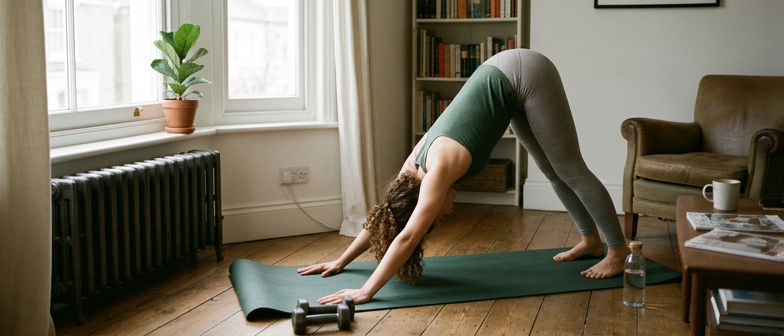
Sticking with a plan at home often depends less on willpower and more on how easy it is to begin. Placing a mat, water bottle, and light gear where you regularly walk past turns the space into a gentle reminder. When everything is visible and ready, starting feels simpler than finding and setting up equipment.
Choose a small “minimum dose” for busy or low‑motivation days, such as a few minutes of walking in place plus some squats and wall push‑ups. If you feel better once you move, you can extend the session; if not, you still kept the pattern going.
Pairing short blocks of activity with existing routines helps them become automatic. A brief mobility sequence after getting dressed, or a quick strength circuit before an evening shower, soon feels like part of that routine instead of an extra task.
Gentle rules and backups that keep you on track
Soft, flexible rules often work better long term than strict demands. One useful guideline is “move before excuses”: when the thought “I could exercise” appears, do a single set of any movement right away. Another is “never miss twice”: if one planned day slips, commit to showing up the next day, even for a shorter session.
Prepare a short list of backup options for days when usual training feels unrealistic. This might include low‑impact cardio for tired joints, simple chair‑based movements when you feel worn out, or easy stretching when strength work feels too intense. The aim is to keep some form of movement in the picture, even if the type changes.
Simple tracking reinforces this habit. Mark sessions on a calendar or in a notebook with a symbol or brief note about how you felt. Over time, those marks create a visible chain of effort that encourages you to keep going and reminds you that consistency often comes from many modest sessions rather than a few perfect ones.
Q&A
-
How can I design a Home Workout Routine Setup that stays out of the way in a small apartment?
Choose a single corner as your base, then store minimal equipment training tools vertically in baskets, hooks, or a slim rack. Keep a roll‑up mat, one pair of adjustable dumbbells, and a few resistance bands. The routine should fit that footprint, so you can unpack and start within two minutes. -
What Small Space Exercise options work if I have downstairs neighbors and thin walls?
Prioritize low‑impact, time efficient movement such as marching, slow step‑ups on a sturdy step, controlled squats, wall push‑ups, and band rows. Use tempo changes or short circuits to raise intensity without jumping. Rotating three or four quiet drills keeps neighbors happy while still challenging strength and cardio. -
How do I build a Weekly Fitness Schedule around an unpredictable workweek?
Anchor your weekly fitness schedule to fixed daily anchors instead of exact times, like “after breakfast” or “before evening shower.” Plan two non‑negotiable beginner circuit sessions and one flexible bonus day. Use ten‑ to fifteen‑minute blocks so rescheduling is easy, and track completion, not perfection, to stay consistent. -
What’s a simple Beginner Circuit Planning approach using minimal equipment training?
Choose four movements: squat, push, pull, and core, all friendly to small space exercise. Perform thirty to forty seconds of each with twenty seconds rest, repeating the circuit three times. Start bodyweight only, then add bands or light dumbbells. Keep progression gradual by extending work intervals or adding one extra round. -
How can I strengthen Motivation Habit Building so workouts feel automatic, not forced?
Link time efficient movement to existing habits, like brewing coffee or logging off work. Use tiny “entry” rules, for example one set of squats whenever you step onto the mat. Keep visible cues in your Home Workout Routine Setup and celebrate streaks weekly, focusing on showing up rather than chasing perfect performance.