
Core Stability for Sports: Building Low-Back-Friendly Power from Posture to Rotation
Every sprint, jump, swing, or change of direction depends on how well the middle of your body organizes force and protects your spine. When breathing, alignment, and coordinated muscle control work together, movement feels smoother, strain on the lower back tends to drop, and sport skills can gain more efficient, dependable power.
This story is part of DailySeekers's practical reading library across everyday topics.
Why the Middle of Your Body Shapes Sport Movement
Your trunk quietly decides whether a sport move feels strong and fluid or awkward and shaky. It does this in two main ways: by keeping you steady, and by passing force efficiently between your upper and lower body.
When you cut, jump, sprint, or swing, your legs push against the ground and create force. That force has to travel through your pelvis, torso, and ribcage before it reaches your arms, racket, or bat. If the middle of your body is firm and well controlled, less energy is lost along the way. Many coaches describe this as avoiding “energy leaks”: your hips stay aligned, your spine is supported, and your technique stays organized instead of collapsing under speed or load.
The same idea applies to slower, more controlled actions. A steady trunk helps you keep posture, balance, and joint alignment while you land from a jump, fight for position, or change direction. Muscles around your waist and lower back resist twisting that you do not want, so the twisting you do want can be more precise. This reduces unnecessary strain on the spine and lets the big muscles of the hips and shoulders do their job.
Over time, this combination of stability and clean force transfer influences almost every move on a field or court. A more controlled trunk supports safer lifting in the gym, more efficient running mechanics, and better control when fatigue sets in. Instead of chasing only visible abdominal muscles, treating your midsection as the control center for movement makes training choices more purposeful and more useful for real play.
Building an Everyday Setup: Breath, Alignment, and a Calm Spine
Let breathing guide tension
For daily movement and sports, a steady spine starts with how you breathe. Rather than taking a huge breath and locking everything down, think of a quiet inhale through the nose and a relaxed exhale through the mouth. The goal is to keep the breath flowing while the muscles around your trunk stay gently active.
A simple way to feel this is to stand on one leg near a wall, soften your knees, and pay attention to your breathing. If you lose balance the moment you inhale or exhale, your brace is probably too aggressive or too loose. Adjust until you can breathe almost normally while staying upright and calm. This level of tension is the kind your body can actually use in sport situations, not just in a brief, maximum‑effort hold.
Align, then move
A steady spine is less about being rigid and more about staying well aligned as you move. Picture your ribs stacked over your pelvis, and your head floating over your shoulders. The deep muscles around your waist, lower back, and pelvic floor help keep that stack in place while legs and arms do the work.
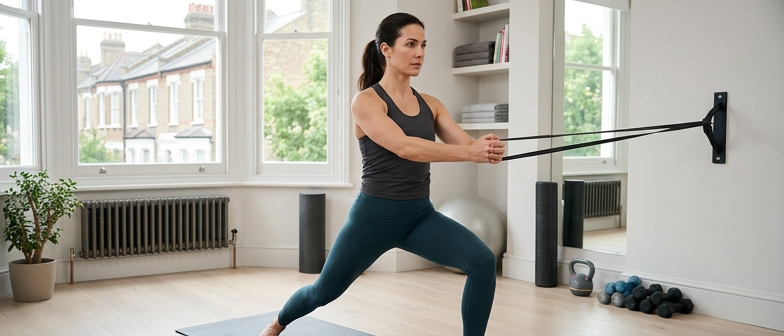
You can explore this in a split stance or light lunge. Keep your trunk relatively quiet, ribs soft, and breathe without strain. The spine may move a little, but it should feel controlled, not wobbly. Side plank variations are another useful check: if your hips stay level and your breathing stays smooth, you are close to a practical everyday setup that can carry over into walking, lifting, and running.
A simple way to match posture focus with common exercise choices is outlined below.
| Focus area | Example movements | What to pay attention to |
|---|---|---|
| Breathing and gentle support | Supine breathing drills, dead bugs, easy marches | Quiet ribs, slow exhale, no breath‑holding |
| Everyday alignment | Split stance holds, side planks, tall kneeling holds | Ribs over pelvis, level hips, relaxed neck |
Preparing the Trunk for Real-Game Forces
Why still drills have limits
Holding planks and dead bugs can build a helpful base, but sport forces are rarely slow or predictable. When sprinting, cutting, or jumping, the trunk has to stay organized while the legs and arms move in different directions, at higher speeds, and often under fatigue.
So the focus shifts from “strong abs” to “stable force transfer.” Your midsection needs to resist unwanted motion, guide useful motion, and link power from the ground to the upper body. That means practicing control in positions and speeds that actually look more like your sport, not only in perfectly lined‑up gym poses.
Early on, controlled “anti‑movement” drills can teach this: half‑kneeling presses, slow dead bugs with a steady exhale, or carries where the trunk stays relatively quiet while the limbs move. The priority is posture, breathing, and smooth coordination, not chasing a burning sensation.
From controlled to powerful
A practical path is to move from stable to dynamic to explosive patterns.
Start with stable anti‑movement work, then add dynamic drills that connect hips and trunk, such as hinge‑based swings or rotational lifts. Here, the trunk has to absorb and redirect force as the hips drive power upward. Finally, layer in plyometric options like medicine‑ball style throws, bounds, or hops where landings are crisp and the trunk does not collapse.
The aim is to switch from calm to powerful without losing alignment. Over time, this teaches the body to keep the middle relatively calm while the rest of you moves at full speed, which is much closer to real games.
The table below shows how different types of drills can support this path.
| Stage of practice | Typical drill style | Main sport benefit |
|---|---|---|
| Stable control | Planks, carries, half‑kneeling presses | Basic support, lower‑back friendly tension |
| Dynamic linking | Swings, rotational lifts, split‑stance pulls | Better force transfer between hips and shoulders |
| Explosive actions | Throws, bounds, hops with clean landings | Sharper power with maintained alignment |
Planning the Week: Protecting the Back While Building Power
A simple structure across days
Thinking about programming can feel complicated, but focused trunk work can stay fairly simple: a few short sessions spread across the week. The goal is consistent practice, not exhausting yourself on a single day.
On two to four days, mix low‑load control work with slightly harder strength moves. Early in a session, use breathing drills, gentle pelvic tilts, or dead bugs to wake up the deep support muscles around the spine. These help you feel how to keep the trunk steady while arms and legs move.
Then add a few sets of strength exercises that challenge posture and stability, such as front planks, side planks, stability‑ball variations, rollouts, or hanging leg raises if appropriate for your level. Keep your ribs stacked over your pelvis, avoid sagging or arching, and stop a set when you start to lose that form rather than forcing extra repetitions.
Example weekly rhythm and on‑field carryover
One possible rhythm might look like this:
Day 1: control work plus moderate strength (front plank, side plank, bird dog)
Day 3: control work plus rotation and balance (presses resisting twist, single‑leg drills)
Day 5: control work plus higher‑load options if you feel prepared (rollouts, V‑sit holds, hanging knee raises)
On the other days, let the trunk rest from heavy direct training but keep moving with walking, light mobility, and your usual sport practice. During technical drills, pay attention to quiet, stable ribs and pelvis while you cut, jump, or strike. Notice whether your breathing stays steady or if you hold your breath whenever you try to move fast.
Linking calm breathing, organized alignment, and coordinated muscle action in the middle of your body does not just support comfort in the lower back. It also gives your movements a clearer path for force to travel, so that the effort your legs and hips create has a better chance of reaching your arms and hands when it matters. Over time, that combination of support and efficiency can make your sport work feel more controlled, repeatable, and sustainable.
Q&A
-
How does Core Stability For Sports actually improve on‑field performance beyond traditional ab training?
Core stability for sports focuses on how your trunk organizes and transfers force during specific game patterns instead of just making muscles burn. Training in split stances, on one leg, or with tempo changes teaches your midsection to stay calm while limbs move fast, improving accuracy, repeatability, and resilience under fatigue in competition. -
What are effective Balance Control Exercises that carry over to cutting, jumping, and rapid direction changes?
Useful balance control exercises load the hips and trunk in positions similar to sport: single‑leg hinges, lateral step‑downs, and multi‑direction hops with a controlled stick on landing. Adding eyes‑closed holds or light perturbations from a partner forces the trunk to react quickly, sharpening real‑time balance adjustments without over‑stressing the ankles or knees. -
What should athletes know about Trunk Strength Basics before adding heavy lifting or explosive work?
Trunk strength basics start with tolerating tension while breathing, then holding alignment under modest load. Athletes should demonstrate clean side planks, controlled carries, and hip‑hinge patterns before progressing. This foundation reduces energy leaks when they move to heavy squats, Olympic‑style lifts, or powerful jumps, allowing safer progress and better force transfer. -
How can Rotation Awareness Practice help both performance and low back comfort in rotational sports?
Rotation awareness practice teaches athletes to differentiate hip, trunk, and shoulder motion, instead of twisting from one overloaded segment. Drills like slow cable chops, mirror‑feedback torso turns, and step‑to‑rotate patterns build timing and segment control. This improves swing mechanics while spreading stress, often easing low back irritation in golfers, throwers, and hitters. -
What makes an exercise truly Low Back Friendly among Posture Support Training and Sport Movement Foundation drills?
A low back friendly move respects neutral or gently moving spinal positions, allows full exhalation, and can be stopped without pain or breath holding. Good choices keep force closer to the hips and shoulders rather than isolating the lumbar spine. Regressing range, load, or speed while preserving posture usually keeps the drill productive and safe.