
Digital Detox for Mental Wellness: Quiet Evenings, Clearer Focus, Deeper Sleep
Most nights, many people climb into bed with a glowing screen, telling themselves they are “just unwinding for a minute.” The colors, movement, and constant updates feel comforting in the moment. Yet the same habits often leave thoughts racing, sleep unsettled, and attention scattered the next day. Gentle changes to evening screen use can ease this mental load without requiring a full tech shutdown.
This story is part of DailySeekers's practical reading library across everyday topics.
Why Late-Night Screens Feel Comforting But Drain The Mind
Easy pleasure that looks like rest
After a long day, it is natural to reach for something that feels simple and rewarding. Social feeds, short videos, and chat apps offer quick hits of novelty and connection with almost no effort. There is always one more clip, one more post, one more message.
This low-effort flow can feel like the opposite of work. The app does the planning by feeding the next piece of content. Especially when someone feels lonely or stressed, seeing other people’s updates can create a temporary sense of company.
The brain, however, is busy in the background, comparing, reacting, and processing. Emotional stories pull attention in, arguments spark irritation, and upbeat highlights from other people’s lives invite quiet self-judgment. The body may be still, but mental activity stays high.
Hidden strain from light and stimulation
Two forces usually operate at once: bright light from the screen and mental stimulation from the content. Blue-leaning light can make it harder for the body to move into a sleepy state, while a stream of new information keeps the mind active.
News, messages, and fast-moving videos ask the brain to keep switching tasks. The nervous system stays slightly on guard, watching for the next surprise, joke, or notification. Instead of drifting toward rest, the mind remains in “daytime mode,” alert and ready to respond.
Sleep can start later, become lighter, or break more often during the night. Even when total hours in bed look similar, the sense of feeling restored in the morning may be weaker. Over time, this pattern can contribute to low energy, a heavier mood, and more trouble focusing.
Small Adjustments To Light, Sound, And Alerts
Softer visuals that invite winding down
Light is one of the simplest levers to pull. Bright, cool-toned screens signal the brain to stay alert. In the later evening, lowering screen brightness and switching to warmer colors can create a visual cue that the day is closing. Some people also find that turning on grayscale reduces the pull to keep checking “just one more thing,” because the display looks flatter and less exciting.
The room environment plays a similar role. Using softer lamps instead of strong overhead lighting can reduce eye strain and make it feel more natural to step away from the device.
Here is one way to think about choices around light and visual settings:
| Evening visual choice | Likely effect on wind-down | When it may help most |
|---|---|---|
| Very bright, cool-toned screen in a brightly lit room | Keeps brain alert and engaged; harder to notice tiredness | When tasks must be finished, not ideal for pre-sleep hours |
| Dim screen with warmer tones and softer room lighting | Encourages slower pace and less strain; easier to pause | When trying to shift from online activity to rest |
| Grayscale screen with minimal on-screen clutter | Reduces reward from colorful feeds; less urge to scroll | When social or video apps feel especially “sticky” at night |
Calmer audio and quieter notifications
Sound also shapes how tense or relaxed the mind feels. Frequent alerts can make attention jump, even when they are quickly dismissed. Many people feel less on edge once they turn off non-essential notifications, especially for social, shopping, or entertainment apps. Batching updates to a few times a day, or silencing them during certain hours, can lower that sense of always needing to check.
Instead of alert tones, some people use soft background audio in the evening, such as gentle music, white noise, or nature sounds. This gives the brain a steady pattern to follow, rather than sharp interruptions. A quiet soundtrack plus reduced notifications can create a cleaner mental space for winding down.
Simple phone-free pockets can help too: no screens during meals, or a silent period during the last stretch before bed. These boundaries can lower stress by giving the mind regular breaks from digital demands.
Gentle Evening Customs That Support Rest
A softer “runway” into night
Evenings often feel jumpy when they simply continue the pace of the day. Creating a softer “runway” into night can ease that feeling. One approach is to choose a time by which most screen-heavy activity winds down. Even aiming for “earlier than usual” is a start.
Putting the phone to charge somewhere slightly inconvenient to reach can break the habit of automatic checking. Using a simple alarm device instead of relying on the phone may also make it easier to leave the screen outside the bed area. Turning off non-essential alerts during this window reduces the chance of being pulled back in.
Physical cues help, too: slightly dimmer lights, a cooler room, and lower noise can all signal safety and rest. Over repeated evenings, this combination of environment and timing can make it easier to fall asleep and to wake with a steadier mood.
Replacing scrolling with easy, offline rituals
Letting go of a familiar habit is easier when something else enjoyable fills the gap. The replacement does not have to be ambitious. Short, low-effort activities fit better at the end of a long day.
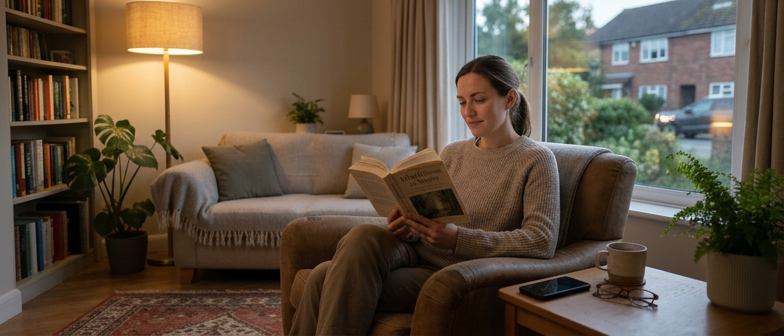
Examples include reading a few pages of a printed book or magazine, doing light stretches, or taking a warm shower. A few minutes of slow breathing or simple mindfulness can also help thoughts settle. For those who like working with their hands, easy puzzles or gentle organizing tasks can be calming.
Over time, they can become evening anchors: small signals that the day is done. Placing a book or journal by the bed, or keeping a puzzle within reach of the couch, makes it more likely that these options are chosen instead of the phone.
Tracking What Works And Planning For Slippery Moments
Tiny notes that reveal patterns
Paying attention to habits can be helpful without becoming a chore. One option is to keep very brief notes about evening screen use and how it feels.
For example, before sleep, a person might write:
- Rough sense of how much time was spent on screens that evening
- Mood on a simple scale, such as low to high
- Main activity type (chatting, reading news, social feeds, videos, games)
After several days, patterns often become clearer. Perhaps longer stretches on social apps coincide with more restless nights, or turning screens off earlier matches with feeling more refreshed in the morning. This type of self-observation can guide small adjustments without strict rules.
Some people like visual cues, such as marking a calendar on days when they stop most scrolling by a chosen hour or feel especially calm at night. The idea is not to judge each day as good or bad, but to notice what supports clearer focus and steadier mood.
A simple comparison can help clarify what to track:
| Tracking approach | Effort level | What it can reveal |
|---|---|---|
| Quick notes on time, mood, and main activity | Low | Links between specific apps or time of use and how rested you feel |
| Calendar marks for “calmer evenings” | Very low | Whether small changes are adding up over weeks |
| Detailed logs of every app and minute | High | May show fine-grained patterns, but can feel tiring or rigid |
Backup options for “just this once”
Even well-planned intentions can fade when a late message arrives or a new series becomes tempting. Planning for those “just this once” moments can reduce the strain of relying on willpower alone.
Some people use app limits that gently block their most tempting choices after a selected time, requiring an extra step to continue. Others charge the phone in another room so it is not within easy reach. Keeping a small “evening menu” of alternatives nearby—like a book, puzzle, stretching routine, journal, or simple planning pad for the next day—gives the hands and mind something else to do.
When the urge to reach for the screen appears, having a pre-decided option can prevent long internal debates. The person is not arguing with themselves; they are following a plan made earlier with a clearer head. Over time, these light structures can make calmer evenings feel less like a special project and more like a normal, sustainable part of daily life.
Shifting evening tech habits does not require a perfect retreat from all devices. Step-by-step changes to light, sound, alerts, and routines can ease mental overload, support deeper rest, and leave more attention available for the parts of life that matter most.
Q&A
-
How does a Digital Detox For Mental Wellness differ from completely quitting technology?
A Digital Detox For Mental Wellness focuses on intentional breaks and reshaping screen habits, especially at transition times like evenings, rather than banning devices. It emphasizes awareness of triggers, scheduling offline pockets, and choosing calmer, purpose-driven use so technology supports mental health instead of constantly hijacking attention and mood. -
What are practical Social Media Boundary Habits that still feel realistic in daily life?
Realistic Social Media Boundary Habits include checking feeds at pre-set windows, turning off non-essential push alerts, and moving apps off the home screen. Many people also separate “creation” from “consumption,” for example posting updates but delaying scrolling, which reduces emotional comparison loops and preserves energy for offline relationships and hobbies. -
How can a Quiet Evening Routine improve Attention Recovery Benefits the next day?
A Quiet Evening Routine gives the nervous system a predictable cooldown, which improves Attention Recovery Benefits like mental clarity and sustained focus. Gentle cues such as dimmer lighting, low-key conversation, and simple offline activities help the brain shift out of reactive mode, so cognitive resources replenish instead of remaining scattered by late-night stimulation. -
In what ways does Mindful Screen Use contribute to Better Sleep Support?
Mindful Screen Use supports Better Sleep Support by aligning device behavior with the body’s natural wind-down. This includes choosing calmer content, limiting rapid notifications, and setting a “last active screen” time. When digital inputs slow and become more intentional, it is easier to notice tiredness, fall asleep faster, and experience more restorative sleep cycles. -
How do limits on media create Stress Reduction Through Limits without feeling restrictive?
Stress Reduction Through Limits works best when boundaries feel self-chosen and flexible, not punitive. People might cap late-night news checking, use app timers with graceful overrides, or define “no-scroll zones” like the bed. These structures reduce decision fatigue and ambient anxiety, freeing mental space while still allowing enjoyable, purposeful online time.