
Healthy Meal Planning That Lasts: From Balanced Plates to Smart Grocery Prep
Eating well every day doesn’t have to mean counting every calorie or spending hours in the kitchen. With a simple visual formula on your plate, some relaxed prep on quieter days, and realistic portions, satisfying meals can fit into busy weeks without a complicated nutrition plan.
This story is part of DailySeekers's practical reading library across everyday topics.
A Visual Plate You Can Use Anywhere
A visual plate formula skips the math and lets your eyes do most of the work. Instead of tracking every bite, you focus on the overall shape of the meal in front of you.
The emphasis is on balance rather than perfection. The aim is not an exact target but a meal that feels filling, steady, and enjoyable.
A practical starting point is this rough layout:
- Around half of the plate: vegetables
- Around one quarter: protein
- Around one quarter: carbohydrates
- Plus: a small portion of added fat
The generous vegetable section might be salad, cooked greens, mixed roasted vegetables, or a simple stir‑fry. This helps with fullness and adds volume.
The protein section might include poultry, fish, eggs, tofu, beans, lentils, or yogurt. The carbohydrate section can come from whole grains or starchy vegetables, such as rice, pasta, bread, potatoes, or similar options.
A thumb‑sized amount of added fat, such as a drizzle of oil, a few nuts or seeds, or some avocado, brings flavor and helps meals feel more satisfying.
This plate pattern is a flexible guide, not a rule. Using it most of the time supports a steady way of eating without weighing or logging.
Adding variety through color and texture
Once the basic layout feels familiar, variety can come from color and texture. Brightly colored vegetables, chewy grains, crunchy toppings, and creamy elements like yogurt or soft cheeses can make the same structure feel fresh again and again.
A quick way to think about it is: one leafy item, one colorful item, one protein, one starch, and one small flavor boost. Mixing and matching from those loose categories keeps meals interesting while staying within the same easy visual pattern.
Light-Prep Cooking For Busy Evenings
On rushed nights, a complicated recipe with many steps can feel out of reach. Light-prep routines focus on a few building blocks you can assemble in different ways, rather than a different full recipe for every evening.
Building blocks instead of full recipes
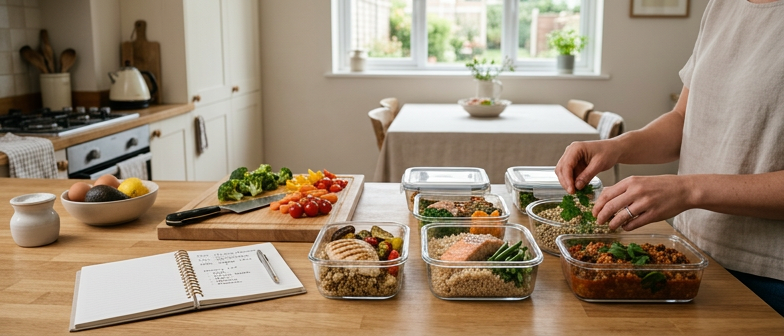
On a quieter day, it helps to prepare:
- One or two proteins
- A tray of mixed vegetables
- A pot of grains or another starch
- One or two simple sauces or dressings
Stored in clear containers, these pieces turn into quick bowls, wraps, and salads during the week. A portion of protein and vegetables can be reheated and served over grains with a spoonful of sauce. The same components might become a wrap the next day or a simple stir‑fry with a different seasoning.
One preparation session can support several different plates, which reduces both cooking time and decision fatigue on workdays.
Tiny habits that shrink weekday effort
Small, repeatable actions make this style of cooking easier:
- Rinse and dry salad leaves soon after shopping
- Chop onions, carrots, or peppers in small batches ahead of time
- Portion snack foods into small containers instead of eating from large bags
Keeping a short list of reliable combinations on the fridge door can also help. When energy is low, you pick from that list rather than starting from zero.
Sturdy, shallow containers make it easier to see leftovers and use them before quality drops.
| Building block | Simple example uses | When it helps most |
|---|---|---|
| Cooked grain or starch | Base for bowls, side for soups, filling for wraps | Evenings with very little cooking time |
| Roasted or steamed vegetables | Added to eggs, mixed into salads, reheated with sauce | Days when fresh chopping feels like too much |
| Prepared protein | Topped on salads, folded into tacos, served with grains | After late work shifts or busy family activities |
Portion Cues You Can See And Feel
Serving sizes can be guided by simple visual cues. Instead of weighing or measuring, using your hand and plate can keep amounts in a realistic range that still feels flexible.
Using your hand as a quick guide
Hands come in different sizes, so this method adjusts naturally from person to person. Some common cues are:
- A palm (without fingers) for many protein foods
- A cupped hand for grains or other starchy foods
- A thumb or small thumb‑tip for fats like nuts, seeds, or spreads
These are not strict rules, but they gently guide how much lands on the plate. That can be useful when eating out, sharing family dishes, or serving yourself buffet‑style, where portions tend to creep up.
This style of estimating also makes it easier to adjust based on how you feel. If you finish a meal and are still hungry, you might add another half palm of protein or a small extra scoop of starch next time. If you often feel overly full, slightly reducing each portion can be a low‑stress experiment.
Letting the plate shape the amount
The plate itself can also act as a boundary. Filling roughly half with non‑starchy vegetables, then dividing the other half between protein and starch, gives a simple structure that works with many cuisines and preferences.
For snacks, small containers and repeatable visuals help. Examples include:
- A small handful of nuts in a dedicated snack jar
- A single piece of fruit as a default sweet option
- A small bowl that you always fill to the same level for yogurt, popcorn, or trail mixes
These cues reduce the “just a little more” cycle and make it easier to notice when hunger has faded.
| Situation | Visual cue that can help | Why it’s useful |
|---|---|---|
| Serving dinner from shared dishes | Decide plate sections before scooping | Prevents automatic overfilling |
| Grabbing snacks while working | Pre‑fill a small bowl or container | Adds a clear stopping point |
| Eating out with large portions | Use hand cues to guide what to eat now and what to save | Supports comfort without feeling deprived |
Turning Ingredients Into A Flexible Weekly Rhythm
A calm, realistic rhythm for meals starts with what you already have and the kind of week ahead. The focus is on a loose structure that bends with changing plans.
Starting in your own kitchen
A quick scan of the fridge, freezer, and pantry can shape the plan:
- Which proteins should be used soon?
- Which vegetables are almost past their best?
- Which grains, beans, or canned goods are already available?
This short survey helps reduce waste and keeps decisions grounded in what is actually on hand. After that, you can look at local sales or seasonal produce and pair them with what you already own. If a particular protein and vegetable are good value and you already have a compatible grain, you have the base for several dinners.
Organizing the ideas by theme can further simplify planning. Grouping by “taco night,” “stir‑fry night,” “soup and bread,” or “sheet pan dinner” gives broad outlines that can be filled in with whatever ingredients and flavors sound appealing in the moment.
Matching meals to your real schedule
A gentle weekly outline works best when it respects time and energy. Glancing at the calendar first helps:
- Busier evenings get the fastest options or leftovers
- Quieter evenings get dishes that need more attention or oven time
On hectic days, pre‑washed salad mixes, frozen vegetables, or ready‑to‑cook proteins can keep cooking light. On slower days, making a double batch of a favorite dish means one future evening requires almost no work at all.
Instead of locking every day to a specific dinner, many people find it helpful to keep a short list of about five ideas using the ingredients they chose at the start of the week. Each evening, they pick one idea based on how they feel and how much time they have.
Over time, this pattern becomes a repeatable loop: check what you have, notice what needs using, glance at sales or seasonal produce, look at your week, then jot down a flexible list. Paired with a simple plate layout and easy portion cues, this approach can make everyday eating feel more organized without becoming rigid or complicated.
Q&A
-
How can Healthy Meal Planning stay flexible when my weekly schedule changes a lot?
Healthy Meal Planning works best when it follows your calendar, not the other way around. Start with a loose Weekly Menu Structure of four to five ideas rather than fixed daily assignments, then shuffle them depending on work, social plans, or energy. This keeps planning useful without feeling rigid or stressful. -
What are the key elements of Balanced Plate Basics for everyday meals?
Balanced Plate Basics focus on building meals around vegetables, protein, and smart carbohydrates with a modest amount of healthy fat. Rather than strict measurements, you use visual proportions and Portion Awareness Tips to stay in a reasonable range. This approach supports steady energy, satiety, and nutrient variety across different cuisines. -
How do I set up a simple Grocery Prep Strategy that actually saves time?
An effective Grocery Prep Strategy starts in your kitchen, checking what you already have, what needs using, and which staples are low. From there, shop with a short list tied to your Weekly Menu Structure and prep only high‑impact items, like versatile proteins and vegetables, so you can assemble Practical Healthy Eating options quickly. -
What are some Portion Awareness Tips that don’t involve weighing food?
Portion Awareness Tips can rely on hands, plates, and containers as visual boundaries. Using your palm, cupped hand, or thumb to estimate key foods, plus consistent bowls or snack containers, keeps portions realistic while leaving room to respond to hunger and fullness. This method works equally well at home, work, or restaurants. -
Why do Colorful Food Choices matter in Practical Healthy Eating?
Colorful Food Choices usually mean a wider mix of plant foods, which often bring varied vitamins, minerals, and protective compounds. Thinking in color families—greens, reds, oranges, purples—makes it easier to diversify meals without complex rules. It also boosts visual appeal, helping healthy dishes feel more satisfying and less repetitive over time.