
Everyday Nutrition Lessons: Turning Family Meals and Snacks into Learning Moments
Most children learn what, when, and how to eat long before they can read a label. Every bite at the table, every choice in the cart, and every after‑school nibble quietly teaches something. With a bit of intention, ordinary routines can build skills, confidence, and a calmer mood around food.
This story is part of DailySeekers's practical reading library across everyday topics.
Everyday Moments That Quietly Teach About Food
Everyday life is full of small chances to learn about eating without turning meals into a lesson. The goal is to keep curiosity alive and pressure low, so children can explore and form their own steady, relaxed habits.
Turning daily routines into learning
A trip to the store can become a gentle conversation. Invite a child to pick a vegetable in a new color, or compare two kinds of bread by texture and smell. When looking at packaging together, neutral comments such as “This one has more fiber” keep the focus on noticing, not judging.
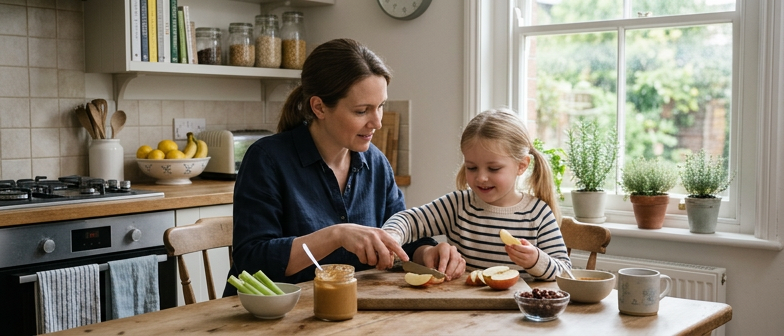
At home, the kitchen can work as a quiet practice space. Small tasks count as real help: rinsing berries, tearing lettuce, stirring a sauce, or placing toppings on a dish. Describing foods by color, crunch, juiciness, warmth, or aroma shifts the language away from “good” or “bad.” When children help prepare something, it usually feels more familiar and safe, which can make tasting less scary.
Play also fits naturally. “I Spy something green on your plate” or a simple rainbow challenge turns trying vegetables into a game. Pretend restaurants, menus drawn on scrap paper, or make‑believe cooking with toy food let kids sort, name, and group foods without pressure to eat.
Mealtimes offer chances to notice body signals. Short phrases such as “Is your tummy starting to feel full?” or “You can stop when your body feels done” help children tune in to their own cues. There is no need to praise for cleaning a plate or criticize for leaving food. Ordinary habits like these, repeated many times, gradually support a more confident relationship with eating.
From Cart to Kitchen: Involving Children Step by Step
Involving kids from shopping to serving does not require fancy recipes. A bit of structure helps transform everyday tasks into steady practice, while keeping the adult in charge of what is offered.
Making the store a learning space
Before leaving home, a short list can set the tone: one fruit, one vegetable, one grain, and one source of protein. At the store, let children “own” one or two of those items. They might pick which color peppers to buy or choose between two whole‑grain breads. Offering clear options – “Would you like carrots or cucumbers this week?” – keeps decisions manageable.
Label reading can turn into a quiet game for older children. They might look for choices with more fiber or fewer sweeteners. Younger children can count how many different colors of produce end up in the cart. These moments stay calm and observational, focusing on what foods are made of, not on guilt or praise.
A simple table can help parents think about how to match tasks to a child’s stage and comfort level:
| Child’s comfort with food tasks | Examples of suitable jobs | Focus of the learning moment |
|---|---|---|
| Just getting used to helping | Rinsing fruit, tearing lettuce, placing bread or tortillas on a plate | Touching and seeing foods in a low‑pressure way |
| Moderately comfortable | Stirring sauces, measuring dry ingredients with help, choosing between two vegetables | Exploring textures, smells, and basic prep steps |
| Very comfortable and interested | Mixing batters, shaping patties with assistance, helping portion foods for serving | Building confidence and ownership of shared dishes |
Turning the kitchen into a practice zone
Back home, a step stool at the counter, a small spoon or spatula, and a simple task make participation feel real. Setting the table, scooping yogurt into bowls, or sprinkling toppings all offer chances to handle food without pressure to taste right away.
Serving meals “family‑style” – with food in shared bowls and children using small utensils to serve themselves – can gently teach appetite awareness and basic manners. Children learn to take a little, try a bite if they wish, and pass the dish. Seeing, touching, smelling, and sometimes tasting the same foods across many meals often matters more than any single conversation.
Calm, Predictable Meals and Snacks
A relaxed atmosphere around food usually starts with a simple rhythm. When children know what to expect, arguments about “one more snack” or “just one more bite” tend to ease over time.
Building a calm rhythm around food
A loose but steady pattern of meals and snacks in a similar order each day helps children trust that food will show up regularly. Adults decide what is served and when; children decide whether to eat from what is offered, and how much feels right to their bodies.
Serving one shared meal for everyone sends a clear message. Instead of cooking separate plates, offer the same base foods to all, with small tweaks if needed. Including at least one familiar item – bread, rice, fruit, or another already‑liked side – makes the table feel safe without turning it into a custom order counter.
Structure around where and how long meals last also helps. Sitting at a table, switching off screens, and keeping eating to a set window signal that this time is for food and connection. When the meal ends, it ends; the next eating time will come soon enough.
Keeping structure firm and pressure low
Structure does not mean strict rules about finishing everything. Within clear boundaries, pressure can stay low. Adults choose and prepare balanced options, then step back from convincing, counting bites, or bargaining for “just one more forkful.”
Repeated, low‑key exposure lets children look, touch, sniff, or taste at their own pace. This can be especially supportive for cautious or selective eaters. Neutral comments – “That one is crunchy,” “This soup smells garlicky,” or chatting about the day – keep tension down.
Over time, this mix of routine, shared dishes, and gentle exposure supports appetite, curiosity, and a more settled attitude around eating, while keeping learning rooted in daily life rather than rules.
Responding to Picky Phases with Curiosity
Refusing a new dish or saying “no” to a once‑loved food can worry adults, but picky phases are common. A calm, curious approach usually works better than turning meals into a test.
Staying steady when a child says “no”
A picky phase is rarely about the cook or the recipe. Many children need to see a new food multiple times before they feel ready to taste it. Calm, low‑pressure meals give room for that slow process.
Instead of “You have to eat three bites,” neutral phrases such as “These carrots are crunchy and sweet” describe the food without demanding a response. Serving the same meal to everyone, with at least one safe item the child already likes, keeps expectations consistent: this is the meal, and you can choose what and how much to eat from what is here.
Regular mealtimes and snack times also matter. A child who arrives at the table hungry, but not overly hungry, has more energy and patience to look at something new.
Turning new foods into small experiments
Curiosity grows when children feel a bit of control within the limits set by adults. Small choices can help: “Do you want peas next to your rice or mixed into your rice?” The adult still chooses the options; the child chooses the details.
Pairing new foods with familiar favorites, and keeping portions tiny at first – even just one pea or a thin slice – keeps things from feeling overwhelming. Seeing the same item many times without pressure slowly makes it more normal.
Involving children in washing, stirring, or arranging a new food on a plate can reduce worry, because they get a chance to see, touch, and smell it before anyone expects them to eat it. For some children, texture, fear, or low appetite can make tasting especially hard. In those cases, very small steps and extra patience matter even more.
A simple way to think about the pace of trying new foods is to look at the kind of progress a child is making, not only at whether they swallowed a bite:
| What the child is currently comfortable with | How adults can respond | How to view the situation |
|---|---|---|
| Looking at or having the food on the plate | Allow the food to sit there without comment; offer a familiar option alongside | Early exposure, not failure |
| Touching, smelling, or licking | Notice the effort: “You checked how that feels,” without pushing for more | Real progress in exploring |
| Taking small tastes sometimes | Keep portions small and pressure low; keep including the food regularly | Growing comfort over time |
Noticing these small steps and treating them as progress can keep everyone calmer. Instead of rushing toward a perfect plate, the focus shifts to gentle exploration and steady routines, which makes learning about food part of everyday family life rather than a struggle.
Q&A
-
How can family nutrition education start without formal “lessons” or strict rules?
Family nutrition education can grow from everyday talk and shared decisions rather than lectures. Parents model how to notice hunger, enjoy different foods, and respect body signals. Short, neutral comments about ingredients, cooking methods, and how food makes us feel teach core ideas gently and consistently over time. -
What do balanced meal conversations sound like at a typical family table?
Balanced meal conversations focus on variety and how foods work together, not calories or weight. Parents might mention how a meal includes something for energy, something for strength, and something for comfort or taste. Asking children which foods help them feel full or energized builds understanding without pressure or judgment. -
How can parents plan healthy snacks without creating food battles?
Healthy snack planning works best when parents set simple patterns and offer two or three options. Rotating fruit, dairy, nuts, and whole grains helps balance nutrients. Posting a short weekly snack list on the fridge reduces last‑minute negotiations, while still leaving children room to choose and listen to their own appetite. -
What are practical ways to increase child‑friendly food variety at home?
Child‑friendly food variety grows from small, low‑stakes changes. Families can offer one new flavor or shape alongside familiar foods, use dips and sauces to make vegetables less intimidating, and invite kids to suggest colors or textures they’d like to see. Repeating options calmly matters more than immediate acceptance. -
How can grocery trips and home cooking habits build a positive eating environment?
Grocery learning moments let children compare prices, origins, and basic nutrition facts, turning the store into a real‑life classroom. At home, simple, shared cooking jobs help kids feel capable and included. When meals are relaxed, predictable, and free from body talk, these habits together build a positive, respectful eating environment.