
Indoor Herb Garden Basics: Planters, Potting Mix, and Watering at Home
If you want fresh flavor in a small kitchen or apartment, an indoor herb garden can fit on a sunny sill or under simple grow lights. This guide walks through choosing herb planters and potting mix, setting up lighting and watering, and using basil care and harvesting techniques as everyday examples.
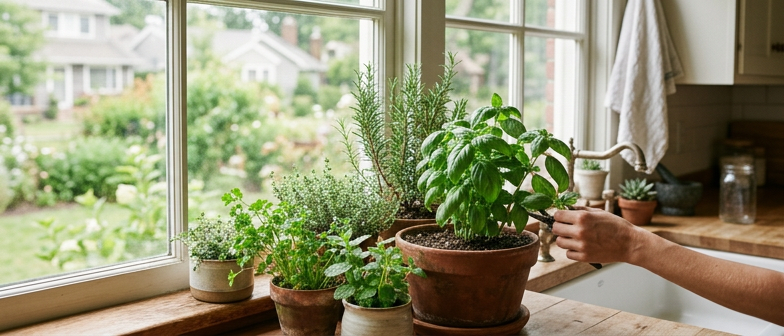
This story is part of DailySeekers's practical reading library across everyday topics.
Why Grow an Indoor Herb Garden
An indoor herb garden gives home cooks easy access to fresh flavor without relying only on dried seasonings or frequent store trips. Keeping small pots on a windowsill, shelf, or countertop makes it simple to pinch a few leaves of basil, parsley, or other common herbs and adjust taste as you cook. For people in apartments or with little outdoor space, growing herbs inside can be a manageable first step into gardening, using compact containers and modest amounts of soil instead of full garden beds. Indoor setups also offer some control over temperature and light, which can help when outdoor conditions are too cold, hot, or changeable.
There are, however, practical limits to what an indoor herb garden can provide. Light indoors is usually weaker and less consistent than outside, so plants may grow more slowly and harvests may be smaller unless you choose good locations or add lighting. Pots dry out at different rates depending on size, material, and indoor air, so watering needs close attention. Some species that thrive outdoors may not adapt well indoors, and even healthy plants will not supply the volume or variety of a full produce section. With realistic expectations, an indoor setup is best treated as a small, fresh source of flavor and a way to practice basic plant care.
Choosing Herbs, Containers, and Potting Mix
When planning an indoor herb garden, start with plants that adapt well to life on a windowsill or under grow lights. Basil, chives, mint, oregano, parsley, and thyme generally handle typical indoor temperatures and modest light. Choose a small group you cook with often, because too many varieties can crowd limited space and complicate care. Check the mature size and growth rate of each herb; vigorous growers such as mint can easily overtake slower plants if they share a pot. Group herbs with similar light, temperature, and watering needs in the same area so routine care is consistent and no plant is stressed while another thrives.
Containers for herbs need drainage holes so excess water can escape and roots do not sit in soggy soil, which often leads to decline or root rot. Shallow, wide herb planters suit low or spreading plants, while deeper pots are better for woody herbs with larger root systems. Plastic, clay, and glazed ceramic can all work if water can drain into a saucer that you empty regularly. A good herb potting mix is lighter and better aerated than garden soil, usually blending peat or coir, perlite, and composted material to hold moisture while still allowing air around the roots. Garden soil from outdoors is not recommended because it can compact, drain poorly, and introduce pests or weed seeds. Over time, even quality mix breaks down, so repotting into fresh mix each year or when growth slows helps keep indoor herbs healthy.
| Herb | Indoor Light Need | Suggested Container Depth | Relative Care Difficulty | Best For |
|---|---|---|---|---|
| Basil | Medium to high | Medium | Moderate | Cooks who use fresh leaves often |
| Chives | Medium | Shallow to medium | Easy | Beginners and small kitchens |
| Mint | Medium | Medium | Easy but vigorous | Separate pots and frequent harvests |
| Oregano | Medium to high | Medium | Moderate | Hearty dishes and small planters |
| Parsley | Medium | Medium to deep | Moderate | Steady garnish use |
| Thyme | Medium to high | Shallow to medium | Moderate | Compact spaces and slow growers |
Picking the Right Herb Planters
Container size, shape, and drainage directly affect root health indoors. Pots that are too small restrict roots and dry out fast, while very large ones stay wet too long. Many common herbs grow well in containers about 6 to 8 inches wide with at least one drainage hole so excess water can escape instead of soaking the roots.
Pot material changes how you manage indoor watering. Unglazed clay or terracotta allows moisture to evaporate through the sides, helping prevent soggy soil but requiring more frequent watering in a dry room. Plastic, glazed ceramic, and metal hold moisture longer, so water more lightly and watch how quickly the potting mix dries. In all cases, use a saucer to catch drips, empty standing water, and choose a well‑draining mix so roots get air and steady, not excessive, moisture.
Light, Water, and Everyday Care Indoors
Light drives almost everything in an indoor herb garden. Most culinary herbs need several hours of strong light each day to stay compact and flavorful. A bright south window often works in darker seasons, while east or west windows may suffice when days are longer. If plants lean toward the window, form pale leaves, or have weak stems, light is probably inadequate. In that case, many growers add full-spectrum LED herb grow lights positioned just above the foliage and used for about 12 to 16 hours daily. Leaves should never feel hot, and lights should be switched off at night so plants keep a normal day–night rhythm.
Watering indoors depends on container size, material, and the potting mix, so fixed schedules are less useful than checking the soil. Press a finger into the top layer of mix and water when it feels dry rather than slightly damp, adding water slowly until some drains from the base. Containers need drainage holes and a saucer that is emptied so roots do not stand in water. Persistent excess moisture can cause root problems and yellowing leaves, while too little water usually leads to wilting, crisp foliage. Indoor air from heating or cooling vents can speed drying, so the same pot may need different watering frequencies at different times of year.
Daily care also involves air movement, temperature, and cleanliness around herb planters. Gentle airflow from a small fan placed at a distance reduces stagnant, humid pockets that favor disease, but should not push constantly on the foliage. Most herbs are comfortable at typical room temperatures, yet sudden drafts or very hot spots near stoves or radiators can stress them. Removing dead or yellow leaves and occasionally wiping dusty foliage with a soft damp cloth keeps plants cleaner and helps them use available light more effectively.
Using Herb Grow Lights Effectively
Grow lights can support an indoor herb garden when windows do not provide steady light, but they work best when intensity and duration match plant needs. Position fixtures about 6 to 12 inches above the leaves, or follow the manufacturer’s guidance, and raise them as herbs grow so foliage stays bright without feeling hot. Many herbs do well with 12 to 16 hours of light followed by darkness, so an outlet timer helps keep a stable schedule and prevents overexposure that can stress plants or dry out pots. For safety and cost, choose lights rated for indoor use, keep cords clear of water during routine watering, allow space for ventilation, and compare wattage and expected lifespan so you understand likely electricity use instead of focusing only on the lowest purchase price.
Indoor Basil Care as an Example
Basil shows how indoor herbs respond to warmth, steady light, and careful watering. It grows well in a bright window or under grow lights for about 12 to 16 hours, with temperatures kept comfortably warm and away from cold drafts. Containers are usually set back from chilly glass, and a well draining potting mix for herbs helps protect the roots from staying wet for long periods.
Indoor basil care depends on balanced watering and regular harvesting. Let the top of the soil dry slightly before watering again, and use pots with drainage holes so excess water can escape. Feeling the soil with a finger is often more reliable than following a strict schedule. Pinching or cutting stems just above a pair of leaves encourages branching and a fuller plant, and removing flower buds can help maintain leaf production and flavor for a longer time.
Q&A
-
What are the main advantages of keeping a small indoor herb garden in a kitchen or apartment?
It gives quick access to fresh flavor, saves some store trips, fits in limited space, and lets you grow herbs even when outdoor weather is too hot, cold, or changeable. -
Which herbs are easiest for beginners to grow indoors on a windowsill?
Basil, chives, mint, oregano, parsley, and thyme usually adapt well to indoor temperatures and light, especially when you start with just a few you cook with often. -
How do I choose suitable herb planters for indoor use?
Pick containers about 6–8 inches wide with drainage holes, and use saucers to catch excess water so roots do not sit in soggy soil or dry out too quickly. -
When should I add herb grow lights instead of relying only on a window?
If herbs lean toward the glass, look pale, or grow weak, the light is probably too low, and full‑spectrum LED fixtures 6–12 inches above the leaves can help. -
What does good indoor basil care look like day to day?
Keep basil warm, give it 12–16 hours of bright light, water when the top inch of potting mix is dry, and trim stems regularly rather than stripping single leaves.