
Reading the Ground Beneath Our Feet: Soil Health Indicators from Microbes to Structure
Beneath every thriving field or backyard bed lies a hidden system quietly shaping harvests, water use, and long‑term productivity. Clues appear in how the ground holds moisture, crumbles in your hand, and supports diverse life. Learning to read these signals turns observation into practical decisions that build more resilient growing spaces.
This story is part of DailySeekers's practical reading library across everyday topics.
Reading Structure with Your Hands
Crumbs, Clumps, and the Simple Squeeze Test
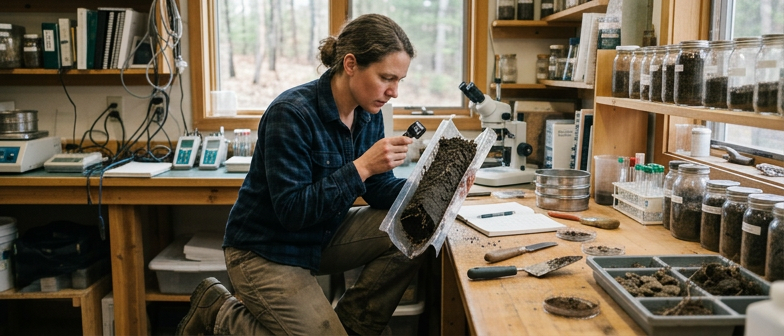
A small handful of slightly moist soil reveals a lot. When it breaks into small, irregular crumbs rather than rock‑hard lumps or powdery dust, that usually points to a well‑formed internal structure. Those crumbs are held together by roots, fungi, and decayed plant material, creating spaces where water can soak in.
A quick squeeze test offers another easy check. Close your hand around the sample, then open it again. If the clump keeps its shape but falls apart with light pressure from a finger, there is typically a good balance between firmness and fragility. When it stays as a hard clod or smears into a slick, solid mass, air and water may struggle to move freely and the ground would benefit from more decaying plant material or fewer passes with heavy tools.
These simple tests do not replace formal measurements, but they connect touch and sight with how roots, water, and organisms are likely to behave below the surface.
Color, Texture, and What They Suggest
Color works like a quick snapshot. Darker browns or almost black tones often signal higher amounts of decomposed plant and animal residues, more available nutrients, more life in the ground, and better ability to hold water. Very pale, gray, or dull surfaces, especially if they stay sticky and wet for long spells, can point toward lower decayed material or poor drainage.
Texture adds another clue. Moisten a sample and rub it between thumb and finger:
- Gritty and sharp usually means a higher share of larger mineral grains, which drain quickly and hold fewer nutrients and less water.
- Smooth and silky points toward medium‑sized particles that feel soft but not sticky.
- Very smooth and sticky material that forms a long ribbon when pressed between fingers suggests a high share of the finest particles.
None of these textures is automatically better or worse. Knowing the mix helps guide choices about how much decayed organic material to add, how thick to keep surface cover, and whether drainage improvements are worth the effort.
Water Pathways: Pores, Aggregates, and Roots
How Pores Decide Soaking and Drying
The tiny spaces between particles and crumbs control how water and air move. When these pores are open and vary in size, incoming rain or irrigation can soak in steadily. Larger spaces let water move down through the profile, while smaller ones hang onto it for later use by roots. Some pores remain filled with air, keeping oxygen available for living roots and organisms.
Trouble starts when pores stay filled with water for long periods. Oxygen gets pushed out, roots sit in saturated conditions, and they may begin to die back. Many gardeners describe this as “overwatering,” but the core issue is often slow drainage caused by compaction or frequent heavy traffic.
Fast, steady soaking without long‑lived puddles usually points to a well‑organized, biologically active system.
Clumps and Roots as Water Engineers
Stable crumbs, sometimes called aggregates, build a three‑dimensional network of pores. They hold together strongly enough to resist slaking into a crust, yet gently enough to break apart under pressure. These clumps form and persist thanks to decayed plant residues, sticky substances produced by microbes, and living roots moving through the profile.
Roots serve as both users and engineers of water. As they withdraw moisture from surrounding pores, they gradually dry the nearby zone, drawing new water toward the root tips. During dry spells, the depth and spread of roots help decide how long plants can maintain growth before wilting.
When roots can explore a large volume of soil, they tap into deeper reserves of stored water. In compacted layers, however, roots are confined to a shallow zone. Observing root depth when you dig, along with how easily a shovel penetrates, gives feedback on whether structure supports or limits water use.
Life Below the Surface: Organisms as Living Signals
The Underground City in a Pinch of Soil
A pinch of soil holds a crowded community of organisms, from microscopic to visible. When this underground city is diverse and active, it often signals a robust, adaptable system.
Different groups fill different roles:
- Bacteria break down simple residues and release nutrients that roots can absorb.
- Fungi send out long threads that bind particles together, move water and minerals, and often form close partnerships with plants.
- Worms and small insects chew plant residues into smaller pieces, opening channels for air and water.
- Tiny predators such as nematodes feed on bacteria and fungi, releasing nutrients back into the soil solution.
This constant eating, digesting, and recycling keeps nutrients circulating. Visible hints of an active community include gently crumbly soil, lots of fine roots, and bits of leaves or stems that slowly fade into the background instead of sitting unchanged.
Linking Microbial Activity to Everyday Choices
The mix and vigor of hidden life provide a practical window into underlying condition. While most organisms are too small to see directly, gardeners and land managers can encourage them with basic habits rather than specialized tools.
A simple comparison can help guide decisions:
| Management Habit | Likely Effect on Underground Life | When It May Be Most Useful |
|---|---|---|
| Regular additions of compost | Feeds diverse microbes and improves crumb stability | Where structure is weak and residues break down slowly |
| Reduced frequent tilling | Protects fungal threads and existing channels | Where repeated mixing has led to powdery or crusted soil |
| Surface mulching | Moderates temperature, keeps moisture, and supports detritivores | Where bare ground dries quickly or erodes easily |
| Mixed plant roots | Supports varied root exudates and microbial niches | Where a single plant type dominates year after year |
Looking at a handful of dirt through this lens shifts the question from whether there is soil to how much life is working within it.
From Test Reports to Practical Actions
Making Sense of Numbers and Notes
Printed reports full of pH values, nutrient levels, and estimated organic content can feel distant from beds filled with vegetables, flowers, or pasture. Linking them with field observations makes those numbers easier to use.
A pH measurement shows whether roots sit in acidic or alkaline surroundings. In lower ranges, several nutrients may become less available, and materials that gently raise pH can help. At higher readings, plants that prefer more acidity may struggle.
Nutrient levels play a similar role. A low reading for key elements can explain stalled flowering, fruiting, or root growth, pointing toward carefully managed additions of balanced nutrients or well‑decomposed organic inputs. Very high figures, especially when plants still grow poorly, suggest that simply adding more nutrient products is not the answer; improving structure, drainage, and biological activity is often more effective.
The portion of decayed organic material in a test result offers a broad sense of how sponge‑like and lively the ground is. Modest values often benefit from steady, seasonal additions of composted materials, leaf litter, or other well‑rotted inputs rather than sudden, heavy applications.
Turning Signals into Step‑by‑Step Decisions
Good decisions start even before the report arrives, with how samples are collected. Using a clean trowel or sampler and combining slices from several spots in the same area gives a more representative picture than relying on one scoop.
Once results are in hand, pairing them with what you see on the surface sharpens the story:
- Persistent weeds can hint at compaction, dryness, or nutrient imbalance.
- Patchy growth may line up with variations in pH or nutrient supply.
- Standing water or cracked ground often points to structural issues that surface cover and traffic changes might ease.
Rather than chasing every figure, many people find it more practical to choose one or two priorities each season: gently adjust pH, build decayed organic material, or correct a clear shortage.
| Observed Condition | Main Clue from Tests or Field Check | Useful First Focus |
|---|---|---|
| Soil hard to dig, shallow roots | Signs of compaction, weak crumb structure | Reduce traffic, add surface cover and compost |
| Water puddles after rain | Slow soaking, possibly low air‑filled pores | Improve drainage and structure before fertilizing |
| Pale growth despite high nutrients | High test values but poor root exploration | Encourage roots deeper with better structure |
| Quick drying, plants wilt fast | Very low organic content, coarse texture | Increase decayed material and surface mulching |
Q&A
-
How do Soil Health Indicators go beyond basic nutrient tests for home gardeners?
Soil health indicators integrate physical, chemical, and biological signals, giving a fuller picture than nutrient tests alone. For gardeners, that means watching aggregation, rooting depth, infiltration rate, and biological activity alongside lab numbers. Tracking these over seasons helps evaluate whether management choices are truly building resilience and productivity. -
Why are Organic Matter Basics essential for improving Moisture Retention Factors?
Organic matter acts like a sponge, increasing the soil’s capacity to store water and release it slowly to roots. It also stabilizes aggregates so pores resist crusting and compaction. Regular inputs of compost, residues, or mulches gradually raise organic matter, buffering both drought stress and short intense rain events. -
What is the practical Role of Microbial Activity in everyday garden decisions?
Microbial activity drives nutrient cycling, builds soil structure, and influences disease suppression. For gardeners, this translates into favoring practices that keep microbes fed and undisturbed, like reduced tillage, diverse plantings, and continuous cover. Observing decomposition speed and root vigor offers low‑tech feedback on microbial performance. -
How can Soil Structure Awareness guide better Land Management Insights on small properties?
Recognizing whether soil is loose, compacted, or stratified helps land managers choose traffic patterns, planting methods, and amendments strategically. For instance, confining wheel tracks, protecting wet soils from machinery, and targeting deep‑rooted species where pans exist all emerge from careful attention to structural patterns. -
What is the Gardening Science Link between lab data and field observation?
The gardening science link is the habit of interpreting lab data through visible field responses. Instead of treating test reports as abstract, gardeners match pH, nutrient levels, and organic matter readings with plant performance, infiltration behavior, and biological signals, then adjust management in small, testable steps over time.