
A Practical Guide to Sorting Laundry by Color and Fabric
If you’ve ever ended up with gray “whites” or misshapen tees, basic laundry sorting can usually explain why. This guide walks through sorting by color and fabric, reading laundry care labels, planning wash loads, and using baskets to protect delicate fabrics with realistic expectations.
This story is part of DailySeekers's practical reading library across everyday topics.
Why Laundry Sorting Matters
Sorting laundry is mainly about controlling how different items interact in the same wash load. Separating clothes by color and general soil level helps reduce visible problems such as dye transfer, graying, or dingy fabric surfaces. Lighter items washed with heavily dyed pieces are more likely to pick up excess color, especially in warm or hot water, so grouping similar shades together can keep whites brighter and pale colors clearer. Dividing loads also makes it easier to choose a water temperature, cycle, and detergent amount that suits what is in the washer instead of relying on one setting for everything.
At the same time, sorting has practical limits. Careful laundry sorting cannot reverse damage that has already happened, such as set-in stains, fiber thinning, or previous shrinkage. A well-sorted load may still experience some wear because washing always involves friction, water, and detergent. Differences between washing machines, detergents, water hardness, and fabric quality also affect results, so two households that sort in similar ways may see different outcomes. Thinking of sorting as one basic step among others, rather than a complete solution, gives more realistic expectations about how much it can extend the life and appearance of everyday clothing and linens.
Sorting Laundry by Color
Color-based laundry sorting reduces dye transfer and helps clothes look consistent over time. A simple method is to separate loads into whites, light colors, and dark or bright items so each wash contains fabrics with similar shade and dye strength. New, intensely dyed garments such as dark jeans or vivid red shirts are more likely to bleed during their first few washes, so keeping them in their own load or with similarly dark pieces can limit staining on lighter fabrics. Printed items that mix light and dark sections are usually safest with colors that match their darkest area, since any transferred dye will show most clearly there. These habits cannot stop all fading or transfer, but they can limit obvious color change and keep many garments looking similar for longer.
Water temperature works together with color sorting but does not replace it. Cool or cold water is often used for mixed-color laundry because lower temperatures slow the movement of loose dye, which helps when washing items that might bleed. Warm or hot water can remove heavy soil more effectively, but the higher temperature also raises the risk that dye will spread, so it is usually reserved for sturdy items in similar colors. When time, space, or machine capacity are limited, it may be practical to keep only the brightest or least colorfast pieces in a separate small load and wash the rest together in cold water. Even with thoughtful sorting and temperature choices, gradual fading and slight color change are normal results of repeated washing.
| Color Group | Typical Items | Wash Temperature Guidance | Bleeding Risk | Sorting Caution |
|---|---|---|---|---|
| Whites | T-shirts, socks, sheets | Warm or hot for sturdy pieces | Low | Keep fully separate from colors |
| Light Colors | Pale pastels, light gray | Cool or warm | Medium | Avoid mixing with new darks or brights |
| Standard Darks | Navy, black, dark gray | Cool or cold | Medium | Group with similar deep shades |
| Brights | Vivid reds, neons, bold prints | Cold, short cycle | High | Wash in small loads with similar brights |
| New Deep Colors | New jeans, dark towels | Cold, gentle or regular | High | First few washes in separate load |
Managing New, Dark, and Bright Garments
New jeans, dark towels, and vivid reds or neons are likely to bleed, so keep them in small, separate wash loads instead of mixing with regular darks or lights. Test for color transfer by dampening a hidden area and pressing it with a white cloth; if dye appears, wash the item alone in cold water on a short cycle.
When these high risk pieces must be washed with other items, group them by shade and fabric weight to limit color transfer and surface damage. Wash lint producing towels away from smoother fabrics, and turn garments inside out to reduce visible fading and abrasion. Using an extra rinse can help flush out loose dye, but it is still safer to keep new or intense colors away from light clothing until they repeatedly wash clean.
Sorting Laundry by Fabric Type
Sorting laundry by fabric type looks at how thick, heavy, or delicate each item is, not just its color. Heavier fabrics like denim, sweatshirts, and towels usually need longer, more vigorous cycles to remove soil, while light woven shirts or lingerie can stretch, snag, or show abrasion under the same conditions. Grouping similar weights helps items move evenly in the drum so bulky pieces do not slam against lighter garments, which can cause twisting, pilling, or broken fibers. Broad groups such as heavy, medium, and delicate materials are usually detailed enough for everyday wash loads.
Mixing very heavy items with very light ones can lead to uneven cleaning and extra wear. Dense fabrics absorb more water, making the load heavier and harder to balance, so lighter garments may ride near the top and come out less thoroughly washed or still soapy. Strong agitation that works well for jeans or work clothes can be rough on knits, activewear, or lightweight blouses, especially if they include zippers, mesh, or lace. Separating loads by fabric type lowers the chance that hard trims or hook-and-loop fasteners will rub against delicate surfaces, and closing fasteners or using a mesh bag adds extra protection.
Fabric type also influences water temperature and cycle choice. Sturdy cotton and many synthetic blends often tolerate warm or hot water and a normal or heavy-duty cycle, as long as the care label does not call for cooler settings. Lightweight synthetics, stretchy fabrics, and garments marked as delicate usually do better in cold water on a gentle cycle to limit shrinkage, fading, and distortion. Because manufacturers test garments differently, care labels remain the clearest guide, and when instructions are unclear, a shorter, cooler, less aggressive cycle for mixed lighter items can reduce wear, with very soiled pieces washed separately if needed.
Washing Delicate Fabrics Safely
Delicate fabrics such as lingerie, sheer blouses, fine knits, and some activewear should be sorted by fabric type instead of washed with jeans or towels. Give them their own small load or place them in mesh laundry bags so hardware, zippers, and rough textures cannot snag them. Always read the care label for terms like gentle, hand wash, or cold water only, since different fibers and trims respond differently to agitation, heat, and spin speed.
When planning wash loads for delicate pieces, select the gentle or delicate cycle, use cold water, and add only a small amount of mild detergent to limit residue. Very fragile items are often better washed by hand in cool water with light agitation, especially when they are only lightly soiled. Avoid bleach and harsh stain removers, do not overload the washer so items can move freely, and expect elastic, lace, and very fine yarns to wear out gradually even with careful care.
Using Laundry Care Labels and Washer Settings
Laundry care labels are the main guide for deciding how to wash each item in a mixed load. Tag symbols show whether a garment can be machine washed, what water temperature is recommended, and how much agitation it can handle. A tub symbol indicates machine washing, with dots or numbers for cooler or warmer water. A line under the tub calls for a gentler cycle, and two lines signal very mild mechanical action. Words such as gentle, delicate, or hand wash warn that the fabric or construction may be damaged by a regular cycle. When you sort a pile of clothes, checking these tags helps you group sturdy pieces into one wash load and set aside delicate fabrics for a more protective cycle or separate wash.
After reading the labels, match each group of items to the washer settings you have. Normal or heavy cycles suit durable fabrics that tolerate stronger agitation and, when allowed, warmer water. Delicate or gentle cycles use slower spin speeds and shorter wash times, which are better for lace, loosely knit sweaters, and garments with trim. Cold water is usually easier on dyes and many synthetics, while warm or hot water should be used only when the label clearly permits it. When care instructions in the same load conflict, follow the most restrictive guidance, even if this means running extra loads or washing certain pieces by hand, to reduce preventable fading, shrinking, and wear.
Q&A
-
Why should laundry be sorted by color instead of washing everything together?
Separating whites, light colors, and dark or bright pieces limits dye transfer and graying, and lets you choose a water temperature that suits each group. -
How should I wash new dark or bright items like jeans or red tops?
Dampen a hidden area and press with a white cloth. If color transfers, wash the garment alone or with similar dark pieces in cold water for the first few loads. -
Why sort laundry by fabric type as well as color?
Keeping heavy towels and denim separate from light shirts or knits allows suitable cycles and spin speeds, helping reduce abrasion, stretching, and pilling. -
How do care labels guide my washer settings?
Labels indicate if machine washing is allowed, suggest water temperature, and note regular or gentle cycles. Following them helps reduce shrinkage or damage but does not prevent all wear. -
How can laundry baskets make sorting easier at home?
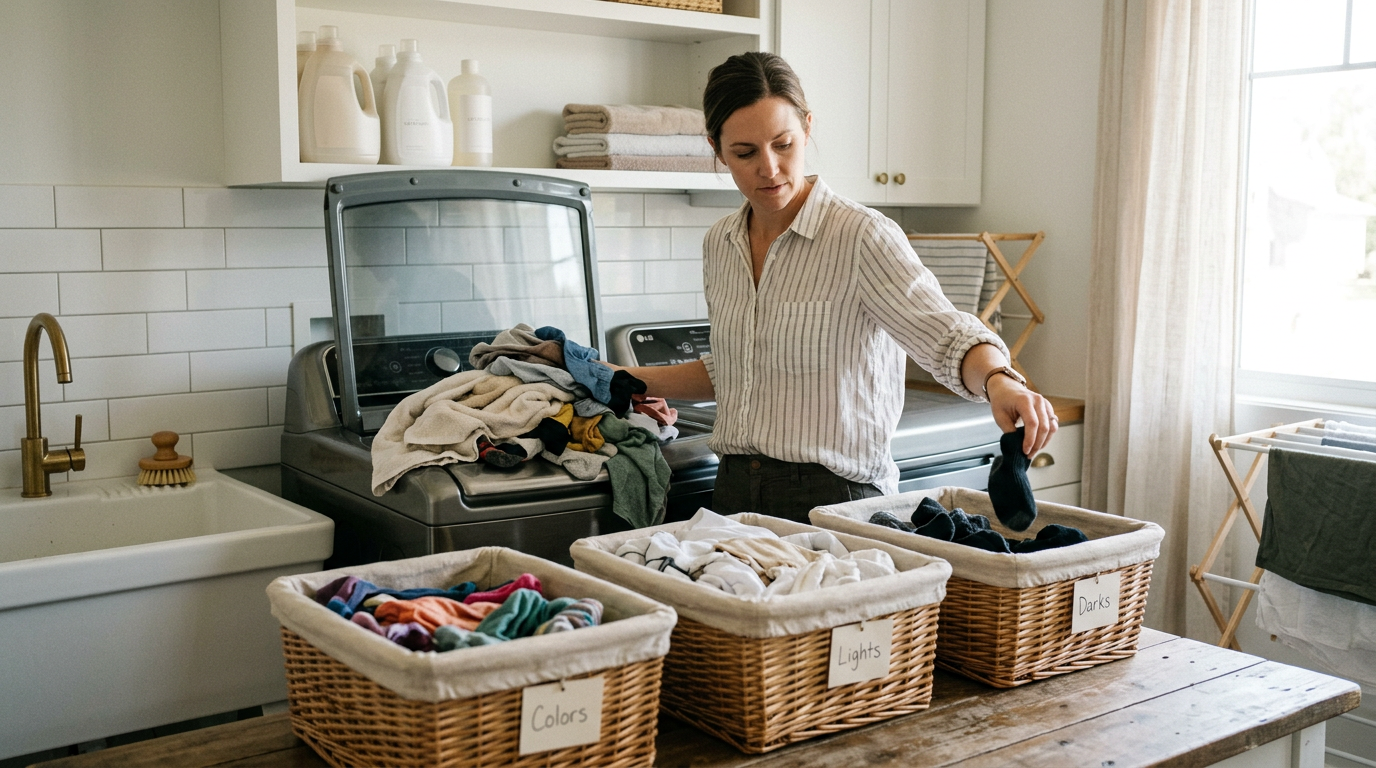
Use separate baskets for whites, lights, darks, and delicate fabrics. This pre-sorting saves time and keeps special-care items out of regular wash loads.