
Seasonal Meal Prep That Actually Fits Your Week: From Fresh Ingredients to Easy Batch Cooking
When the week feels crowded, what you cook on the weekend can shape your energy levels and food budget. Building a rhythm around what’s fresh—then cooking smart, storing safely, and mixing components creatively—keeps lunches and dinners interesting without constant last‑minute decisions or complicated planning.
This story is part of DailySeekers's practical reading library across everyday topics.
Let the Market Guide Your Plan
Spot a few “hero” ingredients
Planning around what is naturally abundant keeps choices simple and usually makes food taste better. Before searching for recipes, pay attention to what looks especially vibrant and plentiful where you shop.
Choose three to five of these standouts to highlight all week. Think of them as “hero” ingredients rather than single‑use items. Instead of locking yourself into detailed recipes, decide on a few broad meal types you enjoy: a grain bowl, a pasta, a sheet‑pan dinner, a simple soup or salad.
One ingredient can easily appear in a few different roles. Juicy tomatoes might become sandwich fillings one day, sliced over a salad another day, and chopped into a topping for a warm grain dish. A mild vegetable such as zucchini can be roasted, tucked into tacos, or stirred into a warm pasta. This kind of loose planning keeps things flexible if plans change or something runs out midweek.
Fit food choices to your actual schedule
A realistic plan starts with your calendar. Mark nights that you know will be rushed. On those evenings, lean on components that are either prepped in advance or bought ready to eat, then combine them with your seasonal picks: washed greens with pre‑cooked protein, tacos with ready‑to‑use fillings and sliced vegetables, or egg muffins with a quick side salad.
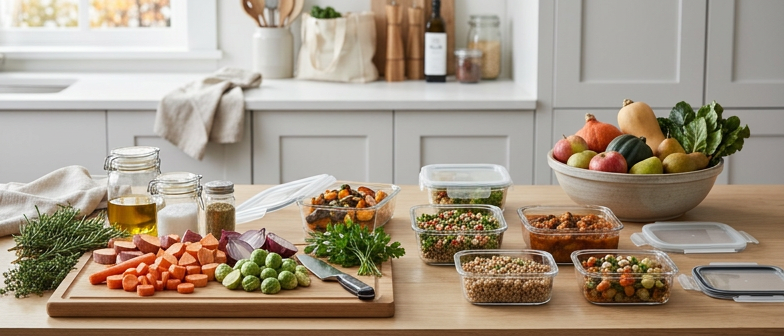
On slower days, slot in the meals that ask for a bit more attention, such as stuffed vegetables or a simply grilled protein with seasonal sides. Use that time to prep a few building blocks for the coming days: chopped vegetables, cooked grains, or a jar of dressing. Stored in clear containers, these pieces stay visible and are more likely to be used instead of forgotten.
Over the week, repeat your hero ingredients in new combinations so seasonal produce shows up often without requiring you to cook from scratch every night.
Simple Building Blocks That Carry You Through the Week
Starting from zero for every meal—washing, chopping, cooking, cleaning—quickly feels overwhelming. Putting in a bit more effort once and then reusing those basic pieces spreads the work across several days. A tray of roasted vegetables, a pot of grains, a neutral‑tasting protein, and one or two sauces can be rearranged into many different plates.
Choosing what is naturally in season works well here. In warmer periods, that might mean lighter vegetables that roast or grill quickly. In cooler periods, sturdier roots or squash can anchor bowls and soups.
A few anchors to prep in advance
Start with a small set of versatile items:
- A pan of mixed vegetables, tossed with oil, salt, and pepper and roasted until browned at the edges
- A pot of one grain, such as rice or a small pasta shape
- A mild protein, like shredded meat, tofu, or beans, seasoned simply
- One creamy and one tangy sauce or dressing
Once these are in the fridge, dinner becomes more about assembly. Roasted vegetables and grains can be warmed for a bowl, or cooled and tossed with leafy greens. The same protein can be rolled into wraps, added to a quick soup with frozen vegetables, or folded into a simple pasta.
A couple of easy sauces change the mood: a lemony yogurt dip, a basic tomato sauce, or an herb‑heavy vinaigrette can make the same base taste new. With just a handful of building blocks and seasonal produce, your kitchen holds many different directions for quick meals.
| Prep choice | When it helps most | Trade‑offs to know |
|---|---|---|
| Roasting a big batch of vegetables | Evenings when you want fast assembly dinners | Texture can soften over days; reheating on a hot pan helps keep some crisp edges |
| Cooking a large pot of grains | Days when you need filling lunches that travel well | Plain grains can taste flat; pairing with sauces, herbs, or citrus keeps them interesting |
| Making one or two sauces | Weeks when you want variety without new recipes | Sauces take fridge space; labeling clearly helps you use them before quality declines |
Keeping Food Safe, Crisp, and Enjoyable
Cool and store with a plan
Warm food that lingers too long at room temperature can lose both safety and texture.
Spread hot dishes in shallow containers instead of deep ones so steam can escape and the center cools more evenly. For roasted vegetables, let them sit just until they stop steaming, then move them to the fridge. Soups, stews, and sauces can be divided into smaller portions before chilling or freezing.
Clear labeling saves guessing games. Short notes such as “veg pasta – eat cold” or “chicken with sauce – reheat” act as reminders. For salads and grain dishes, storing dressings, crunchy toppings, and tender greens separately helps keep them from going soggy.
Reheat with texture in mind
Reheating is where prepared food either becomes appealing again or turns limp. Moist dishes such as stews, saucy beans, or shredded meat usually do better in a covered pan with a splash of water or stock.
Crisp elements need a different treatment. Heating roasted vegetables on a hot pan, rather than in the microwave, can bring back some caramelization. For bowls or plated meals, keep crunchy items and fresh produce separate until serving. Warm the grains and protein first, then add cool lettuce, chopped fruit, or herbs at the end.
Many pasta and rice salads taste best cold or barely warm. Instead of reheating them fully, consider letting them sit at room temperature for a short time so the flavors open up.
| Dish type | Storage tip | Reheating or serving approach |
|---|---|---|
| Soups and stews | Portion into smaller containers before chilling or freezing | Warm gently with a bit of extra liquid, stirring so heat spreads evenly |
| Roasted vegetables | Store in shallow containers to avoid steaming | Reheat in a hot pan or oven to revive browning rather than using only a microwave |
| Salads and grain bowls | Keep dressings and delicate greens separate | Add dressings and toppings just before eating; serve cold or lightly warmed |
Mixing and Matching Without Extra Work
Build a flexible “component closet”
Thinking in components instead of full recipes is a way to keep variety high while effort stays low. For a seasonal week, that might mean one tray of roasted vegetables, one pot of grains, one main protein, and a couple of flavor boosters.
You could roast a batch of whatever looks best: cubes of sturdier vegetables in cooler periods, or sliced softer vegetables and small tomatoes in warmer periods. Cook a pan of rice, quinoa, or another favorite grain. Add a straightforward protein such as baked chicken pieces, beans, lentils, or tofu.
The small extras make these pieces feel different from day to day. A jar of vinaigrette, a yogurt‑based herb sauce, a citrusy tahini mix, a sprinkle of cheese, or a handful of nuts can change the character of a meal without requiring more cooking.
Use simple formulas and swaps
Once those basics are ready, diversity comes from swapping components, not from starting over. A grain bowl one day can become a salad or a wrap filling the next, only by changing what you pair it with.
A loose formula helps:
- One base: grain or leafy greens
- One protein: beans, meat, tofu, or eggs
- One or two vegetables: raw or roasted
- One flavor booster: sauce, cheese, nuts, seeds, or pickled vegetables
Rotate each slot across the week. For lunch, you might combine grains, roasted vegetables, beans, and a spoonful of dressing. Another day, skip the grains and arrange vegetables and protein over greens. The same beans can appear again in a taco‑style meal with sliced seasonal produce, or blended into a quick dip with a plate of bread and raw vegetables.
Using this mix‑and‑match mindset, the work you do once stretches into multiple meals that feel different enough to stay appealing. Instead of chasing new recipes every night, you are rearranging familiar, well‑prepared parts so your table keeps pace with both the season and your schedule.
Q&A
-
How can I turn Seasonal Meal Prep Ideas into a realistic weekly plan without overcomplicating recipes?
Seasonal meal prep works best when you narrow your focus to a few broad meal types and repeatable templates, not detailed recipes. Choose a handful of seasonal produce, match them to flexible formats like bowls or wraps, and rotate flavors with simple sauces so planning stays light while meals still feel varied. -
What does Simple Batch Cooking look like for someone with only a few weeknight hours?
Simple batch cooking means choosing items that share cooking temperatures and pans, so you can roast vegetables, bake protein, and simmer grains at the same time. Aim for neutral seasoning first, then customize with sauces later, letting one short cooking window produce multiple mix‑and‑match components. -
How do I approach Fresh Ingredient Planning when I am unsure what will be available at the store?
Instead of writing rigid shopping lists, plan in categories: one leafy vegetable, one sturdy vegetable, one fruit, one quick‑cooking protein. At the store, plug in whatever looks freshest, then adjust your ideas at home, using dressings and pantry grains to link those fresh finds into simple, cohesive meals. -
What are the Storage Container Basics that actually make Weekday Lunch Prep easier?
Choose clear, stackable containers in a few standard sizes so fridge organization stays simple and leftovers are visible. Shallow containers cool food quickly, small ones prevent dressings from wilting greens, and leakproof options make it easy to pack lunches directly without needing a second round of repacking. -
How can Balanced Meal Rotation support a Time Saving Kitchen Routine without feeling repetitive?
Balanced rotation means repeating nutrient roles, not identical dishes. Alternate grain‑based and vegetable‑forward lunches, change proteins every few days, and shift flavor profiles with herbs, acids, and spices. This rhythm reduces decision fatigue, supports steady nutrition, and keeps your prep routine predictable while meals still feel fresh.