
Simple Home Food Safety: From Clean Hands to Smart Leftovers
Most people worry about upset stomachs from takeout, yet overlook the everyday habits in their own kitchens that can cause similar problems. From how long food sits out after dinner to the way yesterday’s meal is chilled, packed, warmed and stored, small choices quietly shape your household’s health and comfort.
This story is part of DailySeekers's practical reading library across everyday topics.
When Home Cooking Isn’t Automatically Safer
Many people feel uneasy about a box from a delivery bag but relaxed about a dish from their own oven. Germs, however, do not care whether food came from a restaurant, a friend, or your stove. They only respond to temperature, time, and how clean the environment is.
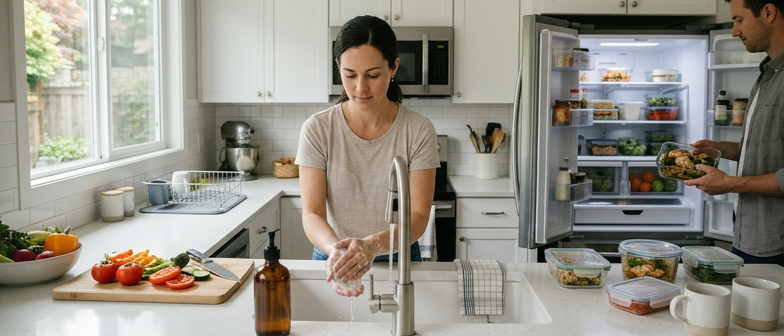
In one scene, hands are washed with soap before chopping, counters are wiped, produce is rinsed, and leftovers go into the fridge. In another, the same spoon is used to taste and stir, cooked dishes sit out for a long time while people pick at them, and the cutting board from raw meat is used again for salad. The second picture is more likely to cause trouble, even if every ingredient was bought fresh and cooked at home.
Everyday routines that raise or lower risk
Small steps add up. Washing hands before cooking and after handling raw meat, rinsing fruits and vegetables under running water, and cooking dishes all the way through are simple but effective habits.
Cooling food properly matters just as much as cooking it. Keeping chilled items consistently cold slows down germ growth. Reheating last night’s meal until it is steaming, not just warm, helps make it safer to enjoy again. Turning takeout worries into a check on your own routine is often more useful than skipping a favorite restaurant.
From Sink To Cutting Board: Cleaner Prep, Safer Meals
The areas where food is washed and chopped can either block germs or spread them around. Paying attention to sinks, sponges, and boards keeps the riskiest contact points under control.
Keeping the sink from sharing germs
After touching raw meat or fish, washing hands with warm soapy water before reaching for the fridge handle or phone helps keep surfaces cleaner. Using a towel or tissue to turn off the tap once hands are clean avoids re‑contaminating them.
The sink itself needs regular attention. Food scraps and juices can cling to the basin, drain, and stopper. After messy cooking, scrubbing these spots with hot soapy water and then rinsing them helps remove residue. Allowing the area to air‑dry, instead of leaving it constantly wet, makes it less welcoming to microbes.
Sponges and dishcloths are another common trouble spot. Because they stay damp, they can collect germs over time. Rotating several sponges, letting them dry fully between uses, and replacing them before they look very worn reduces the chance that cleaning tools will become sources of contamination.
Smarter cutting board habits
A cutting board can harbor more germs than the sink, especially once it has knife grooves that hold on to juices. Using one board for raw meat and another for bread, fruit, or salad helps keep raw and ready‑to‑eat foods apart.
Cleaning a board works best in steps: scrape away leftover pieces, wash with hot soapy water, rinse thoroughly, and stand it upright or on its side so air can reach both faces. After preparing raw meat or fish, adding a suitable disinfecting step before rinsing again gives extra protection.
Many plastic boards can go safely in the dishwasher. Wood or bamboo options usually do better with handwashing, towel‑drying, and then standing on edge. A light coat of appropriate oil from time to time helps keep them from cracking.
Here is one way to choose boards for different jobs:
| Board type or setup | Advantages in daily use | Points to keep in mind |
|---|---|---|
| Separate plastic board for raw meat | Often easy to clean and place in dishwasher; clear visual reminder to keep raw items apart | Replace when heavily scratched; avoid using for bread or salad |
| Wooden board for bread and fruit | Gentle on knives; attractive for serving; less likely to slide when stable | Requires handwashing and drying; needs oiling to prevent cracks |
| Color‑coded set for all tasks | Quick way for everyone in the home to remember which board is for what | Still needs thorough cleaning and drying after each use |
Cooling, Storing And Reheating Without Guesswork
Once a meal is over, what happens in the next few hours often decides whether leftovers feel like a safe bonus or a risky gamble.
Cooling out of the “warm zone”
Cooked food can still support germ growth once it begins to cool. Leaving dishes on the counter too long keeps them in a temperature range where bacteria multiply more easily. Limiting how long food sits out at room temperature and moving it into the fridge within a short, predictable window lowers this risk.
Spreading hot foods into shallow containers instead of deep ones helps them cool more quickly and evenly. Leaving some space around containers in the fridge allows cold air to circulate. Covering them once most steam has escaped prevents excess moisture from condensing on lids.
Raw meat and raw seafood fit best on the lowest shelf, packed in sealed containers, so any juices cannot drip onto cooked dishes or produce. Closing the fridge door properly and avoiding frequent opening while hot items are cooling inside helps the interior temperature stay more stable.
Storing and reheating with a plan
Labeling containers with what is inside and the day they were prepared turns the fridge into a helpful reminder instead of a guessing game. Planning to eat leftovers within a few days keeps them closer to their best quality. Freezing portions stretches their life further, though texture and flavor can change with time.
When it is time to reheat, aim for more than just “not cold.” Heating leftovers until they are steaming hot all the way through is a practical target. Stirring, flipping, or rotating food, especially in a microwave, helps the center reach the same temperature as the edges. Liquid dishes like soups or stews are often simpler.
Reheating the same pot or dish again and again breaks the helpful cycle of cool, store, reheat. A safer habit is to take out only the portion you plan to eat, warm it once, and leave the rest chilled. That way each part of the meal travels through the temperature “danger zone” as few times as possible.
Knowing When Food Still Belongs On The Table
Date labels and sensory checks often cause confusion. A bit of structure makes it easier to decide whether to keep or discard an item.
Making sense of date phrases
Packages use several kinds of wording, and they do not all mean the same thing. Terms related to “best” or “best before” usually describe how long the maker expects peak flavor, color, or texture to last. Passing that point does not instantly make food dangerous.
Phrases such as “use by” or “expires on” are firmer and may relate more directly to safety, particularly for chilled items that are meant to be eaten without further cooking. When these dates are clearly in the past, cautious choices become more important, especially if the food has not been stored exactly as directed on the label.
Storage conditions can shorten or extend how meaningful a date is. An item kept consistently cold and sealed is different from the same product left out on a warm counter, carried around in a bag, or opened and closed many times. Since dates assume proper storage, once that chain is broken, the printed information becomes only part of the decision.
| Situation | How to think about the label | Practical next step |
|---|---|---|
| Date still in the future, food stored as directed | Label is likely still a useful guide to both quality and safety | Check look and smell; use normally if everything seems typical |
| Date just passed, storage mostly careful | Quality might be slightly lower, safety often still reasonable with chilled items | Inspect closely; if unsure, choose a quicker use or discard |
| Date well past or storage clearly poor | Label no longer reliable because conditions did not match instructions | Do not rely on taste tests; when in doubt, throw it away |
Letting your senses support, not replace, safety basics
Before throwing something out, a brief check can prevent waste. Start by looking: unexpected mold, strange colors, or unusual separation that does not match the food’s normal appearance are all signals to be careful. Next, smell the item: a sharp, sour, or otherwise off odor usually means it should not be eaten.
Taste should be the last and smallest test, and only if both appearance and smell seem completely normal. Even then, a tiny amount is enough to judge whether flavor has changed in a way that suggests spoilage.
Some harmful germs do not change how food looks or smells, which is why basic hygiene habits remain essential. Keeping chilled items cold, cooking dishes thoroughly, reheating leftovers until hot throughout, and avoiding contact between raw and ready‑to‑eat foods reduce the chance of invisible problems.
When the date and your senses both raise questions, the safer path is to skip the food rather than risk hours or days of discomfort.
Q&A
-
What are the core ideas behind Simple Home Food Safety for everyday cooks?
Simple Home Food Safety means treating your kitchen like a small food business: control time and temperature, keep hands and tools clean, separate raw and ready‑to‑eat foods, and cool leftovers quickly. Build these into habits so they happen automatically, even on busy nights or when you feel tired. -
Which Safe Storage Temperatures should a home cook actually monitor?
Aim to keep the fridge at or below 4°C / 40°F and the freezer at or below ‑18°C / 0°F, checked with an appliance thermometer, not just the dial. Hot foods should stay above 60°C / 140°F. Avoid storing food in the “danger zone” between these temperatures for more than two hours. -
What are the most important Leftover Reheating Basics for safety and quality?
Reheat leftovers to at least 74°C / 165°F, ensuring the center is steaming hot. Cover food so it heats evenly, stir or rotate in the microwave, and avoid reheating the same batch multiple times. Cool and store portions separately so each serving only travels through the danger zone once. -
Why does Hand Washing Before Cooking matter if my ingredients look clean?
Hands pick up invisible germs from phones, doorknobs, pets, and money. Washing with soap and warm water for at least twenty seconds removes most of them before they touch food, taps, and handles. Clean hands dramatically lower the chance that your otherwise fresh, well‑cooked meal will cause illness. -
How can Cross Contamination Prevention and Expiration Label Awareness fit into a Kitchen Hygiene Routine?
Design your routine so labels and separation are automatic: keep raw meat on the lowest shelf, use color‑coded boards, and place soonest‑to‑expire items at the front. During a weekly “fridge reset,” check dates, inspect containers, wipe shelves, and discard doubtful items to keep your kitchen system reliable.