
Weekend Reset for Productivity: A Calm Rhythm of Tidying, Meal Prep, and Planning
By Sunday evening, many people feel suspended between unfinished chores and a growing list of responsibilities. Light organizing, simple food preparation, and a short check of upcoming commitments can turn that tug-of-war into something more grounded. Instead of chasing a “perfect” weekend, a gentle, repeatable rhythm can support both rest and focus for the days ahead.
This story is part of DailySeekers's practical reading library across everyday topics.
A Soft Landing: Tidying That Eases Visual Noise
Starting with light, visible tidying helps create a calmer backdrop for everything else you want to do. The aim is not deep cleaning, but a few clear wins that make rooms feel more open and your mind less cluttered.
Clear what your eyes land on first
Begin with the surfaces and spots you see most often. Pick one “hero” surface such as a desk, coffee table, or bedside table. Remove everything, then put back only items you use daily or genuinely enjoy seeing. This small reset can change how the entire room feels, reducing the sense of chaos without a lot of effort.
If you have windows, wipe the glass briefly and open the curtains or blinds. Letting in more light can ease that heavy, closed-in feeling. At the entrance to your home or workspace, simplify: one place for keys, one place for bags, and as little extra as possible. A clear entry can make arriving and leaving feel less rushed.
Make soothing, low-effort adjustments
Light tidying can also involve soft, comforting changes rather than scrubbing. If you have options, swap heavy blankets or darker cushions for lighter or brighter ones. Add a small plant, a cutting in a jar, or another simple natural detail. These touches are not about creating a picture-perfect space; they are about making it easier to relax and think clearly.
Keep each task short enough to finish in one go. Completing a few contained actions builds a sense of momentum and lowers resistance to future tasks. This kind of gentle start lays the groundwork for deeper organizing later in the weekend, if you choose.
| Area to Tidy First | Why It Helps Mentally | Effort Level (subjective) |
|---|---|---|
| One “hero” surface | Reduces visual clutter immediately | Low |
| Entry area | Makes transitions feel less hectic | Low to moderate |
| Window + curtains | Increases light and sense of space | Low |
Light Food Prep: Supporting Weekdays Without an All‑Day Cook
Food preparation can easily become overwhelming if it turns into a long list of recipes. A gentler approach focuses on a few building blocks that shorten weekday decisions and reduce last-minute stress around meals.
Start with a few helpful basics
Choosing just two or three items to prepare keeps the process approachable:
- One breakfast option that can be portioned in advance
- One protein that works with several kinds of meals
- One grain or grain-based salad that can easily become bowls or sides
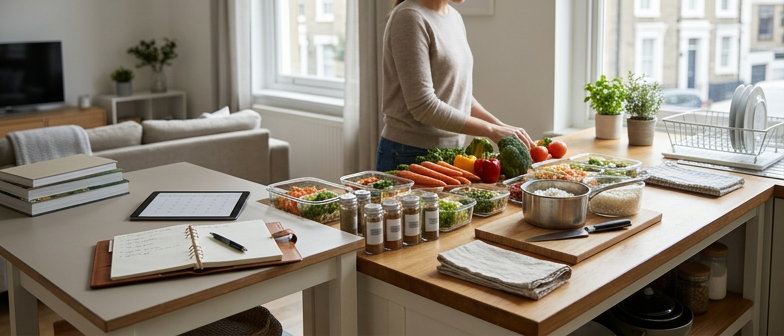
Stay within a short window of time. While something bakes in the oven, you can chop a few sturdy vegetables, rinse salad greens, and shake together a simple dressing. Instead of planning perfect menus, you are creating a small toolkit that removes friction when you are tired or pressed for time.
Prepped components can also lower the barrier to eating in a way that supports your energy: it is easier to assemble a balanced plate when much of the washing and chopping is already done.
Turn staples into mix-and-match meals
Once you have a few basics ready, they become more valuable if you think in flexible combinations rather than strict recipes. A single tray of seasoned protein can top grains with vegetables one evening, then be sliced into wraps, added to a salad, or paired with a different sauce on another day.
A short, personal list of household favorites can guide what you prepare. Writing down simple meals you already enjoy makes it easier to choose two to four options for the week. Weekend prep then becomes about supporting those choices: chopping toppings, making a basic sauce, and portioning snacks like fruit or yogurt into ready-to-grab containers.
On busy days, your role shifts from “full cook” to “assembler.” You are mostly combining prepped elements, reheating, and adjusting seasoning. This can make weekday evenings feel less like a race and more like following a familiar, low-stress routine.
| Prep Choice | How It Helps During the Week | Best For |
|---|---|---|
| One ready breakfast | Faster mornings, fewer decisions | People with early starts |
| Batch protein | Flexible lunches and dinners | Households with varied tastes |
| Grain or salad base | Easy bowls and sides from the same pot | Anyone wanting simple variety |
A Short Look Ahead: Planning That Feels Kind, Not Rigid
A weekly check-in does not need to feel like a formal meeting. When it is short and gentle, it can prevent small issues from quietly piling up and turning into a sense of being behind before the week even begins.
Keep the check-in brief and grounded
Before opening a calendar, pause for a moment. Take a few slow breaths, notice any tension, and let your shoulders drop. Even a short mindful break can soften stress and bring more clarity to what truly matters in the next few days.
From there, think about the basics of daily life: sleep, meals, and breaks. Ask yourself where these slipped recently and how you can protect them more effectively in the coming week. You might block out a real lunch, set a gentle target for bedtime, or mark one block of “no work” time.
A simple structure for reviewing your week
Glance over the next few days and identify the tasks that genuinely move your work or personal life forward. Choose:
- One key priority for each day
- One very small win for the start of the week
A small win might be tidying a tiny area, sending a single email you have been postponing, or taking a short walk outside. These actions are intentionally easy to complete but create a sense of motion that counters the feeling of being stuck.
If plans change, return to the same pattern: a short breathing break, a quick look at your schedule, and an adjustment to one or two time blocks. The focus stays on flexibility and intention rather than on creating a flawless plan.
Making It Stick: A Rhythm That Matches Your Real Life
For this kind of reset to last, it needs to work with your actual weekends instead of an ideal version. Paying attention to your real patterns helps you design something that feels natural enough to repeat.
Start from how your weekends already look
Observe what usually happens: recurring family plans, social events, errands, and the times of day when you tend to have more or less energy. Notice how much time alone you realistically have, and where you tend to feel rushed or drained.
Shape your reset around those realities. If mornings are busy with other people, it might be more realistic to place your planning moment in the evening. If you have a predictable window of quiet, that might be the time for a single load of laundry, clearing one section of a room, or setting a focus for Monday.
Think in very small steps: one home task, one life admin task, one planning moment, one gentle priority for the first workday. Repeating a simple pattern each weekend often creates more stability than occasional, high-effort overhauls that leave you worn out.
Build a light framework you can revisit every week
A supportive rhythm tends to touch three areas: your body, your surroundings, and your focus. One possible framework could be:
- Morning: move your body in a way you enjoy, drink water, and step outside briefly
- Midday: do one home-related task and one small administrative task
- Evening: look over the next few days and choose a single top focus for each
This structure is meant to be flexible. None of the pieces need to be intense or perfect. When you become familiar with this pattern, the reset stops feeling like a special project. Instead, it becomes a calm background rhythm: a bit of tidying, a few food basics, and a short planning pause that together make the coming days feel more manageable.
Over time, this steady approach can help you end the weekend feeling more grounded than drained. Chores feel less like scattered emergencies, and more like predictable touchpoints that support your attention, energy, and ability to enjoy both rest and work.
Q&A
-
How can a Weekend Reset For Productivity avoid feeling like more work?
A weekend reset feels lighter when you cap it at a specific time window, pick just three focus areas, and define a “good enough” version in advance. Think of it as recovery plus preparation: gentle motion, minimal decisions, and a short list that protects Monday energy instead of chasing perfection. -
What does a realistic Home Tidy Schedule look like for busy people?
A realistic home tidy schedule groups tasks by time, not rooms: five‑minute surface resets, ten‑minute clutter sweeps, and one longer session for hotspots. Rotate areas weekly rather than aiming for whole‑house order. This rolling approach keeps visual chaos down without demanding a dedicated “cleaning day.” -
How should beginners design a Meal Prep Starter plan without overcommitting?
A smart meal prep starter focuses on one breakfast, one protein, and one versatile base like grains or roasted vegetables. Choose foods you already eat often, limit prep to ninety minutes or less, and store components in clear containers. The goal is faster assembly, not a full menu overhaul. -
What makes a Calendar Review Habit actually reduce stress instead of adding it?
A calming calendar review habit starts with a brief pause, then checks only three things: fixed appointments, realistic workload per day, and true rest windows. Rename blocks with verbs, like “write draft” instead of “project,” and always end by deleting or delegating at least one low‑value commitment. -
How can Laundry Catch Up and Weekly Goal Setup become a Stress Reducing Routine?
Pair a low‑focus task like laundry with higher‑level planning so time feels doubly useful. While machines run, choose three weekly goals and one tiny “bare minimum” win. This stacked ritual turns chores into structure, reinforcing the feeling that you’re catching up practically and mentally at the same time.