
Turning Screen Time into Story Time: A Simple, Cozy Family Movie Night Ritual
The best evenings at home often start with something very small: a story everyone can share, a place to sit together, and a loose plan that feels familiar. With a bit of structure, aimless scrolling turns into a calm weekly habit that feels special, personal, and manageable for both energy and budget.
This story is part of DailySeekers's practical reading library across everyday topics.
Setting a Simple Weekly Rhythm
A regular, predictable evening does quiet work in the background. When there is a usual night and time, there is less arguing or guessing. Everyone knows that on that evening, the plan is already decided.
Pick a time that already feels a little slower. It does not need to be perfect, only “good enough” for most weeks. Thinking of it as an anchor keeps it flexible. If schedules change, the evening can move or skip without guilt.
Talking about the plan during the week keeps it in mind. Short phrases like “We start after dinner that night” or “Snacks stay on the table” are easy to remember and set expectations long before anyone presses play.
Clear expectations without a lot of rules
Before starting this new rhythm, a short, friendly family chat can help. Topics include:
- Who chooses the title each time
- How long everyone will watch
- Which snacks are fine on the table
- What happens afterward, especially for younger children
Being clear early on usually means fewer mid‑movie negotiations.
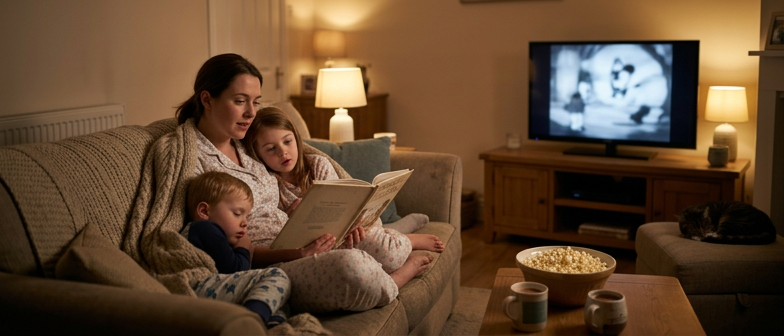
The setup can stay easy. Using the furniture and blankets you already have, dimming the lights a little, and placing snacks within reach keeps the evening repeatable. When the effort stays low, the habit is more likely to stick and feel enjoyable.
Balancing screens with the rest of the week
A regular viewing night can support healthier screen habits. By having one predictable evening for a longer watch, families can keep other days lighter. Some prefer shorter clips or none at all on other nights, knowing there is a dedicated time coming up.
A simple way to talk about it:
- On this night, a full movie or longer feature
- On other evenings, shorter shows or alternatives like reading or games
- For younger kids, a fixed ending time to protect bedtime
The goal is clarity. When everyone understands the pattern, there is less bargaining and more trust.
Turning Scrolling into Shared Storytime
Endless menus of titles can leave everyone impatient. A small shift in how choices are made can keep the focus on sharing a story, not on winning an argument.
Start with mood, then match the title
Instead of diving straight into a list, begin by naming the mood. A calm, cozy tone fits many ages: gentle stories, clear emotions, and not too much danger or noise.
Once the mood is set, it is easier to filter by age and comfort level:
- For very young children, look for very low‑conflict stories and simple plots
- For older children, gradually include mild adventure, mystery, or light science fiction while avoiding overwhelming content
General “family‑friendly” or “younger viewer” lists on your usual platforms can help.
Making the choice a shared game
Disputes usually come from how the title is chosen. A shared method lowers tension. One system is a rotating turn: each week, a different person picks from an agreed list. No one decides every time, but everyone knows their turn will come.
A short, home‑made catalogue can help:
| List Type | What You Might Include | When It Helps Most |
|---|---|---|
| Comfort picks | Stories everyone already knows and likes | When energy is low and no one wants surprises |
| New discoveries | Titles nobody has seen yet | When older kids ask for “something different” |
| Grown‑up throwbacks | Picks the adults loved when younger, checked for age‑fit | When adults want to share a memory |
Before starting, it can help to agree on one guideline: if the story clearly is not working after a set amount of time, anyone can say so, and the family can switch to a backup choice without blame. This keeps the atmosphere light.
From Sofa to “Mini Cinema” Without Big Purchases
A living room can feel fresh and special with small changes, often using what is already at home.
Rearranging the room for shared viewing
Before thinking about new items, re‑consider the layout. Facing the main couch squarely toward the screen can prevent neck twisting. If space allows, moving the seating slightly closer or farther can make a difference in comfort.
Extra spots to sit do not need to be expensive. Floor cushions, poufs, or beanbags can go in front of the main seat, while folding chairs can create a simple “second row.” Leaving a small path clear keeps it easy to move around.
Surfaces within reach matter. Small tables, sturdy stools, or nesting tables give everyone a place to set bowls, drinks, and remotes. A basket or bin for blankets and pillows near the seating area makes it simple to grab an extra layer once the lights go down.
Subtle atmosphere shifts
The feeling of a small cinema often comes more from light and sound than from large equipment. Dimming main lights and switching on a few warm lamps or soft string lights changes the mood while keeping the space safe.
Closing curtains or blinds can cut down on glare and help the image stand out. If you use speakers, placing them closer to ear height rather than on the floor can help dialogue feel clearer at moderate volume.
A very small snack corner on a side counter or shelf can complete the effect. Bowls, napkins, and a spot for popcorn or treats make the room feel prepared without needing a full kitchen trip once the story has started.
Snacks, Shared Jobs, and Gentle After‑Talk
The time around the viewing can create as much connection as the viewing itself. Small, repeated rituals help everyone know what to expect and give each person a role.
Treats that feel special but stay simple
Food is often the first topic children bring up, which makes it an easy place to build rituals. Instead of one person rushing alone, simple, repeatable patterns can make preparation part of the fun:
- A basic “snack bar” with popcorn, a small sweet option, cut fruit, and water or simple drinks
- One “twist” each week, such as flavored popcorn, fruit on sticks, or a dessert that matches the type of story
- A short “opening moment”: lights dim, bowls passed along the couch, then the opening scene begins
What matters is that everyone sees the food as something shared.
Many families like to pair sweet or salty snacks with at least one lighter option like fruit or crunchy vegetables, and to offer water alongside other drinks.
| Snack Style | Extra Benefit | When It Works Well |
|---|---|---|
| DIY topping bowls | Lets kids customize without more work for adults | With older children who enjoy small choices |
| “Color plate” mix | Combines a few colors: fruit, veggies, and one treat | When you want a mix of fun and lighter options |
| One‑bowl share | Everyone eats from one large bowl, with napkins | For short features or when cleanup must be easy |
Roles that turn watching into a shared project
Small jobs can help children feel like hosts. Roles can be fixed or rotate:
- One person as “ticket checker,” making simple pretend passes or marking a list
- One as “snack helper,” in charge of filling bowls from the snack corner
- Younger kids laying out blankets or deciding who sits where
Because the tasks are small and clear, children can fully own them. This builds a sense of contribution and can reduce conflict.
Light conversation after the credits
A brief chat at the end can turn passive watching into shared reflection. Keeping it short and predictable makes it easier for everyone to join:
- Quick reactions: “thumbs up, sideways, or down?”
- One scene each person enjoyed
- One character they found kind, brave, or funny
If someone is tired, they can listen rather than speak. Over time, these tiny moments of reflection often become what people remember most: the jokes, the opinions, and the chance to hear how others saw the same story.
Q&A
-
How can we start planning a Family Movie Night without it becoming another chore?
Begin by choosing one consistent evening and keeping the plan very light: a rough start time, a simple snack, and a loose theme. Use a recurring calendar reminder and a short checklist so setup becomes automatic, turning the night into a low‑effort shared family ritual instead of a project. -
What are some easy Theme Selection Ideas that work for mixed ages?
Rotate broad themes that stay flexible, such as “animals,” “music,” “journeys,” or “based on books.” Pair the theme with a tiny activity or prop, like drawing tickets or wearing matching colors. This keeps choices playful while still letting parents filter titles by age, content, and screen time balance. -
How do we build a Snack Prep Routine that kids can manage mostly themselves?
Prepare a small “movie caddy” with reusable bowls, cups, and a scoop for popcorn or crackers. Before showtime, kids refill it from parent‑approved snack bins. Limiting options but allowing arrangement choices supports independence, keeps sugar in check, and protects your cozy home setup from major mess. -
What is a realistic Screen Time Balance when adding a weekly movie night?
Treat Family Movie Night as an anchor, not an extra. On that evening, allow a full feature; on surrounding days, trim casual scrolling or background TV. Discuss this openly so kids see it as trade‑off, not punishment, and connect the longer session to other low cost entertainment like board games or reading. -
How can we make a Shared Family Ritual feel special on a very small budget?
Focus on repetition, not purchases: the same blanket, a “lights dim” countdown, the same opening song. Rearrange furniture to face the screen, use lamps instead of overhead lights, and designate a “snack station” on an existing shelf. Over time, these repeated signals define the ritual more than any new gear.