
Walking Breaks at the Desk: Small Movements That Reset Energy and Protect Health
Hours at a computer can quietly drain comfort, focus, and long‑term wellbeing. Research now shows that scattering tiny walking pauses through the day—sometimes just a couple of minutes—can ease stiffness, support heart and brain function, and steady attention, without demanding gym clothes, special equipment, or major schedule changes.
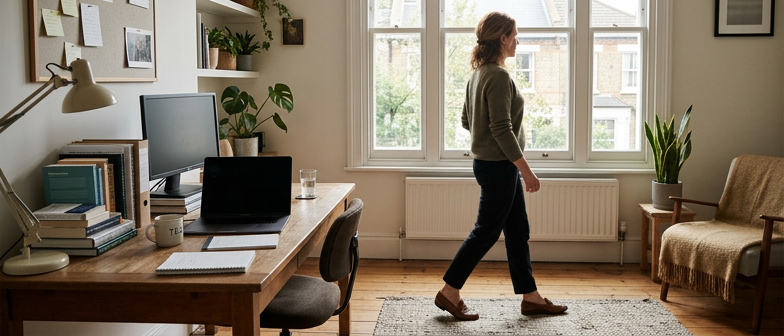
This story is part of DailySeekers's practical reading library across everyday topics.
Why short walks during the day matter
Long spells of sitting slow circulation, make it easier for blood sugar to surge after meals, and leave muscles in a low‑effort state. One hard workout later in the day is helpful, but it cannot fully offset many hours spent still. For people who work at a desk, small but frequent walks often play a different, more practical role.
Standing up for one to ten minutes and walking down a hallway, around a shared workspace, or while taking a call gives the body a gentle wake‑up cue. Leg muscles contract, blood moves faster, and the body handles blood sugar more efficiently. Repeating this pattern across the workday creates many small boosts rather than a single effort at the end.
Why “little and often” can beat “all at once”
Imagine two routines. One person sits almost nonstop, then does a demanding session in the evening. Another also moves in the evening, but spreads out brief walks every hour or so and adds light movement after meals. Both are active, yet the second person keeps interrupting continuous sitting, which research links with more stable circulation and metabolism.
The advantage lies in frequency, not intensity. A loop during a coffee break, pacing during a phone call, or walking over to talk to a colleague instead of sending a message all count. Short bouts stop the body from settling into low‑power mode all day.
Short walks do not replace structured exercise, especially for strength or endurance. They do, however, offer an accessible way for desk workers to reduce the strain of long sitting by using time that already exists in the schedule.
A quick comparison of common patterns
| Workday movement pattern | Typical choices and likely impact |
|---|---|
| One intense session, long sitting | Long hours seated, single demanding workout later; supports fitness, but still leaves long, uninterrupted sitting periods. |
| Frequent light walks plus planned activity | Regular short walks, a bit of movement after meals, and some structured exercise; helps circulation stay more active through the day. |
| Scattered movement “snacks”, no formal workout | Many tiny bouts like walking to a printer or pacing on calls; helpful for comfort and stiffness, though strength and endurance may need extra attention. |
Finding a realistic rhythm for getting up
When and how long to move does not need to be complicated. For many people at a desk, standing up and walking every 30 to 60 minutes, for roughly 3 to 5 minutes, is a practical starting point. The main goal is not distance but simply breaking up sitting.
Short walks to the restroom, printer, or drink station all help. If tasks feel intense, it may be easier to start with once every hour and shorten the gap later. During those minutes of movement, letting the body feel slightly warmer than usual walking pace is often enough. Adding gentle shoulder rolls or neck, wrist, and ankle circles can loosen common tight spots.
Matching movement to workload and comfort
Ideal timing depends on concentration needs and how the body feels. Work that requires close attention can pair movement with natural task boundaries: getting up after finishing a section of writing or a group of emails.
People who notice back or neck discomfort may benefit from moving closer to every 30 minutes. Those without clear symptoms might begin with 60‑minute gaps and adjust based on stiffness or fatigue. Simple digital reminders can prompt a stand‑up moment, but missing the occasional cue is not a failure; what matters is a general shift toward more frequent movement.
Over time, scattered short walks can add up to a meaningful amount of activity. Many people also notice that brief changes in posture and scenery help ease mental fatigue and make it easier to restart the next focused block of work.
Choosing a rhythm that feels sustainable
| Approach | How it works in practice | When it may fit best |
|---|---|---|
| Fixed intervals (every 30–60 minutes) | Timer or reminder prompts a quick walk and stretch at regular points. | Suits structured schedules and people who like clear routines. |
| Task‑based breaks | Movement happens after finishing emails, meetings, or sections of a project. | Works well for roles with variable demands or deep focus periods. |
Adding more steps without leaving your area
Small movements that fit right at the desk
Building movement near the desk is less about long treks and more about brief “snacks” of activity. One option is to stand up once an hour, roll the shoulders, and walk in place for half a minute to a minute.
Chair‑friendly actions can also contribute. Seated marches—sitting tall and slowly lifting one knee, then the other—gently wake up hip and core muscles. Straightening one leg at a time, flexing the foot, holding briefly, and switching sides can engage the front of the thigh. Under the desk, pulling the toes toward the body and then pointing them away keeps blood moving in the lower legs.
The aim is to replace stretches of complete stillness with small, regular signals that the body is still meant to move.
Turning routine tasks into extra steps
Many everyday actions can quietly add more movement. During phone calls, standing instead of sitting and pacing in a small loop beside the chair is an easy shift. When space is limited, gentle side steps, rocking from heel to toe, or a few slow calf raises while talking can serve a similar purpose.
Movements can also be tied to common on‑screen events. Waiting for a file to load might become a cue to do several calf raises or slow, controlled squats down to the chair and back up. Reading a longer document could start in a standing position for the first section before sitting down again.
These bursts often feel insignificant on their own. Spread over a full workday they create a background of light activity that can make sitting‑heavy routines feel more comfortable and less draining.
Keeping movement breaks when work is demanding
Treating brief walks as part of how you work
When deadlines loom, small walking pauses are often the first habit to disappear, even though busy periods are when they can be most helpful. A brisk 5 to 10 minute walk can wake up muscles, get the heart and lungs working a little harder, and clear some of the mental fog that builds up during intense concentration.
Framing walking breaks as part of getting the job done, rather than an optional add‑on, can help. One idea is to connect them to total screen time. After roughly a couple of hours of focused work, standing up, stretching, and walking for a few minutes can act as a reset. This walk does not need to be ambitious; a loop along a corridor or around a shared space is enough to interrupt long sitting and ease stiffness.
Repeating this pattern can support steadier comfort and attention without requiring large blocks of free time.
Blending movement into existing tasks
On days that allow almost no formal breaks, light walking can weave into work instead of sitting outside it. Taking calls while standing, pacing gently during conversations, or reading printed notes while walking slowly are examples of low‑effort adjustments. Some people also find it useful to set a one‑minute timer between back‑to‑back meetings as a cue for a quick lap or a short standing stretch.
Planning ahead makes it easier to follow through when workload rises. Blocking short pauses in a calendar, keeping shoes nearby that feel comfortable for a quick loop, or agreeing with colleagues on a shared mid‑afternoon stroll can turn movement into a normal part of office culture.
As these habits settle in, they tend to feel less like extra tasks and more like a natural rhythm for the day. Many workers report that regular, light movement supports more consistent energy levels, reduces the sense of being drained by the end of the day, and makes long stretches of desk time feel more manageable.
Q&A
-
How can walking breaks for office health be built into a packed schedule without hurting productivity?
Short, pre‑planned walking breaks work best when attached to existing anchors like meetings, coffee runs, or phone calls. Treat them as part of task transitions, not time “away” from work. Many people find that three to five minutes of movement every hour actually sharpens focus and reduces error rates afterward. -
What are realistic first steps for sedentary time reduction if I rarely move at work now?
Start by identifying the longest uninterrupted sitting block and insert a single brief walk there. Add another a few days later. Use visible cues, like a sticky note near your monitor, to stand or walk during low‑stakes tasks. Gradual layering of these moments is more sustainable than a sudden, strict schedule. -
What counts as a gentle movement habit for people with joint pain or low fitness?
Gentle movement can include slow hallway walks, standing calf raises while holding a desk, or seated leg lifts done comfortably. The key is low impact, steady breathing, and no sharp pain. Short, frequent bouts help build confidence and tolerance without the intimidation or recovery demands of formal exercise. -
How do circulation support benefits from walking breaks differ from a single daily workout?
Brief, repeated walking episodes stimulate leg muscles and blood flow many times across the day, which can help manage swelling, blood sugar swings, and feelings of heaviness. A single workout is still valuable, but circulation returns to a sluggish pattern if the remaining waking hours are spent almost entirely sitting. -
What does a practical mental refresh routine look like for improving daily step improvement and workday energy reset?
Pair small walking loops with simple mental shifts: look out a window, do a short breathing pattern, or mentally close the last task and name the next one. This combination of light steps and cognitive reset tends to restore motivation, making it easier to keep adding steps without feeling forced.