
Walking for Fitness: Turning Daily Step Goals into a Gentle Outdoor Routine
A simple walk outside can quietly transform how you move, feel, and unwind. With the right route, a pace that feels natural, and realistic time goals, each outing becomes easier to repeat. Over time, scenery, fresh air, and gentle effort can add up to meaningful, sustainable progress without needing complex equipment or detailed training plans.
This story is part of DailySeekers's practical reading library across everyday topics.
Why Time Outside Feels So Good For Body And Mind
Moving steadily in fresh air offers a mix of physical and mental benefits that build up gradually, especially when walks become a regular part of the week.
How Your Body Responds Outdoors
Unhurried walking at a steady rhythm is a form of light aerobic activity. When repeated often, this kind of movement can help the heart and blood vessels work more efficiently.
Uneven ground, small slopes, and curbs quietly train muscles in the feet, legs, and core. Each step asks these muscles to stabilize and adjust, which can gently support balance over time. Sunlight during the day also helps the body set its internal clock.
Because the overall impact on joints is relatively mild compared with many high‑impact sports, many people find they can recover well and walk again the next day. That repeatability is where the long‑term physical gains tend to come from.
What It Does For Mood And Focus
Stepping away from screens and tightly focused tasks changes how attention is used. Looking at trees, sky, buildings, or water pulls the mind outward instead of inward. Many people notice that worries feel a little quieter after even a short loop around the block.
Circulation increases during walking, including to the brain. Some people find their clearest ideas appear halfway through a relaxed route, not while sitting and forcing themselves to concentrate. Reaching a familiar bench, a street corner, or a favorite view also creates a small sense of progress and completion.
These modest shifts in mood, clarity, and satisfaction layer on top of the physical effects and can make even short, easy walks feel surprisingly refreshing.
Choosing Routes And Surfaces You Actually Enjoy
Picking where to go often matters more than how far you travel. Enjoyable surroundings and comfortable footing make it far easier to repeat walks consistently.
Matching The View To Your Energy
When the setting feels pleasant, the effort often feels lighter. Many people notice they stay out longer on paths with trees, water, or open views compared with stretches of plain parking lots.
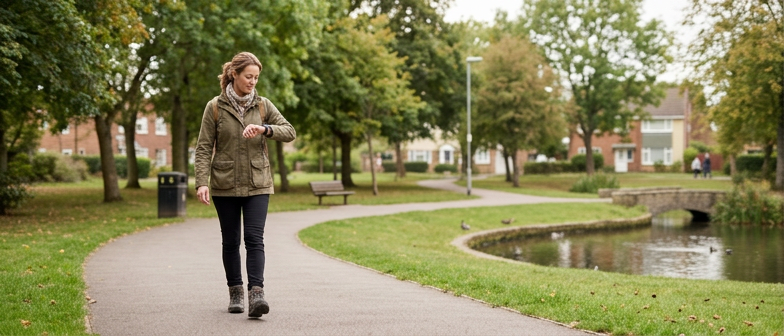
Quiet neighborhood streets, park paths, riverbanks, or greenways can turn movement from a chore into a short daily break. Even a simple loop that passes a few gardens, a small pond, or a cluster of trees can feel different from a route lined only with traffic and walls.
| Route option type | When it may feel most helpful | Possible trade‑offs |
|---|---|---|
| Park or path with greenery | When you want a “mental reset” and calmer mood | May be less convenient to reach from home or work |
| Quiet residential streets | When you prefer predictable, familiar surroundings | Scenery can feel repetitive over time |
| Busy commercial areas | When you like people‑watching and varied sights | More noise, crossings, and stops at lights |
| Waterfront or open fields | When you want a wider view and sense of space | Can be windy or exposed in harsh weather |
Mixing two or three of these options across the week can keep walks interesting without needing complicated plans.
Picking Surfaces Your Joints Will Thank You For
While scenery keeps the mind engaged, the ground under your feet strongly affects comfort. Very hard surfaces, such as solid concrete, can feel harsh on knees and hips, particularly if you are just starting or returning after a break.
Whenever it is practical, many people do well seeking slightly forgiving options: well‑kept grass, packed dirt, gravel paths, mulch‑covered trails, rubberized tracks, or wooden boardwalks. These surfaces tend to absorb some of the impact from each step, which can reduce lingering soreness and make it more appealing to head out again the next day.
At the same time, extremely uneven terrain, deep sand, or fields full of rocks can feel unstable and tiring. If every step demands intense concentration just to avoid tripping, it may be harder to relax into a rhythm.
A helpful rule of thumb: finish your outing feeling pleasantly used, not worn out. If your feet and joints feel fine a short while after you get home, the surface is probably a good match for regular use.
Finding A Comfortable Rhythm Without Overdoing It
Paying attention to how your body feels often works better than chasing specific numbers or targets, especially early on.
What A “Natural Pace” Often Feels Like
A natural pace is a speed you can hold for several minutes without consciously forcing it. Breathing feels steady, arms swing loosely, and you could answer simple questions out loud without gasping.
To discover this pace, start your outing a little slower than you expect. Every minute or so, gently increase your speed until speaking in full sentences starts to feel slightly effortful. Then ease back just a little. Over a few outings, that “cruise speed” becomes familiar.
Body signals offer more useful guidance than a watch display. Mild warmth, a light sheen of sweat, and a sense that your steps fall into a pattern usually indicate a workable effort level. In contrast, sharp pain, dizziness, nausea, chest tightness, or feeling drained for the rest of the day suggest that the pace or duration is too ambitious for now.
Choosing Distance And Time You Can Repeat
Instead of starting with a fixed length, it can be simpler to use the “comfortable there‑and‑back” idea. Pick a route you are confident you can finish while still feeling like you could go a bit farther if needed. The aim is to end with energy in reserve, not to stagger home.
Thinking in minutes rather than distance also removes pressure. For many people, a short outing at a natural pace is enough at the beginning. If you finish feeling refreshed instead of depleted, you can experiment with adding a few extra minutes to one or two walks later on.
If increased soreness, heavy fatigue, or disrupted sleep show up after you lengthen a route, that is useful feedback. Holding the same duration for several outings, or even shortening slightly, gives your body space to adjust.
Turning Casual Strolls Into A Steady Movement Habit
Small, repeatable choices often matter more than intensity. Building a simple personal pattern can gradually turn occasional outdoor time into a lasting routine.
Creating A “Default Walk” You Rarely Skip
One helpful tactic is to choose a single outing as your “non‑negotiable” walk. This might be a brief loop in the morning, a circuit near your workplace during a break, or a short route after dinner. The key is that it happens at roughly the same time on most days.
Treat this outing like brushing your teeth: just part of what the day usually includes. A modest duration at a pace where you can talk in full sentences can still support cardiovascular health when it becomes a regular pattern.
To make it automatic, connect this walk to something you already do. For example, after finishing a meal, you might immediately put on comfortable shoes and head out before you sit back down. The fewer decisions involved, the easier it becomes for your body and brain to expect movement at that time.
| Habit style | Who it may suit | Possible adjustment |
|---|---|---|
| Short daily loop | People with busy schedules who like predictability | Keep distance modest but aim for most days of the week |
| Longer but less frequent route | People who prefer fewer, more focused sessions | Add very short “bonus” walks on off‑days if energy allows |
| Flexible time, fixed route | People with changing work hours | Keep the same path but allow the clock time to shift slightly |
Any of these patterns can work well if they feel realistic and kind to your current energy levels.
Adding Gentle Challenge Without Losing Enjoyment
Once a basic habit feels steady, small changes can gradually increase the benefits without turning outings into something intimidating. One option is to add brief segments of slightly faster walking, then return to your usual pace. Another is to include mild slopes or a short flight of steps on routes you already know, as long as you stay within a level where conversation is still possible.
You can also play with simple rules that rely on surroundings instead of numbers. Walk a bit faster between two landmarks, such as from one corner to the next, or occasionally choose the slightly longer way home once or twice a week. These small variations keep the body guessing while preserving the overall relaxed feel.
The main aim is consistency first, then gentle progression. If a new twist makes you dread going out, scale it back until the walk feels approachable again. Over time, those modest, repeatable steps allow outdoor movement to settle into your life as a reliable source of physical support and mental breathing room.
Q&A
-
How can I use Walking For Fitness if I do not like traditional workouts?
Walking for fitness works well when you treat it as part of daily life rather than a workout session. Build it around errands, commuting, or short outdoor breaks. Focus on a comfortable walking pace, pleasant surroundings, and shoes that feel good. Over weeks, increased energy, easier breathing, and better sleep usually appear gradually. -
What is a realistic way to set Daily Step Goals without obsessing over numbers?
Instead of chasing a fixed number like ten thousand, start by observing your current average for a typical week. Add a small, realistic increase, such as one or two thousand extra steps most days. Use that as a gentle guide, not a strict rule, and prioritize how your body feels over hitting exact totals. -
How do I find a Comfortable Walking Pace that still improves fitness?
Aim for a pace where your breathing deepens but you can still hold a casual conversation. If you can sing easily, you are likely going too slow for fitness gains; if you can barely speak, it is probably too fast. Session by session, that middle ground builds stamina without leaving you wiped out. -
What simple Route Planning Tips help keep an Outdoor Fitness Routine interesting and safe?
Choose routes with good lighting, clear sightlines, and some variety in scenery. Include optional shortcuts in case your energy drops or the weather changes. Mix softer paths with sidewalks, avoid long stretches without people or exits, and note benches, restrooms, and sheltered spots before trying a new loop. -
Why is walking considered an effective Low Impact Exercise for a Consistent Activity Habit?
Walking loads joints gently while still challenging the heart and muscles, making it easier to repeat most days. Because soreness and fatigue are usually mild, people are more likely to maintain an outdoor fitness routine. That repeatable, low‑impact nature is what slowly improves endurance, balance, and overall health.