
Calm Before the Climb: A Weekend Hiking Ritual for Safer, Happier Trails
Friday night can look quiet from the outside, but a hiker’s mind is ticking through details. Terrain notes, a shifting sky, layers of clothing, footwear and food line up in a simple routine. With a bit of thought the night before, short days off feel calmer, decisions on the path feel easier, and small problems stay small.
This story is part of DailySeekers's practical reading library across everyday topics.
Reading the Day Ahead: From Forecast to Trail Plan
Checking the sky without overthinking it
Looking at the forecast for a hiking day comes down to three questions: how wet, how hot or cold, and how windy. Instead of focusing only on a single high or low, zoom in on the hours you expect to be outside. Notice chances of rain or storms, temperature swings, and stronger wind on exposed ground such as ridges or open fields.
If storms, very hot conditions, or severe cold are likely, it is reasonable to switch to a shorter outing, pick a more sheltered route, or move plans to another day.
For unsettled weather, pack for “maybe” instead of “perfect.” When rain is possible, bring a simple waterproof layer and one dry top sealed in a bag inside your pack. For sunny, hot conditions, think “protect and carry”: sun hat, sunscreen, light long sleeves, and more water than you think you’ll drink. If the route climbs higher, remember that the top can be colder and windier than the start, so add a warm layer even if the trailhead feels mild.
A simple way to relate forecast details to decisions is to group them into comfort and safety questions:
| Forecast clue | What to rethink before you go | Small adjustment that often helps |
|---|---|---|
| High chance of storms or lightning | Route choice, start time, exposed viewpoints | Shorter route, earlier start, lower trails |
| Big temperature swing | Layers, break locations | Extra mid layer, windproof shell, warm hat |
| Strong ridge or summit wind | Ridge sections, rest stops | More sheltered break spots, extra gloves |
Turning reports into a simple timeline
Trail reports and park updates help turn a vague idea into a clearer plan. Focus on mud or snow, recent closures, damaged bridges, and confusing turns. Pay attention to how long the outing took people who seem roughly similar to you.
From there, sketch a simple timeline: when you want to leave the house, start walking, and the latest time you would turn around if you have not yet reached your goal. Add extra time if recent comments mention deep mud, lingering snow, very rocky ground, or crowded parking areas.
Name one backup option, such as a nearby shorter loop or an easier path that starts from the same parking area. If a last‑minute closure, full lot, or sudden change in weather pops up, you can swap to your backup. Let someone at home know your main plan and your backup in one short message.
Layer by Layer: Dressing and Protecting Your Feet
Clothing as an adjustable thermostat
Clothing choices on a hike are less about looking technical and more about behaving like a thermostat you can adjust. Start with a close‑fitting base layer that pulls sweat away from your skin; synthetic or merino‑style fabrics usually handle sweat better than cotton. Over that, add a light mid layer you can easily take on and off, such as a thin fleece or soft jacket.
On top, carry a simple shell that blocks wind and light rain. Even if the forecast looks friendly, a shell weighs little and makes shady rest stops more comfortable. For your legs, flexible hiking pants or active tights that dry quickly tend to feel better than heavy everyday fabrics.
Even for a short outing, it is worth tossing one extra layer into your bag. Weather can shift quickly, and your own body temperature changes as you gain height, walk into shade, or slow down.
Shoes, socks and small fixes
Feet do most of the work, so start from the inside out. Socks that are smooth against the skin and made from wool or synthetic blends help manage sweat and reduce rubbing. Thick cotton socks, which tend to stay damp and bunch up, often lead to hot spots and blisters. Some walkers like a thin liner under a thicker sock; testing that on short walks near home can show what feels best for you.
For footwear, look for sturdy options with a reliable sole and enough room to wiggle your toes. Many people choose a slightly roomier fit to allow for thicker socks and natural swelling. New footwear is best broken in on short, local walks so you can spot rubbing points before a longer outing. On the trail, adjust laces early if you notice any hot spot forming.
Small fixes can save the day. A simple kit with blister plasters, a strip of athletic tape, and light gaiters to keep out grit, mud or light drizzle can turn “annoying” into “manageable.”
Packing on Purpose: Food, Water and Small Safety Items
A simple structure for food and drink
Packing food and water feels easier when you break the day into blocks: getting to the trail, morning walking, a longer pause, afternoon walking, and the trip home. For each block, picture what you might want to eat or drink and what would help if things take longer than planned.
Plan one main snack for every hour or two of walking, plus a little extra. Choose foods that do not melt easily, can handle being squashed, and are simple to eat without tools. For water, one or two bottles usually work well; place them where you can reach them without taking everything else out first.
Food choices can also support steady energy and comfort:
| Snack type | When it tends to help most | Trade‑offs to keep in mind |
|---|---|---|
| Quick‑energy sweets | Short steeper pushes or late‑day dips | Fast boost, may fade quickly |
| Nut or seed mixes | Longer, steady walking sections | More filling, can feel heavy to some people |
| Simple sandwiches | Main mid‑day pause | Satisfying, may need a short digestion break |
| Fruit (fresh or dried) | Light pick‑me‑up at view stops | Refreshing, can be sticky or fragile |
Keeping a short written checklist in a side pocket of your pack is a way to avoid starting from zero every time.
Grouping the “small but important” items
Tiny safety and comfort items are easy to forget and hard to locate when needed. Group them by purpose. For first aid, consider plasters, a small bandage roll, basic pain relief, and blister care. For navigation and signalling, a simple map printout, a small whistle, and a light source are common choices. Comfort items might include lip balm, tissues, and a light emergency foil blanket.
Use small pouches that look different from each other: one for food, one for first aid, one for navigation and other small tools. Keep the first aid pouch near the top of the bag or in an outer pocket.
Before leaving home, run through a short routine: check water, count your snacks, and briefly open each pouch once. This quick “hands‑on” check is often more reliable than trying to remember everything from memory.
Night‑Before Rituals: Tiny Habits for Calmer Mornings
Reset your space and pack once, slowly
A calm early start often begins the evening before. Clear one surface, put away a few dishes or stray items, and lay out the clothes you plan to wear for the hike.
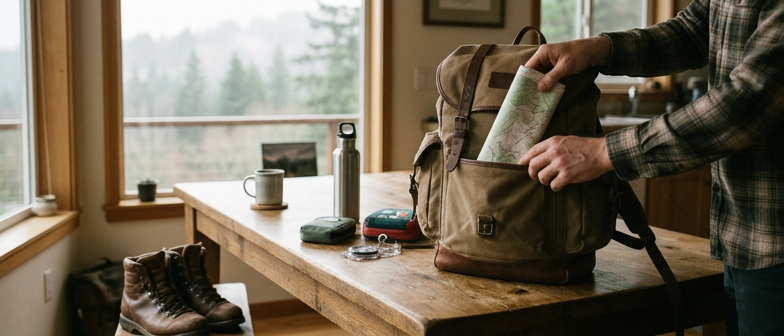
Then turn to your pack. Place it on the floor, empty it, and repack. Start with items you know you will need: water bottles or reservoir, snacks, extra layers, rain protection, map or navigation tools, and basic first aid. Items you will reach for often, such as snacks, sun protection, or a hat, can go near the top or in outside pockets.
Some hikers like to briefly walk around the home with the fully packed bag on. This reveals whether it feels too heavy, whether straps need a small adjustment, or if something hard is poking into your back.
Building habits that run in the background
A night‑before ritual works best when it is short and realistic. Think in terms of “five‑minute habits.” Filling water bottles, placing breakfast items on the counter, and putting footwear, socks and sun protection by the door can all fit into a small window of time.
Linking these actions to things you already do makes them easier to remember. After brushing your teeth, quickly check the latest weather update and confirm your clothing plan. After a gentle stretch or a short walk, set your alarm and place your phone away from the bed.
Some people also like to start gentle hydration in the evening by sipping a glass of water while mentally setting a simple intention for the outing, such as keeping an easy pace or paying attention to views rather than distance. Over time, repeating these small, manageable steps turns early trail mornings from rushed scrambles into something that feels more steady, leaving more attention free for the path, the scenery, and your own pace.
Q&A
-
How can I build a consistent weekend hiking preparation routine without overcomplicating it?
Create a repeating checklist that covers trail difficulty review, weather check routine, pack essentials list, and footwear comfort planning. Keep it on your phone or taped to your gear cupboard. Run through it the same evening each week so decisions become automatic, leaving you fresher for the actual hike. -
What factors should I consider in a trail difficulty review beyond distance and elevation?
Look at surface type, average steepness, exposure to drops or wind, required navigation skills, and typical completion times for hikers similar to you. Cross‑check recent reports for obstacles like washouts or snow. Match all this against your fitness, experience, and daylight window to avoid creeping risk. -
How detailed should my weather check routine be for a casual day hike?
Aim for focused, not obsessive. Check hourly temperature, wind, and precipitation for your hiking window, plus any warnings. Note changes at higher elevations. Use this to adjust start time, clothing layers, and backup plans. A brief second check the morning of the hike catches fast‑moving systems. -
What belongs on a smart pack essentials list for day hiking safety and comfort?
Include navigation tools, water, energy snack planning items, spare layers, rain protection, headlamp, first aid, sun protection, and an emergency blanket. Add personal medications and a small repair kit. Keep the list stable, only tweaking after trips, so packing becomes quick yet reliably covers common problems. -
How do I combine footwear comfort planning with long‑term hiking safety habits?
Choose footwear that supports your ankles, fits with hiking socks, and feels secure on uneven ground. Break shoes in gradually, monitoring hot spots. Pair this with habits like regular lacing checks, short stretch breaks, and cleaning grit from socks. Over time, these routines prevent small irritations turning into injuries.