
Planning a Low‑Waste City Break: From Trains and Walking Routes to Reusable Essentials
Short urban getaways are often sold as fast, packed, and exhausting, but they do not have to be. With a bit of map reading and some simple gear, it is possible to arrive by train instead of a short flight, stay in a walkable district, rely on your own reusable basics, and eat what is already grown nearby.
This story is part of DailySeekers's practical reading library across everyday topics.
Choosing Rail Links and Compact Districts
Looking at trains before anything else
The tone of a short city escape is set long before you reach your room. When the main journey runs on rail instead of a quick flight or a long drive, the day often feels calmer and more predictable. Trains usually avoid check‑in queues, security lines, traffic jams, and parking searches, while lowering noise and roadside pollution compared with heavy car use.
Destinations with strong rail networks often build around stations rather than distant car parks. Major stations sit near the historic centre or business area, which means you can step off the train and walk, cycle, or transfer to trams and buses without much effort. This pattern helps travellers who do not drive.
Choosing rail is not only about emissions. It can also make access more equal for a wider range of visitors who benefit from simple, legible routes from platform to pavement.
A simple trip‑planning habit is to check rail maps before browsing flights. If the station is close to the areas you want to explore, that location alone can shape a quieter, lower‑stress visit.
Why compact neighbourhoods feel calmer
Once you arrive, the layout of the area where you stay matters more than counting sights. Compact districts with mixed uses put cafés, small parks, cultural spots, and everyday shops within a short walk. Streets are often narrower, speeds lower, and crossings simpler, which reduces both physical risk and mental load.
Walkable areas tend to weave in trees, pocket parks, and sometimes small water features that can help with heavy rain and heat. Shade, quieter corners, and cleaner air turn even a busy city into a softer base for a short break.
When planning, study maps for public transport corridors, connected park networks, and pedestrian streets. A quick way to compare possible bases is to look at evening options on foot: where could you stroll after dinner without needing a vehicle?
| Base area option | Everyday access on foot | Likely trade‑offs | Who it may suit |
|---|---|---|---|
| Near main station | Easy for arrival and departure; quick links to several lines | Can be busier and noisier | Travellers with short trips who value simple transfers |
| Historic centre | Short walks to landmarks, cafés, and small shops | Higher prices and more crowds | First‑time visitors focused on classic highlights |
| Residential fringe | Quieter streets, local parks, everyday food shops | Longer transit rides to major sights | Repeat visitors who prefer slow routines |
Building a Walking‑First Plan
Start with where you stay
A walking‑led break begins with the map, not with a list of attractions. Choose a neighbourhood where daily needs are close at hand: places to eat, green space, one or two key sights, and a reliable transit stop. When those things sit within a short stroll, walking becomes the default.
When browsing places to stay, look for information about walking times, not just distance. A ten‑minute walk along a tree‑lined path feels very different from the same distance beside a fast road. If possible, pick somewhere near a park, square, or waterfront so that a relaxed loop is always available.
It is also worth checking how busy nearby streets are in the evening. A walkable base should still feel restful when you return at the end of the day; constant traffic or nightlife noise can undermine that calm.
Plan days around clusters, not endless lists
Long lines drawn across a map often translate into tired feet and rushed visits. Clustering keeps days gentle and more in tune with the pace of walking.
Pick one or two neighbourhoods for each day and group nearby cafés, viewpoints, and museums together. Within each cluster, plan a loose loop with room for pauses. The aim is to wander with intent, not to march from one tick‑box to the next.
Many people enjoy a guided walk early in the trip to understand the layout and main stories of the city. Afterwards, it is easier to return on foot to the places that felt most interesting, instead of trying to “cover” everything in one sweep.
Mix modes as well. A longer morning walk followed by a short tram ride, then a gentle evening stroll, can keep the day almost entirely car‑free while still giving your legs time to recover.
| Day structure style | How it feels in practice | When it works best |
|---|---|---|
| One‑neighbourhood deep dive | Slow, detailed, with repeat visits to the same streets | Short breaks where you want a strong sense of place |
| Two‑cluster loop | Varied but still calm, with a midday transit hop | Trips with companions who enjoy different settings |
| Highlight trail with detours | Main sights joined by side streets and parks | First visits where you still want breathing space |
Packing Light With Reusables in Mind
Clothes and shoes that earn their space
For a short urban trip, a small, well‑chosen set of clothes usually works better than a large suitcase of “maybes”. A simple capsule might include a few tops, two bottoms, and two pairs of shoes that all mix and match. Lightweight layers such as T‑shirts, a sweater or light jacket, and one pair of comfortable trousers or jeans cover a wide range of situations.
Fabrics that dry quickly and can be washed in a sink or laundromat make it easier to repeat outfits rather than bringing extras. A single pair of solid walking shoes plus a lighter pair or sandals usually covers city streets, parks, and smarter restaurants without overfilling the bag.
Thinking in outfits tied to actual plans helps: one walking‑heavy day, one museum‑and‑café day, one slightly dressier evening. If an item does not clearly fit one of those patterns, it probably does not need to come.
Small items that replace single‑use extras
A few compact pieces of gear can quietly cut down on throwaway items while making travel more comfortable. Simple organizers such as one or two packing cubes, a small pouch for cables, and a soft bag for laundry keep a carry‑on or backpack tidy.
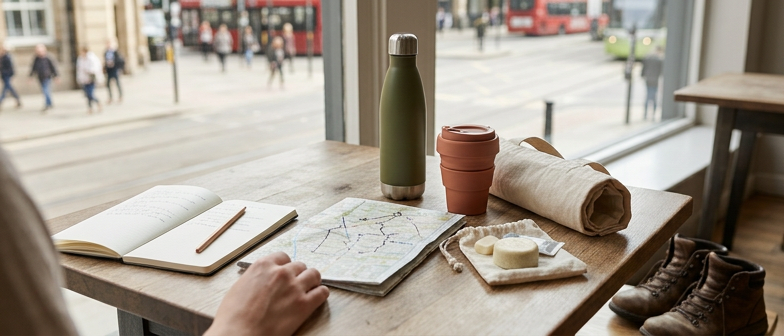
Travel‑size toiletries in refillable bottles reduce the need to open new miniature containers in every room. A quick‑dry towel and a lightweight, reusable water bottle help avoid disposable towels and single‑use cups. A foldable tote or daypack replaces plastic bags for groceries or extra layers during the day.
Planning outfits and gear together turns luggage into a clear, easy system rather than a travelling storage closet. You save time each morning, avoid buying duplicate items on the road, and produce less waste.
Eating With the Seasons and Spending Nearby
Leaning toward what is already in season
Choosing meals that use what a region is already growing can lower transport needs for ingredients and often improves taste. On a short city break, this does not require strict rules. It can be as simple as scanning menus or market signs for daily specials or “house” dishes, which are often based on whatever is plentiful.
Planning one main meal at lunchtime can support both budget and impact. In many places, midday menus are more affordable, which makes it easier to try local, seasonal dishes without stretching spending. Evening food can then stay simple: bread, fruit, and small treats from a grocery store or neighbourhood market.
This rhythm replaces multiple large restaurant meals with a mix of one sit‑down highlight and one lighter, picnic‑style option. It often leads to fewer unfinished plates and less packaging.
Keeping your spending radius small
On a compact urban break, most daily choices can stay within walking distance or a short transit ride. Clustering food stops, cultural visits, and small purchases in one or two areas not only cuts down on extra journeys, it also allows a deeper look at how those neighbourhoods work.
Local bakeries for breakfast, markets for snacks, and small cafés for coffee create a natural “spend nearby” pattern. Money stays with independent businesses rather than chains you might see almost anywhere, and you avoid cross‑town trips just to seek out familiar logos.
Food walks can support this approach. Many are designed so that groups visit several places on foot in a few hours, tasting regional staples within a compact area. After such a walk, you already know where you would like to return, which reduces guesswork and impulse stops that lead to wasted food.
Over time, these everyday habits—favouring trains, compact neighbourhoods, walking‑friendly plans, light luggage, and nearby, seasonal food—add up. The trip still feels like a treat, just with less clutter, less rushing, and gentler pressure on the places you have come to enjoy.
Q&A
-
How can I start Sustainable City Break Planning without overcomplicating the trip?
Begin by fixing your travel dates and budget, then shortlist destinations that offer rail access and compact, walkable areas. From there, sketch a loose walking‑first itinerary, identify neighbourhoods with public transport hubs and local food options, and build bookings around those cores instead of chasing every attraction. -
What Public Transport Choices make the biggest difference in a short urban getaway?
Prioritise high‑frequency, easy‑to‑read systems such as metros, trams, and bus routes that run late. Look for day passes or contactless caps so you are not worrying about single fares. Combine these with walking, using transit mainly for the longest hops between clusters of sights, rather than for every small move. -
Which Light Packing Tips help most when you want to walk all day?
Aim for one small carry‑on or backpack that you can comfortably manage on stairs and pavements. Choose versatile layers, minimise shoes to two pairs, and use packing cubes so you can find items quickly. Lighter bags make station transfers, hilly streets, and spontaneous walks far easier and less tiring. -
How do I approach Walkable Itinerary Design in a new city?
Start by marking transit stops, parks, and food streets, then connect them with short walking loops rather than straight lines. Limit yourself to one or two neighbourhoods per day and plan natural pauses at squares or viewpoints. This style keeps the day car‑free while leaving room for unscheduled discoveries. -
What Reusable Travel Items and habits support Lower Waste Travel Habits and Local Food Planning?
Pack a compact kit: bottle, cutlery, cloth napkin, tote bag, and small containers for bakery items or leftovers. When planning meals, favour markets, bakeries, and small eateries that are used to refillable containers or eat‑in service, helping you avoid disposables while funnelling more of your spending to nearby businesses.