
Indoor Air Quality Tests Explained
If you are wondering whether the air in your home is contributing to stuffiness, odors, or irritation, indoor air quality testing can clarify what is present. This overview compares home test kits, monitors, and professional services, and outlines when each option makes practical sense.
This story is part of DailySeekers's practical reading library across everyday topics.
What Indoor Air Quality Testing Covers
An Indoor Air Quality Test is a structured way to find out what is present in the air you breathe at home or in the workplace. People often arrange a home air quality check when they notice persistent odours, visible dust, moisture problems, or recurring discomfort such as eye or throat irritation. A basic indoor air pollution test looks for the most likely issues rather than every possible contaminant, focusing on the building type, its age, and any known problems such as leaks, recent renovations, or the use of certain household products.
Testing usually centres on key groups of indoor pollutants. These include particulate matter from dust, smoke, or cooking, and gases such as carbon monoxide and volatile organic compounds released from paints, cleaning agents, furniture, or flooring. Moisture and mould indicators are often included, especially in areas with past water damage, and some evaluations also screen for indoor allergens like pet dander or pollen. Together, these findings give a practical picture of indoor conditions and help you decide whether simple changes in habits, better ventilation, more regular cleaning, or a more detailed follow‑up investigation might be useful.
Deciding Whether Your Home Needs Air Quality Testing
A Home Air Quality Check is most useful when indoor conditions seem to affect comfort or daily life. People often consider Home Air Quality Testing if they notice persistent musty or chemical odors, visible mold, unusual dust, or frequent condensation on windows and cold surfaces. Unexplained stuffiness, headaches, or eye and throat irritation that improve after leaving the home can also be signs to look more closely at indoor conditions. An Indoor Air Pollution Test is especially relevant in homes with attached garages, older heating or cooling systems, recent renovations, or past water leaks, where hidden moisture and building materials may influence what is in the air.
Lifestyle and building features also help you decide whether testing makes sense. Homes with pets, regular use of candles, fireplaces, or indoor smoking often have different particle and odor levels than homes without these factors. Tightly sealed houses where windows are rarely opened may allow indoor pollutants to build up, while buildings near busy roads or industrial areas can draw in outdoor contaminants. People who are sensitive to dust, fragrances, or combustion by‑products sometimes choose an Indoor Air Pollution Test as a precaution, even without clear problems. In these cases, Home Air Quality Testing offers neutral information and can show whether simple steps, such as better ventilation or cleaning routines, are enough or whether a deeper assessment may be needed.
| Household Situation | Typical Indicator | Testing Priority | Suggested First Step |
|---|---|---|---|
| Persistent musty or chemical odours | Comfort or irritation improves when away | High | Targeted Indoor Air Pollution Test |
| Visible mold or frequent window condensation | Damp rooms or past leaks | High | Home Air Quality Check with moisture review |
| Pets, candles, fireplaces, or indoor smoking | Odours and fine particles indoors | Medium | Basic Home Air Quality Testing or monitor |
| Tightly sealed home with rarely opened windows | Stuffy indoor air | Medium | Ventilation changes plus simple test kit |
| Home near busy roads or industrial areas | Concerns about outdoor pollutants entering | Medium | Short‑term Indoor Air Pollution Test |
| Sensitive to dust, fragrances, or combustion by‑products | Discomfort without clear visible issues | Variable | Precautionary Home Air Quality Check |
Common Pollutants and Household Risk Factors
When people arrange an indoor air pollution test or broader home air quality testing, they often discover that several common pollutants come from routine household activities. Fine particles can be released by cooking, burning candles, or using fireplaces, while tobacco smoke and poorly vented heaters add additional combustion by-products. Mold spores may build up in damp areas such as bathrooms, basements, or around leaky plumbing, especially where ventilation is limited and surfaces stay moist. Volatile organic compounds, or VOCs, can be emitted by fresh paint, new furniture, cleaning sprays, air fresheners, and some hobby materials, and their levels are often higher in tightly sealed homes with little outdoor air exchange.
Testing Options: DIY Kits, Monitors, and Professional Services
When planning a home air quality check, many people start with a do‑it‑yourself option. A typical air quality test kit is designed for short‑term sampling of specific pollutants such as mold spores, volatile organic compounds, or radon. Some kits ask you to collect air or dust and mail it to a laboratory, while others show results immediately through a color change or similar indicator. These kits are relatively affordable and can show whether more detailed home air quality testing is needed, but they usually cover only a narrow range of contaminants and require careful use to be reliable.
An indoor air quality monitor works differently from a one‑time kit because it tracks conditions over time. Many monitors measure fine particles, carbon dioxide, temperature, and humidity, and some also show selected gases or chemical pollutants. This ongoing feedback helps you see how daily activities, ventilation, or weather affect indoor air and can warn you when readings move outside your preferred range. Because these devices may miss some pollutants and their accuracy varies, they are best used as a screening and tracking tool rather than a complete indoor air pollution test.
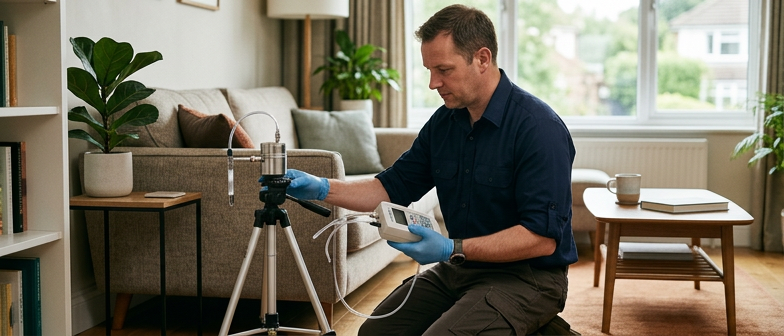
Professional air quality testing services provide the most comprehensive option when a household needs a detailed indoor air quality test or formal documentation. A trained specialist can choose appropriate methods, place sampling equipment, and interpret results in the context of your building and lifestyle. This may include targeted tests for moisture problems, combustion by‑products, or other contaminants that basic home tools often miss. Although hiring a service usually costs more than buying a monitor or a kit, it can be useful when problems persist or you want expert guidance on practical steps to improve the air in your home.
Choosing Between Monitors, Test Kits, and Professional Assessments
When choosing between an indoor air quality monitor, a home air quality test kit, or full air quality testing services, match the option to your goal and budget. A continuous Indoor Air Quality Monitor suits people who want ongoing readings for issues like humidity, temperature, or particles and who are comfortable interpreting the data. A short-term Air Quality Test Kit works better when you need a snapshot for a specific concern in one room and prefer sending samples to a lab instead of tracking daily trends.
Professional Air Quality Testing Services are most useful when you need a detailed Indoor Air Pollution Test, such as for persistent symptoms, complex building systems, or legal and insurance questions. Specialists can combine instruments, sampling, and visual inspection to give a clearer picture than a single device or kit. Many households start with a basic Home Air Quality Testing kit or monitor for a home air quality check, then bring in experts if results are unclear or major repair decisions depend on reliable testing.
How to Prepare for and Carry Out Home Testing
Before starting any home air quality testing, decide what you want to check and which rooms matter most. Walk through the home and note odors, visible dust, damp patches, or stuffy areas. Close windows and exterior doors as the Indoor Air Quality Test instructions recommend so results reflect normal indoor conditions, and keep heating, cooling, and ventilation systems running as usual. Avoid unusual activities like heavy cleaning, painting, or burning candles shortly before a test unless the product guidance allows it, because these can temporarily change pollutant levels and make findings harder to understand.
Different tools support a home air quality check in different ways. An Air Quality Test Kit may include sample containers or strips to capture pollutants such as mold spores, formaldehyde, or combustion by‑products. An Indoor Air Quality Monitor typically tracks carbon dioxide, volatile organic compounds, and sometimes temperature and humidity. Follow the manufacturer’s directions for placement and duration, keeping devices at breathing height, away from direct sunlight, vents, or cooking areas, and in rooms where people spend most of their time. For a broader Indoor Air Pollution Test, some households place devices in both living areas and bedrooms to compare conditions.
When sampling is complete, compare readings or lab reports with the guidance supplied with the kit or monitor, remembering that most consumer tools provide ranges rather than highly precise results and short tests may miss normal variation. If results suggest elevated levels, or if symptoms and musty smells continue despite readings that look acceptable, repeat the Home Air Quality Check at another time or season. If results stay unclear or indicate a persistent issue, consider professional Air Quality Testing Services that use specialized instruments and can place findings in the context of your home layout, ventilation, and moisture control.
Q&A
-
What does a basic Indoor Air Quality Test usually check?
It typically looks at moisture indicators, particles, possible mold, combustion by‑products, and sometimes VOCs, based on the building’s age, condition, and known issues. -
When is a Home Air Quality Check worth considering?
It is useful if you notice persistent musty or chemical odors, visible mold or unusual dust, frequent window condensation, or discomfort that eases when you leave home. -
What household factors can affect an Indoor Air Pollution Test result?
Cooking, candles, fireplaces, tobacco smoke, damp bathrooms or basements, and fresh paint or new furniture can all raise particles, mold spores, or VOC levels indoors. -
How do an Air Quality Test Kit and an Indoor Air Quality Monitor differ?
A test kit offers short‑term sampling for specific pollutants, often with lab analysis, while a monitor provides continuous readings for conditions like particles, humidity, and temperature. -
How should I prepare before using home Air Quality Testing services or DIY tools?
Decide what you want to measure, note any odors or damp areas, follow instructions on closing windows, keep normal heating or cooling running, and avoid unusual activities that could skew results.