Everyday Hydration Habits: Small Cues, Refillable Bottles, Steady Sips
Busy days, changing seasons, and shifting schedules can make it easy to go for long stretches without a drink. Instead of chasing strict targets, many people build small, repeatable cues into meals, work blocks, movement, and warmer‑weather plans. The aim is a calm, flexible rhythm that fits ordinary life.
This story is part of DailySeekers's practical reading library across everyday topics.
Listening To Your Body’s Early Signals
Thirst rarely begins with a dramatic, desert‑dry feeling. The body usually starts with quieter hints that are easy to overlook when you are focused on work, family, or commuting.
A common early clue is a vague sense of tiredness that does not quite match what you have done that day. Concentration can feel heavier, and simple tasks may seem more effortful. Some people notice a mild headache or a fuzzy, “off” feeling.
Physical changes often show up around the mouth and eyes. Your tongue may feel slightly dry or sticky, and swallowing might not feel as smooth as usual. Eyes can feel a little more tired or gritty after screen time.
These signs become more useful when you link them with what you have actually drunk. If you notice low energy or dry lips, think back over the last few hours. Have you had any plain fluids, or have you mostly relied on small sips of coffee or tea?
A practical day‑to‑day check is urine colour. A pale, straw‑like yellow often suggests that your body is getting enough fluid. Darker colour and a stronger smell can mean your body would welcome more, unless a food, drink, or supplement is affecting the colour.
Stronger thirst, dry lips, a scratchy throat, or feeling light‑headed when standing up can appear when you have waited a long time between drinks. Instead of reacting with a large amount of fluid all at once, a gentler response is to take small, regular sips and keep drinks within reach. This turns fluid intake into a steady background habit rather than an occasional emergency fix.
Building Low‑Effort Cues Into Daily Life
Pair drinks with moments you already have
Habits usually stick when they are tied to events that already happen every day. Rather than promising yourself “I will drink more today,” it can help to think, “When this happens, I take a sip.”
Common anchors include:
- After waking
- Whenever you sit down to eat, whether it is a meal or a snack
- Between tasks, such as finishing an email, a call, or a short household chore
Each of these moments becomes a cue. You are not monitoring a strict total; you are allowing frequent, small sips to accumulate through the day.
Hotter days or stuffy indoor environments can also act as cues. If you are spending time in a warm room, on transport, or in direct sun, planning ahead with a filled bottle or an extra glass at meals can soften the impact of higher temperatures.
The table below gives examples of how different routines can link natural “pause points” with simple drinking actions:
| Daily pattern type | Natural pause point | Gentle fluid cue that fits |
|---|---|---|
| Desk‑heavy workday | Before opening email or messages | Take a few sips while your device wakes up |
| On your feet most of the day | Returning to a central counter or locker | Drink whenever you pass your main station |
| At home with caregiving tasks | Settling a child for a nap or screen time | Keep a glass nearby and sip during their quiet time |
| Mixed remote and outside errands | Arriving back home or at a workspace | Sip while you put down bags or keys |
Make drinks visible, reachable, and pleasant
Out of sight often means out of mind. Placing a glass or bottle where you naturally look—on a desk, near the sofa, by the sink, or next to a favorite chair—creates a visual reminder.
If you move around frequently, a lightweight, easy‑to‑carry bottle can keep that reminder with you. Some people like setting a calm phone alert or a small note on their screen so that every time they switch tasks, they see a cue to drink.
For those who find plain water unappealing, small, repeatable tweaks can help: a slice of fruit, a bit of herbs, a splash of carbonated water, or a lightly flavored option you enjoy. The focus is on everyday choices that feel sustainable rather than intense, short‑term “reset” plans. When drinks are nearby, pleasant, and linked to familiar routines, getting enough fluid often starts to feel almost automatic.
Creating A Refillable Setup Around You
A refillable environment is less about owning special gear and more about arranging what you already have so it helps rather than hinders.
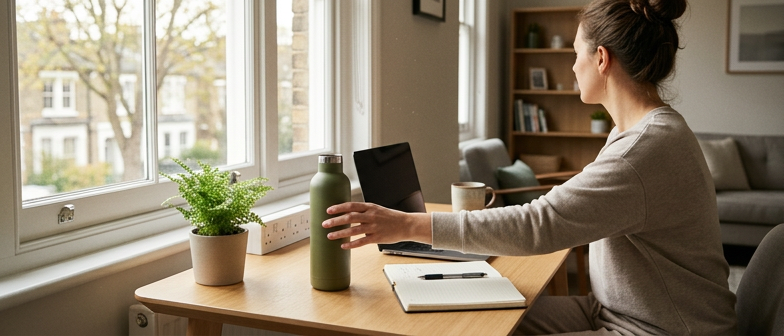
At a desk or main work area, keeping a bottle, mug, or glass within arm’s reach lowers the effort needed to take a sip. A calm routine can support this, such as filling a bottle the night before, then moving it to your main spot when the day begins.
Some people find it useful to think in terms of broad “half‑day” goals instead of exact amounts: finishing one container before a main break and refilling it for the afternoon or evening. The idea is to create a simple rhythm: fill, drink through the morning, refill, drink through the later part of the day.
Visibility has a real impact here. A bright or clear container on the desk is often emptied faster than one tucked away in a bag or drawer. If you enjoy adding fruit or a small amount of flavor, seeing the colour or slices in the bottle can act as a small reward and nudge.
Choosing containers that match your routine can remove friction. Larger bottles mean fewer trips for refills, which may help during long meetings or deep focus periods. Smaller, lighter bottles may suit people who commute or walk frequently.
Mugs and bottles with a straw or spout can make quick sips easier, especially near a keyboard, while wide‑mouth openings can be more convenient for cleaning. Materials and design that rinse easily, with fewer tiny parts, tend to encourage regular use and refilling.
Having a refillable container at hand, planning a top‑up before going outside, and placing a glass in the rooms you use most can make it simpler to adapt when indoor or outdoor temperatures rise.
Noticing Patterns Without Strict Logs
Tiny check‑ins instead of detailed tracking
Paying attention to how much you drink does not require recording every sip or measuring exact amounts. Light‑touch check‑ins can build awareness without turning fluid intake into a project.
One approach is to use recurring daily moments as prompts: after waking, during each meal, and at short movement or stretch breaks. At each of these points, you can briefly ask, “Did I drink something here?” rather than focusing on totals.
Another option is to use one main bottle during the day and observe how often it gets refilled. The exact capacity matters less than the pattern: if it returns to the sink or tap regularly, you probably had several opportunities to drink; if it stays full on your desk for hours, that is useful information too.
Body‑based cues are part of this feedback. A mid‑morning or mid‑afternoon craving for a snack sometimes eases after a glass of water or another fluid. Low energy, slight fuzziness, or a sticky feeling in the mouth can all act as prompts to pause and sip.
A calm end‑of‑day reflection can help you spot recurring gaps: “Where did I drink most today? Where did I tend to forget?”
Letting water ride along with other basic habits
Fluid intake often fits best when it is woven into broader routines that already matter for everyday wellbeing, such as movement, sleep, and stress management.
For example, a short stretch by a window, a few moments of natural light, and a glass of water can form a simple morning reset after a night’s sleep. During work or study, placing a container within reach can reduce the mental load of “remembering” to hydrate during busy blocks.
Before and after everyday movement—such as a walk, household tasks, or a light exercise session—a small drink can act as both a practical step and a cue to notice thirst. On warmer days, planning a drink ahead of outdoor time and having a way to refill when you return can make your routine more comfortable.
Over time, these repeated links—waking, eating, moving, resting—create a picture of your usual rhythm without needing detailed charts. Many people notice steadier energy, fewer afternoon slumps, or less confusion between hunger and thirst when these small patterns are in place.
The overall aim is not perfection or rigid numbers. It is a clearer sense of how gentle signals from your body, simple environmental tweaks, and low‑stress routines can work together to support you through ordinary days, in cooler and warmer weather alike.
Q&A
-
How can I build everyday hydration habits without counting every glass of water?
You can link drinking to regular cues like waking, commuting, or short movement breaks so hydration rides along with what already happens. Keeping water visible, using a comfortable bottle, and checking early body signals lets intake become automatic rather than a tracked target, supporting healthy daily consistency. -
What are practical water intake reminders that feel natural during a busy workday?
Use calm cues instead of nagging alarms: a sip before opening email, after every meeting, or whenever you stand up. Gentle phone prompts, sticky notes on your screen, or a bottle placed beside your keyboard work as visual reminders, encouraging steady fluid intake without interrupting concentration or causing alert fatigue. -
How do I create a refillable bottle routine that actually sticks?
Choose one main bottle that fits your lifestyle and decide simple half‑day milestones, like finishing it by lunch and refilling for the afternoon. Store it where you start your day, refill during bathroom breaks, and rinse it as part of your evening shutdown routine so the next day’s hydration begins on autopilot. -
What is a sensible approach to meal time hydration without diluting digestion?
Aim for moderate sipping before and during meals rather than large boluses of fluid at once. A small glass with each meal, plus a few sips with snacks, supports saliva production, comfortable swallowing, and appetite awareness. Adjust amounts based on how your stomach feels, medical advice, and overall fluid from soups or watery foods. -
How should I plan water for hot weather and keep simple fluid tracking on track?
In heat, begin the day slightly ahead by drinking earlier, then bring a refillable bottle for outdoor time and top it up whenever shade or indoor pauses appear. A quick mental tally of refills, urine color checks, and noticing energy dips gives you low‑effort feedback while maintaining healthy daily consistency without strict logging.