
Simple Hospitality at Home: Calm, Guest‑Ready Comfort without the Fuss
A calm, welcoming home does not depend on matching napkins or elaborate menus. It grows from a tidy space, a kind greeting at the door, somewhere comfortable to sit, and something simple to sip or nibble. Small, thoughtful choices help visits feel easy for everyone, including the person opening the door.
This story is part of DailySeekers's practical reading library across everyday topics.
Creating a Peaceful Base with Quick Reset Habits
A peaceful base starts with what people notice right away: clear, open surfaces and an obvious place to sit. When counters and tables are free of random piles, the whole home feels more relaxed, even if other areas are still a work in progress.
Instead of deep-cleaning every room, focus on the spaces visitors actually use. Walk the route from front door to main seating and reset it as you go. Slide dishes into the dishwasher or stack them neatly in the sink. Gather scattered mail into a single basket. Sweep toys, chargers, or cables into a bin so they are contained rather than spread out.
Soft details matter more than perfection. Smooth sofa cushions, fold blankets, and place remote controls or game controllers where anyone can find them. These small shifts send a clear signal: there is room to sit and room to breathe.
Entry and living area “stations”
The first few steps indoors can either feel hectic or reassuring. A simple setup near the door—such as a tray for keys, a basket for shoes, and a hook or chair for bags—keeps that area from becoming a jumble so guests know where to place their things.
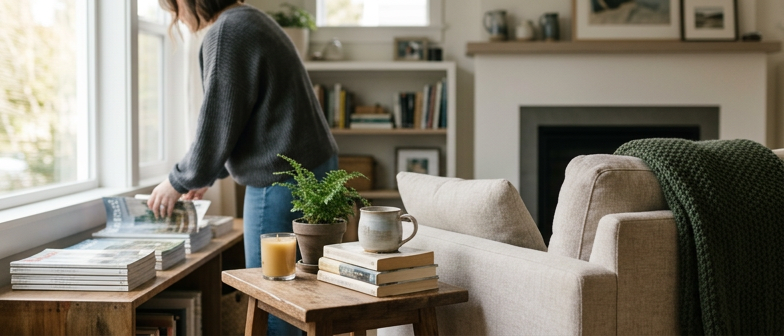
In the living area, think in “stations” rather than one big open room. A basket for blankets, a tray for coasters on the coffee table, and a small box or shelf for books and games each give everyday items a clear home. When everything has a spot, a one-minute reset before someone drops by is enough to make the room feel intentional.
Simple daily habits support this calm baseline. A short evening pickup and a quick wipe of main counters build a sense of order over time and reduce last-minute cleaning sprints.
When fast resets are enough
Not every visit needs full polish. It can help to mentally sort situations into quick levels of attention:
| Situation type | Helpful reset focus | Why it works |
|---|---|---|
| Short, casual stop | Clear one surface, free a couple of seats | Signals “there is room for you” |
| Planned hangout | Entry, bathroom, main seating area | Guests can settle in without hunting for space or supplies |
| Longer stay | Same as above, plus guest room or sofa bed | Keeps both shared and sleeping areas easy to navigate |
This flexible approach keeps expectations realistic and protects your energy while still making visitors feel considered.
The Doorway Moment and First Impressions
The moment a guest crosses the threshold sets the tone long before they notice décor or snacks. A simple smile, steady eye contact, and a calm greeting such as “I’m so glad you’re here” often matter more than any detail on the table.
If you can, pause what you are doing, walk to the door, and meet people there instead of calling out from another room. That short walk signals that their arrival is important and helps them feel seen.
Clear guidance at the entrance
A calm welcome feels easier in a calm doorway. Even if the rest of the home is lively, a clear path inside and a tidy landing spot reduce the sense of rush. Simply keeping shoes, bags, and packages from piling up is enough.
Guests relax faster when they know what to do with their belongings. A hook for coats or a single chair for bags can prevent the awkward, “Where should I put this?” moment. Offering a short, friendly direction such as “You can leave your bag right here” guides them without fuss.
When the entrance feels welcoming and organized, people are more likely to settle in quickly and focus on being together rather than managing logistics.
Setting a relaxed tone for the rest of the visit
The doorway is also a quiet signal about pace. If the entrance is jammed with clutter or you seem rushed and distracted, guests may mirror that energy. A slower, more deliberate greeting—taking coats, offering to hang them, pointing out a seat—invites everyone to slow down.
Simple sensory details add to this effect. Soft, even light instead of a single harsh overhead bulb, and clear floors that avoid tripping hazards, help people feel physically safe and mentally calmer. These are modest adjustments rather than major projects, but they shape how the rest of the time together feels.
Seating, Lighting and Background Comforts
A home feels inviting when people know where to sit and can stay there comfortably. Furniture does not need to match; the key is arranging it so guests can see one another, reach a surface for their drink, and move around without squeezing through narrow gaps.
Pull chairs away from the walls and into clusters. A sofa with one or two chairs angled toward it creates a natural conversation triangle. A bench or ottoman can float nearby, ready to hold an extra guest or a tray. The goal is to make landing spots obvious.
Comfort often matters more than how many seats you have. Chairs that are too deep, too high, or crowded too close together encourage people to leave earlier. A bit of breathing room and enough distance to move past someone without asking them to stand can change how long visitors want to linger.
Using light to support connection
Light quietly shapes mood. A single overhead fixture can feel bright but flat, especially later in the day. Layering light sources creates softer “pools” where people can relax. A floor lamp beside the main sofa and a table lamp near a reading chair can make one corner feel especially cozy.
Warm-tone bulbs and dimmer settings tend to make evenings feel calm rather than stark. Even a small lamp in an otherwise unused corner can turn it into a nook for quieter conversations. Outdoors, gentle, indirect lighting can extend how long people are comfortable staying after sunset.
Background elements round out the sense of ease. A rug under the main seating group helps define the area and muffles sound. Throw blankets within reach let guests adjust their own comfort. Small side tables or stable stools give each person a place to set down a glass or plate.
Matching layouts to different kinds of visits
Different gatherings can benefit from slightly different setups:
| Visit style | Simple layout tweak | Comfort benefit |
|---|---|---|
| One-on-one chat | Two chairs angled toward each other with a small table between | Feels focused and personal |
| Group hangout | Sofa plus a couple of chairs in a loose circle | Everyone can see and hear each other |
| Drop-in flow | Seats along edges with one open “standing” zone | People can move around freely and sit when ready |
Rotating furniture a little or adding one flexible piece, like a lightweight stool, is often enough to shift the mood from formal to relaxed.
Simple Food and Drinks That Feel Thoughtful
A small offer of food or drink can communicate care without demanding a full cooking project. Keeping things simple can make guests more comfortable, because they sense that you are relaxed and present rather than stressed in the kitchen.
A helpful approach is to think in pairs: one option to drink and one to nibble. When visitors arrive and spot a jug of something cold or a pot of something warm plus a small snack, they immediately know what is available and how to help themselves if you invite them to.
Low-effort sips
Preparing a basic drink in advance keeps hosting light. A jug of lightly flavored water with slices of citrus or other fruit can stay in the fridge until it is needed. A simple sparkling mix or a batch drink can be poured into small glasses as guests arrive.
If you enjoy offering alcohol, one bottle of something you like, paired with a salty bite, is usually enough choice for many casual occasions. The emphasis stays on ease: fewer decisions, fewer dishes, and less time shuttling between rooms.
For non-alcoholic options, a straightforward syrup made from herbs or other seasonal ingredients can turn plain sparkling water into a refreshing mocktail. Because the base is simple, it is easy to repeat whenever people visit.
Light snacks that feel special, not fussy
Treats do not have to be elaborate to feel memorable. Foods that rely on texture and fresh flavor often feel more impressive than their effort level suggests.
On the savory side, very simple sandwiches can feel upgraded with one small twist, such as a flavored spread on fresh bread with cheese or sliced vegetables. Small toasts topped with olives, nuts, or a ready-made dip stay firmly in the “easy” category but still invite people to take a moment and enjoy.
The most sustainable approach is to settle on a few favorites you genuinely like making. Returning to the same reliable drink and snack pairings for casual visits turns them into something familiar and comforting, rather than a performance you need to reinvent each time. Over time, these modest routines support the same message as a tidy room and a calm greeting: you are welcome here, just as you are.
Q&A
-
How can I practice simple hospitality at home without buying new décor or tableware?
You can focus on atmosphere rather than objects: keep a few surfaces clear, choose one cozy spot as your main gathering zone, and rely on consistent routines instead of themed setups. Repeating the same welcoming habits each time makes hosting feel natural, familiar, and genuinely personal for both you and your guests. -
What are realistic “guest ready essentials” to keep on hand for casual visits?
Aim for a small, repeatable kit: a neutral tray, a couple of clean glasses or mugs, one reliable drink option, and a go‑to snack that stores well, like nuts or crackers. Pair this with extra seating cushions or a folding chair, so you can quickly expand your comfortable seating setup whenever someone drops in. -
How do I handle easy snack planning when guests have different preferences or diets?
Choose mix‑and‑match elements: sliced fruit, vegetables, simple crackers, and one or two dips, plus clearly labeled nuts or cheese on the side. These flexible, low stress hosting choices let people build their own plates, avoid allergens when needed, and keep you out of the kitchen once everyone has arrived. -
What makes a comfortable seating setup work for both short stops and longer hangouts?
Prioritize adjustability: movable chairs, an ottoman that can be a seat or table, and a few light blankets or cushions. Group seats so people can see one another, but leave a clear path for movement. This way, the same casual gathering ideas stretch from a ten‑minute chat to an unplanned, lingering evening. -
Which warm welcome details have the biggest impact on low stress hosting?
Simple cues matter most: a clear place for bags and coats, a visible first drink and snack, and a brief orientation like “Bathroom’s down the hall, help yourself to refills.” These warm welcome details reduce questions, lower social tension, and free you to actually enjoy time with your guests instead of troubleshooting.