
Backyard Weather Station Setup for Everyday Home Monitoring
If you want weather details tailored to your own backyard instead of a distant station, a simple home setup can help. This guide walks through choosing basic meteorology tools, placing a rain gauge, tracking temperature and wind, and using a daily weather journal to understand local patterns.
This story is part of DailySeekers's practical reading library across everyday topics.
Why Set Up a Backyard Weather Station
Setting up a backyard weather station gives you a clearer picture of the conditions right where you live, rather than relying only on regional reports from airports or distant official sites. Home weather monitoring can show how temperature, rainfall, and wind vary from one neighborhood to another, especially if you live near hills, water, or open fields. This localized view can help you plan everyday activities such as gardening, outdoor projects, and recreation in a more practical way, using observations that reflect your own yard instead of broad forecasts for a wider area.
A backyard weather station setup also turns routine weather checks into an ongoing learning opportunity. By tracking how changes in cloud cover, wind, and temperature align with local forecasts, you can better understand what those forecasts realistically can and cannot capture. Over time, your records support more informed decisions about seasonal maintenance, frost protection, and heat safety at home, without promising perfect prediction. This balanced combination of official information and personal measurements creates a reliable, neutral basis for understanding your local climate and how it evolves throughout the year.
Planning Your Backyard Weather Station Setup
Before you buy equipment or mount sensors, think through how a backyard weather station will fit into your routine and the space you have. Good planning makes home weather monitoring more reliable and saves you from moving devices later. Walk around your yard and notice shaded zones, wet spots, and areas that feel especially windy or sheltered. Buildings, fences, pavement, and trees all influence readings, so sketch your property and mark possible locations to see how the different parts of your setup might work together.
Then decide which basic meteorology tools matter most for what you want to observe. Most people start with a thermometer and humidity sensor for tracking air temperature and moisture, a simple rain gauge for precipitation, and a wind vane or combined wind sensor for direction and overall breeze. Decide whether you prefer an indoor display, data sent to a phone or computer, or manual readings you write down yourself. Choose instruments that match your interest level and budget so your backyard weather station remains easy to use and maintain, with room to add more tools later.
Finally, plan how each instrument will be sited so measurements reflect the yard’s conditions, not one nearby object. Place temperature and humidity sensors where air can circulate, away from direct afternoon sun and heat from walls, roofs, or hard surfaces. Set the rain gauge on level ground, clear of branches and roof runoff, and put wind instruments in the most open spot you have. Think about safe mounting, easy access for cleaning, and how cables or wireless receivers will reach your home. Careful siting at the start keeps your home weather monitoring smoother and your data more consistent.
| Sensor Location | Exposure & Data Quality | Convenience & Access | Typical Tradeoffs |
|---|---|---|---|
| Open lawn center | High, more representative readings | Moderate, walk needed | Good data, less convenient for frequent checks |
| Near house wall | Lower, heat and shelter influence | High, easy viewing and maintenance | Very convenient, requires cautious data interpretation |
| Patio or deck | Medium, affected by hard surfaces | High, close to living area | Useful for daily comfort, limited for broader patterns |
| Garden bed area | Medium, reflects microclimate | Moderate, seasonal access changes | Helpful for plants, may not match wider yard conditions |
| Fence or shed roof | Variable, possible wind and runoff effects | Low to moderate, ladder or tools needed | Better wind exposure, more safety and maintenance concerns |
Choosing Basic Meteorology Tools for Home Use
For a simple backyard weather station setup, start with Basic Meteorology Tools that match what you want to track and what you can spend. At the core of Home Weather Monitoring is a reliable thermometer that shows air temperature and daily patterns such as cooler mornings and warmer afternoons. You can use a digital unit with an outdoor sensor and indoor display or a simple analog model, but choose clear markings, a range that covers local extremes, and a design that can be mounted in a shaded, well‑ventilated spot so readings reflect actual air temperature instead of direct sun or nearby walls.
Alongside temperature, add tools that show how much rain has fallen and how the wind behaves around your home. A basic rain gauge lets you measure daily and storm rainfall and gives useful context for a daily weather journal, lawn care, and gardening. Simple manual gauges with clear inch markings are usually enough for a backyard station. For wind, many observers use a wind vane for direction and a small anemometer for speed, then may later choose an all‑in‑one home weather unit that combines temperature, rainfall, wind, and sometimes humidity in one package.
Placing and Maintaining Your Instruments
Thoughtful placement is crucial in any backyard weather station setup because it directly affects accuracy. A rain gauge works best in an open area away from buildings, trees, and fences that can block rainfall or add extra drops from dripping branches and roofs. Mount it level and stable, with the rim horizontal and high enough that splashing from the ground does not reach inside. Keep it several times its height away from large obstacles and make sure you can reach it easily for routine emptying, cleaning, and seasonal checks without knocking it out of alignment.
Temperature sensors need careful siting to support reliable home weather monitoring and consistent temperature tracking. Place them in the shade, protected from direct sun, reflective surfaces, and artificial heat from air conditioners, grills, or dryer vents. A ventilated housing or radiation shield helps reduce sunshine effects and lets air circulate freely around the sensor. Mount the thermometer a few feet above grass or natural ground rather than over concrete or bare soil. Simple habits like wiping off dust, checking for insect nests, and occasionally comparing readings with a trusted local source help you spot problems before they distort your data.
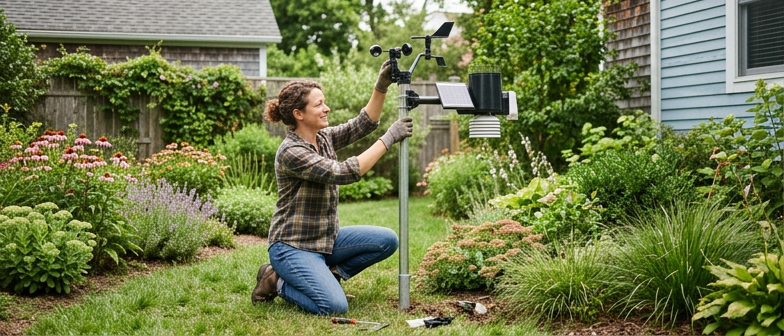
Wind measurements depend on both location and steady maintenance. To understand basic wind direction and speed around your home, mount the anemometer and wind vane where air can flow freely, such as above the roofline or on a pole away from tall trees and nearby structures. Align the vane with true north or a clear landmark so you can interpret changes in your daily weather journal. Plan regular visual checks and gentle cleaning to remove leaves or spider webs, keep mounting hardware tight, and confirm that cables or wireless connections are secure so your backyard station continues to record reliable wind information.
Rain Gauge Placement and Care
For reliable home weather monitoring, place your rain gauge on level ground in an open area where rain can fall straight in without hitting branches, roofs, or fences. Keep it at least twice the height away from nearby buildings or trees so they do not block rainfall or cause extra dripping. Set the rim perfectly horizontal and mount the gauge at a height you can easily reach to check and empty after each storm.
To keep readings consistent, inspect the rain gauge often for leaves, insects, or dirt that might clog the opening or splash water out. Rinse it gently with clean water instead of harsh cleaners that can scratch the surface and affect measurement lines. In colder months, move delicate plastic gauges indoors during hard freezes, and always record the amount before you pour it out.
Temperature and Wind Measurement Basics
Accurate temperature tracking in a backyard weather station starts with careful sensor placement. Keep the thermometer or electronic sensor shaded and well ventilated in an enclosure that blocks direct sun but lets air flow. Mount it a few feet above grass or other natural ground, not concrete or decking, which radiate extra heat and skew home weather monitoring results. Avoid nearby buildings, dark walls, grills, or exhaust vents so readings reflect the real outdoor environment.
Wind direction and speed are best measured where air moves freely, using a simple vane or anemometer above nearby obstructions. Aim for roughly rooftop height and keep the instruments clear of branches, chimneys, and neighboring structures that can funnel or block the wind. Give the vane an open view of the horizon and carefully align the north marker so basic wind direction readings stay consistent when you review your daily weather journal.
Q&A
-
Why set up a backyard weather station instead of relying on a weather app?
A backyard weather station shows the exact conditions at your home, not a distant city site. It reveals how your yard responds to sun, shade, rain, and wind, helping you plan gardening, outdoor work, and activities more precisely. -
What basic tools do I need for simple home weather monitoring?
Get a thermometer, a rain gauge, and a wind vane or small anemometer. Together they track temperature, rainfall, and wind, giving a practical overview of local weather without a big investment. -
How should I place a rain gauge for reliable readings?
Put it on level ground in an open spot, at least twice the height away from nearby trees or buildings. Keep the rim level, raise it slightly to avoid splashes, and check or empty it after each storm. -
What are key tips for accurate temperature tracking in my yard?
Mount the thermometer a few feet above grass in a shaded, well‑ventilated place away from walls, pavement, grills, or vents. Avoid direct sun and tight corners so the reading reflects true air temperature. -
How can a daily weather journal improve my backyard weather station use?
Write down temperature, rainfall, wind direction, and short notes on clouds or storms. Over weeks and seasons, these records reveal patterns and show how your location compares with regular forecasts.