
Basketball Shooting Practice That Sticks: From Form Consistency to Smart Shot Choices
The gap between casually tossing the ball up and becoming a dependable scorer often comes down to intention. How you stand, breathe, and finish each release shapes accuracy far more than raw volume. When every workout blends solid mechanics, thoughtful choices, and simple tracking habits, progress tends to become steadier and easier to notice.
This story is part of DailySeekers's practical reading library across everyday topics.
Building A Steady Base: Balance, Footwork And Release
Dialing in the basics starts with how your body feels before the ball leaves your hand. Many misses are less about fingers and more about shaky balance, rushed feet, or a sloppy finish. Cleaning up those three parts makes every drill more useful, from layup distance to the far edge of your comfort zone.
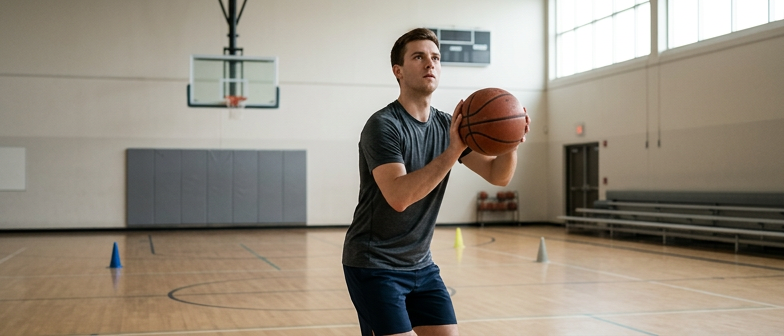
Balance begins with a quiet, repeatable stance. Set your feet roughly shoulder-width, weight on the balls of your feet, knees soft, chest up. Start with close-range form work. Hold your follow-through and notice if you lean, drift sideways, or land in a different spot from where you jumped. If your lower body moves a lot, shrink your range until you can stack a few clean makes without losing control. The target is simple: same shot, same base, again and again.
Once that stance feels natural, layer in basic footwork. Use a one-two step into a catch-and-shoot: inside foot down first, outside foot next, then flow into your jump. Add one-dribble pull-ups with a controlled stop, keeping your feet under your hips instead of lunging out. For the release, think smooth rather than powerful: shooting hand under the ball, guide hand on the side, elbow pointing roughly toward the rim. Lift, extend, then snap your wrist so your fingers point down and freeze that pose briefly.
Avoid twisting your torso, pushing with your guide hand, or rushing just to pile up attempts. Pay attention to where you land and what your body does after each shot. If the landing spot and follow-through feel almost identical on most attempts, you are probably building a foundation you can trust under pressure.
From Short Range To Game Spots: Simple Mechanics Workouts
Form work is easier to clean up when you are close to the rim. Standing almost under the basket forces you to rely on technique instead of strength. One-hand form shooting from about an arm’s length is a useful starting point: guide hand off the ball, feet set, eyes fixed on your target. Focus on a smooth bend, straight shooting elbow, and a relaxed follow-through with fingers down and wrist loose.
Some players like using a simple checklist in their head: balance, eyes, elbow, follow-through. Quiet feet, clear target, straight line with the shooting arm, then a firm but relaxed finish. Misses are acceptable; if the ball keeps drifting left or right, stay close and fix that path before you worry about distance.
Wall work can also support clean mechanics. Stand a few steps from a wall and lightly shoot the ball so it returns to you. Aim for a high, smooth arc and a straight rebound line. Instead of counting makes, you are watching for a repeatable motion and consistent flight.
Expanding Distance Without Losing Form
Once the movement feels automatic near the rim, start sliding back gradually. Move in small steps. If your form changes, or you start pushing with both arms and dipping too deep, move in again. Distance should only increase while the motion still looks like the short-range version.
Take a small batch of shots at each spot, working from just off the rim to the free-throw area, then out to your normal jump-shot distance. Mix in catch-and-shoot reps where you show your hands early, step into the pass, land on balance, and rise straight up. To make the work feel closer to game situations, add one or two dribbles into pull-ups from each spot. Use a firm dribble, a quick stop, and the same mechanics you used at the rim. The goal is for the shot to look and feel similar, whether you are two steps away or out in your usual range.
If your form at deeper spots only looks clean when you slow to an unreal pace, that is a sign to keep working closer and add distance later.
Turning Random Attempts Into Clear Shot Choices
Reading The Court Before You Rise
Smarter attempts usually begin before the ball leaves your hand. Instead of firing whenever you catch it, run a quick mental check: space, balance, and nearest contest. Space means there is enough room to lift the ball without a strip or heavy help. Balance means your feet are underneath you and your upper body is not tilting. The nearest contest is simply knowing who can challenge the shot and from which side.
Sort attempts in your head. A “green” look is one you can recreate many times in workouts with similar balance and rhythm. A “red” one is an off-balance spin, a fade over a long arm, or anything that feels like a surprise make instead of a controlled attempt. Smarter workouts focus on hunting those repeatable, balanced looks on purpose, instead of hoping the low-percentage attempts keep dropping.
Structuring Workouts Around Repeatable Looks
On an empty court, this awareness shows up in how you design your routines. Rather than jogging around and tossing from every line you see, pick a small area and a clear rule. For example: only take jumpers where you land on balance, from a set number of spots, with the same rhythm each time. You might imagine light pressure or have a partner give a hand up late, but the core standard stays the same.
Choose drill difficulty where you are challenged, but not overwhelmed. If you barely miss at all, the work might be too easy. If you rarely see the ball go in, habits may break down. Aim for a level of challenge that forces your feet, set point, and timing to stay sharp while still allowing a steady flow of makes.
Adding small decisions can push this further. You might decide to shoot if you “feel” the defender late, drive if you picture a tight contest, or sidestep if you imagine a hand right in your release path. These choices teach your body to link what you see with the type of attempt you take.
A quick guide can help match players and situations to the type of looks they repeat most reliably:
| Player Or Situation | Most Repeatable Looks | Practice Emphasis |
|---|---|---|
| Spot-up perimeter shooter | Catch-and-shoot from similar spots | Footwork into catches, quick set |
| Slasher or driver | One-dribble pull-ups, short jumpers | Balance after hard steps, soft touch |
| New or younger player | Short, uncontested jumpers and free throws | Simple form, patient progress |
The idea is not to limit a player forever, but to identify which attempts feel sturdy right now and build outward from there.
Planning, Logging And Reviewing Individual Work
Creating A Simple, Focused Plan
A focused workout often looks straightforward: a small group of drills, clear targets, and a time limit. Instead of “shoot for a long time,” write a short script before stepping on the court. That script might include a form warm-up near the rim, a section of spot jumpers from chosen areas, a game-like segment with movement or dribbles, and a brief finish with free throws or mid-range shots under a light pressure rule.
Keeping game-style actions in the middle, when you are a little tired but not exhausted, helps connect mechanics to realistic effort. Throughout the plan, prioritize quality at game pace rather than chasing a huge total number of attempts. If you notice yourself drifting into lazy motion, shorten the drill or reset your stance and speed. Having this plan in advance makes it easier to stay intentional. You know when to move on, which types of attempts you are building today, and how the pieces fit together over the week.
Tracking What Matters And Using It Next Time
A notebook, printed sheet, or simple digital note can all serve as effective logs if they are used every session. Focus on recording the basics: type of attempt, rough number of makes and attempts, and how close the drill felt to real game speed. Brief notes add useful context, such as whether you felt rushed going to one side or particularly calm from a certain spot.
Examples of quick entries might look like this: “Right corner catch-and-shoot: decent rhythm, legs tired late,” or “Top pull-ups going left: many short misses, need stronger base.” The point is to capture enough detail that you remember how it felt, not just the numbers.
After finishing, take a minute or two to glance over what you wrote. Ask yourself which areas felt most accurate, which ones kept causing problems, and which drill deserves to go first next time while you are fresh. Over several weeks, that small review habit reveals patterns that are hard to notice in the middle of a workout.
Those patterns might show that certain spots are quietly turning into strengths, or that a specific movement consistently throws your balance off. With that information, you can adjust your next script, giving more attention to the areas that need it while still reinforcing the ones that are starting to feel automatic.
Q&A
-
How can I structure effective Basketball Shooting Practice when training alone?
Solo shooting sessions work best when broken into short, focused blocks with a clear purpose for each: warm‑up form, game‑speed spot shooting, movement or pull‑ups, and a simple finisher. Set make or time goals, limit distractions, and keep rest brief so every rep feels intentional, not casual. -
What are some practical Form Consistency Drills to improve my mechanics?
Use close‑range one‑hand form shots, wall shooting for arc and straight flight, and “freeze the follow‑through” drills where you hold your finish and check balance and landing spot. Add one‑two step catch‑and‑shoot reps, focusing on the same rhythm and set point every time, regardless of distance. -
How do I build better Shot Selection Awareness during solo practice?
Label each rep mentally as a good or bad decision based on balance, space, and contest you imagine. Only count “green” attempts in your score. Design drills where you shoot, drive, or sidestep based on a cue, like calling out “tight” or “late,” teaching your body to connect reads with smarter shots. -
What should a solid Repetition Routine Planning process look like for a week?
Start by picking two or three themes for the week, such as catch‑and‑shoot, pull‑ups, or finishing. Distribute volume so heavy days are followed by lighter technique days. Keep core drills the same for several sessions so you can actually compare results, then rotate new variations in gradually. -
Which Practice Tracking Tips help turn Balance And Follow Through work into progress?
Track makes, attempts, and shot quality notes instead of raw numbers alone. Record whether you stayed upright, landed on the same spot, and held your follow‑through under game‑speed fatigue. Review patterns weekly, then tweak drill choices, volume, or difficulty to target recurring weaknesses efficiently.