
Beginner Indoor Plant Care: Light, Water, and Placement Working Together
A few small habits can turn a “black thumb” reputation into a calm, green corner at home. Paying attention to how bright each room is, how quickly potting mix dries out, and where containers sit in relation to drafts or heaters shapes whether foliage stays firm and roots stay healthy.
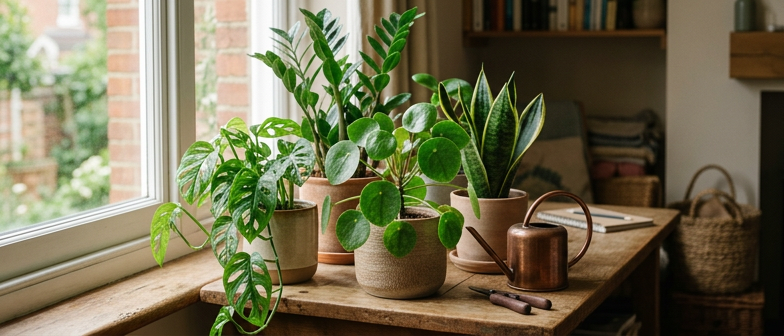
This story is part of DailySeekers's practical reading library across everyday topics.
Getting To Know Your Rooms
Light, warmth, and how you move through a space decide which plant will feel comfortable there.
Noticing light and matching spots
Stand in each room and watch the light. A spot right beside an uncovered window usually counts as bright light. A place a few steps back tends to be medium light. Corners where you can still read during the day but never see a direct sunbeam act as low light.
Once you see these zones, match different kinds of plants to them. Sun-loving plants, including many thick-leaved types, usually do best very close to the brightest window. Foliage that burns, fades, or develops pale patches in harsh sun is often happier a little farther away or behind a sheer curtain. Shade-tolerant plants suit shelves or dimmer corners deeper in the room.
Some rooms stay naturally warmer and more humid, especially spaces where people shower, cook, or dry laundry. These areas suit moisture-loving plants, especially if several can be grouped together so the shared humidity rises slightly. Drier, cooler rooms tend to be better for plants that prefer to dry out clearly between drinks.
Your routines also matter. If you tend to forget watering, keep forgiving plants in the rooms you walk through many times a day. Reserve fussier ones for places where you sit and relax, so you are more likely to notice droopy foliage or dry soil. In small homes, place shade-tolerant plants on lower shelves and those that crave brightness higher up within the same window zone. Watch for stretching, fading, or scorching leaves; these changes are your plant’s report on what that spot is really like.
| Room trait or habit | Plant and placement suggestion |
|---|---|
| Very bright window, dry air | Sturdier, sun-tolerant plants close to glass; use a sheer curtain if leaves scorch |
| Warm, steamy, used daily | Moisture-loving plants grouped together on shelves away from direct splashes |
| Cool, shady corner | Shade-tolerant plants on stands or side tables, rotated occasionally toward any light |
| Busy person, forgetful watering | Easy-care plants placed along daily walking paths and near frequently used seats |
Pots, Mix, And Happy Roots
Roots do best in a container and potting mix that allow both water and air to move through easily.
Picking containers that let excess water escape
Every pot needs at least one drainage hole so extra water can escape instead of pooling around the roots. Without a way out, water collects at the bottom and creates a soggy bath many indoor plants cannot tolerate.
A pot much larger than the existing root ball holds more wet mix than the plant can use, keeping things damp for too long. A container just one size bigger than the nursery pot usually works best. This allows enough fresh mix for new roots while avoiding a heavy, swampy mass.
Plastic tends to hold moisture longer, which can help if you sometimes forget to water. Unglazed clay usually dries out faster and lets air in through the sides, which can be helpful if you tend to overwater. A saucer under the pot is for catching drips. After watering, tip out any water still sitting in it so roots are not standing in a puddle.
A simple, airy blend for most foliage
Many bagged potting mixes sold for indoor use are fine as a base, but they can be dense when used alone. Indoor roots generally prefer a loose, chunky blend that lets water pass through and air sneak in between particles.
A beginner-friendly mix often includes three parts: a regular potting or coco-based medium for holding some moisture, a lighter material like perlite to create air pockets, and a coarser ingredient such as bark chips to prevent compaction. If extra nutrition or moisture is desired, a small handful of gentle organic matter can be added, but not so much that the texture turns heavy.
When you squeeze a handful of the finished blend, it should hold together softly and then crumble, not form a hard clump. After watering, the surface should feel evenly moist, not like sticky clay. If the pot drains well and the mix feels springy between your fingers, there is usually enough space for roots to breathe and grow.
Making Watering Less Stressful
Rigid rules often lead to either parched soil or constant sogginess. Paying attention to what the plant and soil are doing in real time gives better guidance than a fixed schedule.
Simple checks instead of strict routines
A strict rule such as “water every three days” rarely works indoors. Light, temperature, pot size, and soil mix all change how quickly water disappears. One plant may stay content for more than a week, while another in the same room may dry out within only a few days.
Instead of watching the calendar, watch the plant and the potting mix. The finger test is the easiest starting point. Gently push a clean finger about one to two inches into the mix. If it still feels cool and slightly damp at that depth, wait. If it feels dry, it is usually a good time to water. This protects plants from a common beginner mistake: giving more water when leaves turn yellow from soggy roots rather than drought.
Lifting the pot regularly also teaches you the “weight” of a well-watered plant compared with a dry one. A light pot signals that it is likely time to water; a heavier pot suggests the mix still holds enough moisture. A quick look at the foliage can add clues. Slightly droopy but still firm leaves may hint at mild thirst, while mushy stems or constantly wet soil often point toward too much water.
When watering, let water run through the soil until some drains from the bottom, then allow the pot to drain fully. Avoid leaving any container sitting in a full saucer. Many common indoor plants cope well with a gap of roughly one to three weeks between waterings, as long as someone tests the soil and adjusts based on how quickly it is drying.
| Watering habit | Helpful adjustment |
|---|---|
| Tends to water on a fixed day | Switch to finger and weight checks; skip watering if the mix still feels cool and damp |
| Often overwaters | Use faster-drying pots and mixes; wait until the top layer is dry at least to finger depth |
| Forgets to water | Place plants in daily traffic areas; choose slower-drying containers and slightly heavier mixes |
| Nervous about root rot | Ensure drainage holes are clear; empty saucers and avoid decorative outer pots without vents |
Leaf Care And Gentle Problem-Solving
Leaves act as both solar panels and warning flags. Keeping them clean and watching for small changes helps catch issues early.
Dealing with dust and keeping foliage clean
Dust on leaves works like a thin curtain over a window. Light still gets through, just less efficiently.
Support each leaf with one hand, then gently wipe the top and bottom with a soft cloth dampened with clean water. There is usually no need for special shine products. Doing this roughly once a month, or whenever a visible film appears, keeps leaves brighter and helps them use available light more effectively.
While wiping, take a slow look at the plant. Soft spots, sticky areas, or tiny insects are easier to notice on clean leaves than on dusty ones, so this habit doubles as a basic health check.
Interpreting droop and crispy edges
Drooping does not always translate to “add more water.” Before reaching for the watering can, touch the soil. If it is still moist several centimeters down, overwatering or low light may be part of the problem, not thirst. If the mix feels dry at that depth, a thorough drink usually helps the plant perk up. For plants that suddenly lean or flop to one side, check for pests on stems and leaf joints; a gentle rinse or careful hand removal may be enough.
Crispy brown tips on leaves often suggest either dry air, sensitive reaction to tap water, or both. If household water seems to leave marks or cause repeated browning, trying filtered or collected water for a while and watching new growth can offer clues. Pair this with better humidity: group plants together, use shallow trays of pebbles with a little water beneath pots (without soaking roots), or move plants away from strong heating or cooling vents that blow directly on them.
Q&A
-
How should a beginner start with indoor plant care without feeling overwhelmed?
Beginner Indoor Plant Care works best when you limit your first “collection” to just a few plants with similar needs. Learn their light, watering, and temperature preferences, then observe how they respond for a month. Keeping a simple note on watering dates and visible changes builds confidence faster than buying many different species. -
What is the easiest way to judge light levels for indoor plants?
Light Level Awareness does not require a meter. Stand where the plant will live and check if you can comfortably read without turning on lamps throughout the day. If you need lights often, treat it as low light. If sunbeams regularly hit that spot, treat it as bright and choose plants that tolerate or enjoy direct exposure. -
How can I build a basic watering schedule without killing plants?
Watering Schedule Basics should mix rhythm with flexibility. Begin with a weekly “check, not water” reminder. On that day, test moisture and leaf firmness, then water only those that feel dry enough. Over several weeks, you will notice patterns for each pot, allowing you to group plants with similar drying speeds and simplify reminders. -
What are some practical pot drainage tips for small homes or rentals?
Pot Drainage Tips matter even in decorative containers. Always keep plants in nursery pots or inner pots with holes, then slide them into outer cachepots. After watering, empty any collected water within fifteen minutes. If a decorative pot has no hole, line the bottom with inert material and keep the root ball lifted above any standing water. -
Which low maintenance plants and routines suit a busy lifestyle?
Low Maintenance Plants such as snake plant, pothos, and ZZ plant pair well with a simple Leaf Care Routine and thoughtful Plant Placement Planning. Position them where they receive stable, appropriate light and are easy to notice daily. A quick monthly dusting, occasional rotation, and forgiving watering needs make them ideal for hectic schedules.