
Smarter Meal Planning for Busy Weeks: One Prep, Many Quick Balanced Dinners
Weeknight evenings can feel squeezed between late meetings, homework, and errands, yet everyone still needs a nourishing plate. With a little forethought, yesterday’s roast can become today’s soup, weekend batches can turn into calm Thursdays, and a well‑stocked freezer can quietly replace last‑minute takeout.
This story is part of DailySeekers's practical reading library across everyday topics.
Map Your Week Before Choosing Food
When time feels short, staring at a long list of recipes often makes planning harder. It is usually more helpful to start with your calendar and energy level, then decide what kind of meal belongs in each slot.
Look at each day and note three things: who will be home, roughly when everyone eats, and how much effort you can give that evening. A night packed with activities might be labeled “reheat only” or “very quick.” A quieter evening can take on a new dish or something that needs more hands‑on cooking. If there is a day that always runs late, it can be marked in advance for leftovers, something from the freezer, or planned takeout.
Rather than aiming for seven unique dinners, a loose structure keeps things realistic. Many households do well with three or four main evening meals, two simple repeating breakfasts, and easy, mix‑and‑match options for midday. The remaining nights stay open for whatever is left, something spontaneous, or an easy snack‑style plate.
Thinking in patterns instead of specific recipes makes this simpler. Categories like “build‑your‑own bowls,” “wrap night,” “soup and toast,” or “eggs and something” give just enough direction. Once that framework lines up with your calendar, you can plug in recipes or favorite combinations that fit the time and energy you have.
A short overview like the one below can help match days to realistic meal types:
| Day type or pattern | Helpful meal style | Effort level (subjective) |
|---|---|---|
| Late arrival, lots of tasks | Reheat‑only or freezer option | Very low |
| Normal workday | Prepped components assembled quickly | Low to moderate |
| Slower evening | New recipe or dish that cooks longer | Moderate |
| Social plans uncertain | Flexible bowls, sandwiches, or snack plate | Low |
One Prep Session, Several Evenings Covered
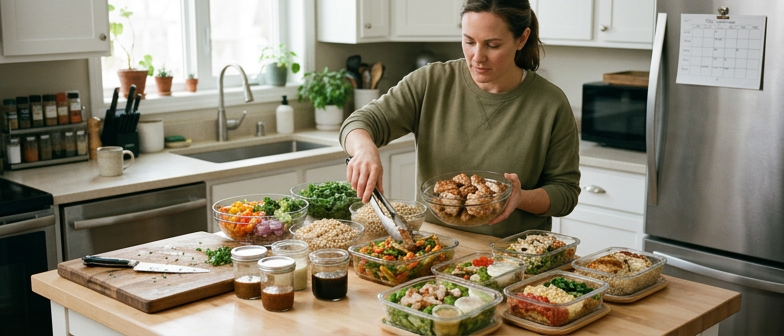
A single focused cooking block can support several nights, especially when evenings feel rushed. The goal is to prepare flexible building blocks that can be rearranged, rather than a lineup of separate, single‑use dishes.
Choose flexible components
A practical starting point is to pick a small set of proteins, vegetables, and starches. You might roast a tray of mixed vegetables, cook a pot of grains, and prepare one or two proteins such as beans, lentils, or simple baked meat or tofu. Season everything in a fairly neutral way so later additions like sauces, herbs, or dressings can steer the flavors.
From that one session, it becomes easier to assemble grain bowls, wraps, quick soups, or hearty salads. The same roasted vegetables can appear over grains one evening and folded into a frittata on another. A bowl of lentils can be served as is one day and blended into a simple soup the next. Neutral seasoning helps prevent flavor fatigue while still giving room for variety.
Plan the remixes before you cook
Before turning on the oven or stove, sketch how many portions you want and where they might land during the week. A note like “roasted vegetables: enough for two evenings” can guide how much you prepare. Label containers with what they contain and roughly how many servings you expect.
Texture and freshness matter too. Some items do best prepped but not finished. Washed salad greens, chopped crunchy vegetables, or an undressed slaw stay fresh longer and bring contrast to reheated elements. Keeping a few quick extras on hand, such as grated cheese, yogurt, sliced olives, nuts, or a jarred sauce, makes it easier to give the same base ingredients a slightly different character each time.
The table below shows how one cooking block can branch into several easy assemblies:
| Base component | First use | Later transformation idea |
|---|---|---|
| Roasted mixed vegetables | Served over grains with a simple sauce | Baked into a frittata or egg muffins |
| Cooked grains | Warm bowl with protein and vegetables | Turned into fried rice‑style dish |
| Simple baked protein | Sliced over salad or bowls | Chopped into wraps or quick soup |
Freezer As Backup, Not Mystery Box
A helpful frozen stash does not need to be large or complicated. It is more useful when it is built around a few familiar categories that can combine into a balanced plate with minimal effort.
Begin by thinking in roles:
- Proteins, such as cooked ground meat, shredded poultry, sliced sausage, or marinated tofu packed flat.
- Grains and bases, like cooked rice, other grains, or small portions of pasta or potatoes, frozen in thin layers for quick thawing.
- Vegetables, including chopped onions, carrots, peppers, broccoli, or mixed blends for stir‑fries or soups.
- Flavor helpers, such as broth, tomato‑based sauces, herb pastes, or small bags of chopped herbs and green onions.
A simple test can guide what to keep on hand: “Could I put together a balanced plate in about a quarter of an hour using only what is here?” If the answer is yes, the freezer is doing its job.
To make that possible, aim to keep at least one item from each group ready to go:
- A protein that only needs reheating
- A grain or other starch that thaws quickly
- A vegetable mix that can go straight into a pan or pot
- A sauce or seasoning base to pull everything together
From there, combinations come together quickly. Frozen beans, cooked rice, a mixed vegetable bag, and a simple tomato‑based sauce can become a skillet meal, filling for wraps, or the base of a soup. Portions stay realistic because you can thaw only what is needed.
Setting aside a brief moment each week to glance through the freezer before writing a shopping list keeps it from becoming a forgotten storage space. Items can be rotated forward, and new batches can fill gaps, turning the freezer into steady support rather than a collection of unmarked containers.
Turning Leftovers Into Something New
Leftovers feel more appealing when they are seen as ingredients for new dishes instead of repeats of the same plate.
Prepare “ready‑to‑use” pieces
This transformation begins even before anything is reheated. When cooking, especially on a busy week, it helps to think in components rather than finished plates. A tray of roasted vegetables, a pot of grains, and a batch of seasoned protein can appear as a straightforward bowl on the first night. After that, each part is available for other uses.
Vegetables that look a little tired can be chopped into a frittata, mini egg muffins, or a crustless quiche‑style bake. Grains and small bits of meat or beans slide easily into fried rice‑like dishes: everything goes into a hot pan with oil, a splash of sauce, and something crunchy on top, such as nuts, seeds, or crisp vegetables. The last slices of bread can be cubed and toasted into croutons or crumbs for salads and baked dishes.
Give yesterday’s meal a new format
When a dish feels unexciting on the second day, changing how it is served often helps more than changing the flavor. Saucy preparations such as stews can be loosened with stock and extra vegetables or pasta to become a comforting soup. Shredded chicken, roasted vegetables, or beans can roll into wraps or breakfast burritos with eggs and a little cheese.
Dairy that is close to its date, like milk or yogurt, can be baked into pancakes, muffins, or simple snack loaves. Leftover cooked meat or vegetables make quick toppings for flatbreads, stuffed potatoes, or hearty salads. A handful of fresh elements, such as herbs, a squeeze of citrus, or a crunchy side, can make the repurposed dish feel different enough that it does not register as a repeat.
Q&A
-
How can I start Meal Planning For Busy Weeks without spending hours every Sunday?
Begin with a 10–15 minute “week glance” instead of a full recipe session. Note late evenings, kids’ activities, and likely takeout nights, then assign simple categories like “sheet‑pan,” “slow cooker,” or “sandwich night.” This lightweight structure keeps Meal Planning For Busy Weeks practical and flexible, not overwhelming. -
What is a realistic Quick Dinner Rotation for a busy family?
Choose 6–8 dinners everyone usually eats and put them on repeat for one month: one pasta, one soup, one skillet meal, one build‑your‑own bowl, one freezer option, plus a wild‑card. A stable Quick Dinner Rotation reduces decision fatigue and makes grocery shopping and prep far more predictable. -
How do I improve Grocery List Efficiency so I stop overbuying?
Write your Grocery List Efficiency plan by store section: produce, pantry, fridge, freezer, snacks. Link each item to a specific meal, plus one “flex” item like eggs or tortillas. Check freezer and leftovers first, then shop with a phone note, crossing off in‑store to prevent duplicates and food waste. -
What makes a meal truly Freezer Friendly and worth batching?
Good Freezer Friendly Meals tolerate moisture, reheat evenly, and use sturdy ingredients: chilies, stews, meatballs, saucy pasta bakes, burritos, and marinated tofu or chicken. Cool completely, freeze in thin, labeled portions with dates, then thaw overnight in the fridge for fast, low‑effort weeknight dinners. -
How can Leftover Repurposing Ideas support a Balanced Family Menu?
Plan one “leftover makeover” night into your Balanced Family Menu. Turn extra protein into tacos or fried rice, vegetables into omelets or quesadillas, grains into salads or soups. Pair each remix with a quick fruit or vegetable side so Leftover Repurposing Ideas still deliver color, fiber, and variety.