
Capsule Wardrobe Planning: From Closet Declutter to Calm, Neutral Everyday Style
Opening your closet should feel calm, not overwhelming. With a focused set of well‑chosen pieces, getting dressed can become quicker and more consistent with your taste. By refining colors, shapes, and habits around what you keep and buy, your rail starts to support you quietly instead of demanding constant decisions.
This story is part of DailySeekers's practical reading library across everyday topics.
Clearing Space Without Harsh Rules
Notice what “too much” feels like
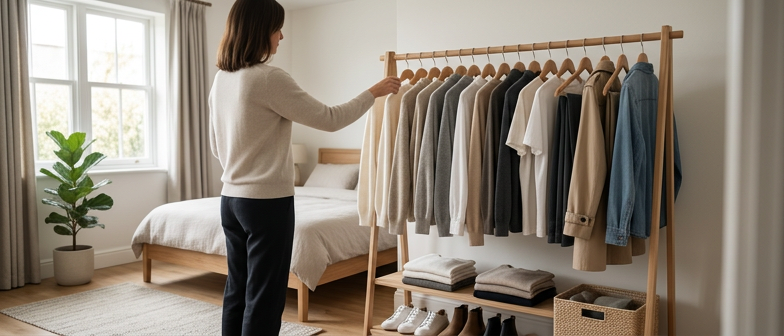
A crowded rail often shows up as decision fatigue: standing there each morning, thinking “I have nothing to wear” while hangers are packed so tightly they barely move. Instead of ignoring that feeling, pause and name it as a sign that your clothes are not working together.
Step back and look at the rail as if it belongs to someone else. Do you see duplicates, stacks of almost identical jeans, or several versions of a jacket you rarely reach for? The aim is not to judge past purchases, but to notice which pieces actually support your days now.
Working in small sections keeps the process manageable. Pull out five to ten items at a time. Touch each one and ask:
- Does it fit comfortably today?
- Would I wear this outside the house without hesitation?
- Can I picture at least two outfits with it using what I own?
If the answer is no to most questions, that piece may be ready to move on or leave the main rail for a while.
A simple way to track this is to group items as you go:
| Category on the rail | What it often reveals | Helpful next step |
|---|---|---|
| Near‑duplicates (many similar jeans, shirts, jackets) | You lean on one favorite shape and color | Keep the best‑fitting versions; move the rest to “not now” |
| Occasion pieces (rarely worn, very specific) | Past lifestyle or one‑off events | Store away from daily rail or release if they no longer fit your life |
| Uncomfortable fits (tight, scratchy, awkward) | Wishful sizing or impulse buys | Prioritize comfort; consider donating or reselling |
Seeing patterns like these highlights what you truly wear, and where you can reduce without feeling deprived.
Create soft landing zones instead of harsh goodbyes
Letting go can feel abrupt, especially if clothes carry memories or were expensive. Soft “in‑between” steps make the process easier to maintain over time.
Set up three clear zones: keep, not now, and let go.
- Keep is for pieces that fit, flatter, and match how you actually spend your week.
- Not now is a temporary home for clothes you are unsure about. Place them in a box or on a separate rail with a time limit in your mind. If you do not reach for them, that tells you something useful.
- Let go is for items that are worn out, uncomfortable, or no longer feel like you. Donation, resale, or textile recycling helps prevent them drifting back into your space.
A clearer rail makes room for what you genuinely reach for, so a future edited wardrobe grows from clothes you already enjoy wearing.
Building a Calm Color Story
Start with what you already reach for
A soothing palette often starts in your own closet rather than on an ideal image. Pull out the pieces you choose on busy mornings: perhaps a soft grey sweater, a beige blazer, or dark denim. Lay them together and look for the common threads. Those “default” shades are your personal base colors.
From there, choose two or three main base colors you feel happy to repeat many times a week. Then add one lighter shade, one mid‑tone, and one darker option within that range. This spread creates enough contrast to mix tops, bottoms, and layers without much thought.
When deciding whether a color belongs, ask yourself:
- Does it sit quietly next to most of my existing clothes?
- Does it feel like “me” on a regular weekday?
- Would I be comfortable wearing it head‑to‑toe?
If yes, it probably earns a place in your core group.
Test harmony and mood before you commit
Once you have a few candidate colors, test how they behave together. Place items side by side. Adjust until the group feels balanced rather than loud.
Pay attention to undertones. Some shades lean warm, like oatmeal or sand; others lean cool, like charcoal or stone. Mixing many different undertones can make outfits look unsettled, even when they are all neutral. Leaning mostly warm or mostly cool gives a more cohesive effect.
Accent shades add interest but are easy to overdo. One or two muted colors, such as a soft blue or a gentle rose, are usually enough. An accent earns its place if it can work with nearly all your base pieces; if it only suits one skirt or one jacket, it may be better left out of the core palette.
Making Outfit Patterns Work For You
Outfit patterns vs. “what should I wear?”
On rushed mornings, the challenge is rarely a lack of clothes; it is the number of tiny choices. Outfit patterns turn that into a repeatable structure. Instead of starting from nothing, you plug different pieces into a template you already know suits you.
A pattern is just a repeatable combination, not a rigid rule. For example:
- Relaxed top + structured bottom + simple shoes
- Fitted top + wide‑leg pants + short jacket
- Dress + light layer + flats
Once a few patterns feel good on your body and fit your daily activities, a small selection of clothes feels larger, because almost every item can slot into several patterns. This method also reveals gaps: if “dress + light layer + flats” is your favorite equation but you own only one pair of suitable shoes, you know exactly where an addition would be practical.
Simple patterns for a leaner rail
Start from your real week: how many days you spend at work, relaxing, socializing, or doing more active tasks. For each setting, note one or two go‑to patterns, then see whether your current clothes can support them.
Some examples:
- Work days: “tailored pants + knit top + blazer”, or “midi dress + cardigan + loafers”
- Off duty: “straight jeans + tee + overshirt”, or “jersey dress + sneakers”
- Warm days: “linen shorts + tank + light shirt”, or “flowy skirt + tee”
- Cooler days: “long‑sleeve top + jeans + short jacket”, or “thin sweater + wide trousers”
Aim for pieces that can move between several of these. A black knit that works with jeans and a slip skirt, or sneakers that suit casual and slightly polished outfits, earns frequent wear without adding clutter.
A way to test versatility is to take one item and see how many patterns it fits. If it only works in a single, very specific combination, it may not deserve a key spot on a smaller rail.
Buying With Intent So Your Closet Stays Balanced
Shopping with intent is about gentle, repeatable habits that keep an edited wardrobe from sliding back into chaos. Instead of reacting to trends or discounts, each new piece has a clear role and supports outfits you already enjoy.
Simple checks before bringing something home
A short pause before paying can protect your space and budget. A useful question set is:
- Do I genuinely like this, or do I just like the idea of it?
- Does it fit comfortably today, without “when I change my body” stories?
- Can I style it at least three different ways using pieces I own?
If any answer is no, the item may not serve your rail for long.
A quick check of fabric, comfort, and care instructions also matters. If something feels scratchy, needs complicated washing, or loses its shape quickly, it is unlikely to become a reliable favorite, even if it looks appealing on the hanger.
Using lists and gentle limits instead of impulse
Thoughtful shopping becomes easier with simple tools. A running wish list on paper or in your phone can keep your focus on genuine gaps rather than passing wants. When you notice repeating themes, like “light layers” for transitional weather or “everyday smart shoes”, you know where to put your energy first.
Soft limits can also be helpful. Examples include:
- A total number in each category (tops, bottoms, shoes)
- A loose “one in, one out” guideline for certain sections
- A flexible monthly or seasonal budget range
These limits ask every potential purchase to justify its place: does it fit the color story, support at least one existing pattern, and feel good enough to wear often?
Q&A
-
How do I start Capsule Wardrobe Planning without overthinking every purchase?
Begin by deciding how many outfits you realistically need for a typical week, then reverse‑engineer the pieces required. Focus on overlapping uses: one blazer that works for work and dinner, one pair of jeans for errands and casual Fridays. Capture gaps on a list, then buy only against that list for one or two seasons. -
What counts as Versatile Outfit Basics in an everyday, non‑corporate lifestyle?
Versatile basics are pieces that work across at least three situations: home, casual social, and slightly polished settings. Think well‑cut jeans, plain tees, neutral knits, a simple dress, and clean sneakers or loafers. Skip fussy details and bold prints; prioritize comfort, easy care, and the ability to dress items up or down with accessories. -
How can Neutral Color Coordination keep my outfits from looking flat or boring?
Use contrast and texture instead of bright colors. Pair light with dark neutrals, mix matte cotton with soft knits or leather, and add subtle interest through belts, watches, or a structured bag. Limiting your palette to a few harmonious neutrals actually makes outfits feel intentional and elevated, not dull, especially in everyday style simplicity. -
What does a smart Seasonal Clothing Review look like in practice?
At the end of each season, pull aside what you never wore and ask why: fabric weight, fit, color, or lifestyle mismatch. Note repeat winners, like a certain trouser cut or boot style. Use these insights to refine next season’s Capsule Wardrobe Planning and guide intentional buying habits, instead of starting from scratch every year. -
Which Closet Declutter Steps best support Intentional Buying Habits long term?
First, define a realistic item limit for each category. Second, track what you actually wear for a month. Third, remove duplicates that don’t add new outfit options. Finally, pause before every purchase to check if it fills a documented gap. This cycle keeps the closet aligned with real life, not passing trends.