
Mobility Training for Athletes: From Dynamic Warm-Ups to Daily Readiness Checks
Every practice, lift, or race is influenced by what happens in the minutes before it begins and in the quieter moments between hard days. How you move your joints, wake up your nervous system, and scan for stiffness shapes how efficiently you apply force and how you recover.
This story is part of DailySeekers's practical reading library across everyday topics.
Why Joint Control Beats Simply “Feeling Loose”
Mobility as usable strength, not just stretch
Many athletes use a vague sense of looseness as the sign they are ready. Muscles feel warm, basic stretches are easy, and there is no obvious stiffness. That sensation mostly reflects temporary changes in muscle tension, not true control over how joints move.
Useful mobility is the ability to guide a joint through its available range with strength, balance, and coordination. Flexibility is more passive: how far tissues can be taken when you relax. A position that is accessible when you hang on a stretch is not automatically available when you have to decelerate, cut, or land.
For sport, what matters is the quality of movement when speed, load, and fatigue show up. Targeted work often includes controlled rotations, multi‑direction body‑weight patterns, and rhythmical drills. These patterns teach the body to move into and out of positions while maintaining tension, alignment, and timing.
Preparing for force, not only comfort
Going into a hard session after only passive stretching can make you feel looser, but it does not always prepare joints and tissues for sudden changes of direction or high force. Real‑world play demands that you absorb load, stabilize in awkward angles, and then produce power again.
When control is good, joints can travel through a comfortable range while surrounding muscles stay active. That can support efficient mechanics and may reduce the tendency for one small area to take all the strain.
Dynamic work before training helps connect range, strength, and coordination. It does not chase extreme angles. The aim is smooth, repeatable patterns that feel stable, so speed and power grow from a more reliable base.
Shaping a Dynamic Flow Around Your Session
Matching your preparation to the day’s demands
A practical moving warm‑up starts with two simple questions: how will you move today, and how intense will it be. A light skills session calls for something shorter and gentler than a heavy lifting day or a game‑style practice.
Thinking in patterns rather than isolated muscles keeps things clear. If the plan includes sprinting and repeated changes of direction, it makes sense to include drills for hip and ankle motion, plus trunk rotation and progressive running patterns. If overhead work or throwing is involved, more time can go to upper back rotation, shoulder control, and smooth scapular movement.
To help make choices easier, it can be useful to group options by focus:
| Session type or focus | Helpful movement themes | Example drill ideas (adaptable) |
|---|---|---|
| Sprinting and cutting | Hips, ankles, trunk rotation | Walking lunges with twist, ankle rocks, light shuffles |
| Overhead or throwing | Upper back, shoulders, shoulder blades | Arm circles, wall slides, controlled reach‑and‑rotate |
| Strength emphasis | Hips, knees, spine alignment | Body‑weight squats, hip hinges, tall‑kneeling rotations |
These drills gently raise temperature, increase blood flow, and invite you into ranges you can actually use when load or speed appears.
A simple structure you can repeat
Many athletes find it helpful to think in three short blocks that flow together: ground, standing, and locomotion.
On the ground, use controlled patterns for hips, hamstrings, and spine. Then shift to standing options like lunges with rotation, leg swings in a comfortable range, or squats. Finish with light locomotion: skips, bounds, shuffles, or short accelerations that mirror the directions and rhythms of your sport.
Linking drills with minimal stopping makes the preparation feel like one continuous sequence. The session should end with you slightly warm, breathing a bit more deeply, and mentally engaged. If a position feels sharp or forced, shorten the range, slow the tempo, or swap it out.
Using Daily Checks to Guide How Hard You Push
A quick scan before things get serious
Before going hard, a brief scan helps catch small issues. Think of it as glancing at a dashboard, not running a full test.
Stand tall and breathe slowly for a few breaths. Notice any unusual soreness, clear differences between sides, or spots that feel stuck rather than simply tired. Then move from the ground up with gentle motions: ankle circles, knee bends, hip rotations, a smooth spine twist, and shoulder circles, finishing with opening and closing the hands.
The goal is not to stretch or strengthen yet, just to notice whether movement feels smooth and even. If something feels unexpectedly sharp, unstable, or far more restricted than the other side, treat that as useful information. It may be a cue to adjust loading, spend extra time on preparation, or occasionally to hold back.
Over time, this quick check builds a sense of what normal feels like for you, so day‑to‑day changes stand out more clearly.
Simple moves to check range and stiffness
A few straightforward positions can give a snapshot of how ready your joints feel.
For the lower body, a deep body‑weight squat while holding a support if needed can reveal how the ankles, knees, and hips are moving together. Notice whether your heels stay on the ground, whether one side feels tighter, and whether you can stay balanced. A gentle forward fold or hinge can highlight hamstring and back tension, while a comfortable lunge with the back heel lifted can show how the calf and front of the hip feel.
For the upper body, raising the arms overhead while keeping the ribs from flaring and the neck relaxed tells you about shoulder and upper back motion. Slow arm circles and gentle trunk rotation add extra feedback.
If mild stiffness eases as you move through your warm‑up, it is often normal tightness from life or previous training. Stiffness that lingers, makes motion feel clunky, or changes how you move is a sign to adjust the plan for the day by reducing intensity, shrinking ranges, or building in more recovery‑focused work.
Blending Preparation, Recovery, and Everyday Movement Across the Week
Organizing theme days without rigid rules
Many athletes stay more consistent when the week has a simple rhythm rather than a strict script. Some days lean more toward preparation and power, others toward recovery and control, with a lighter reset day somewhere in the mix.
Regardless of theme, three ingredients show up often:
- Moving warm‑up: low‑impact drills such as ankle rocks, hip circles, arm swings, and quick, low‑stress footwork
- Recovery‑oriented mobility: slower patterns like deep squat holds, ground‑based hip work, and relaxed shoulder rotations
- Everyday strength patterns: squats, lunges with rotation, carries, and light jumps or throws
A small circuit of about five movements for several easy rounds keeps the structure simple. The emphasis stays on quality: smooth, controlled reps before layering on speed or resistance. When energy is high and joints feel good, you can lean further into power or load. When the body feels flat or unusually tight, you can bias the same structure toward breath, range, and lighter effort.
To help decide which emphasis fits a given day, some athletes find a basic guide helpful:
| How your body feels today | Suggested emphasis | Practical adjustment idea |
|---|---|---|
| Fresh, joints move easily | More power and speed | Short prep, add jumps or throws, moderate volume |
| Slightly tight but no sharp pain | Balanced prep and control | Longer flow, medium intensity, controlled tempos |
| Heavy, stiff, or mentally flat | Recovery‑leaning session | Ground work, easy carries, gentle holds and breathing |
A weekly pattern that stays flexible
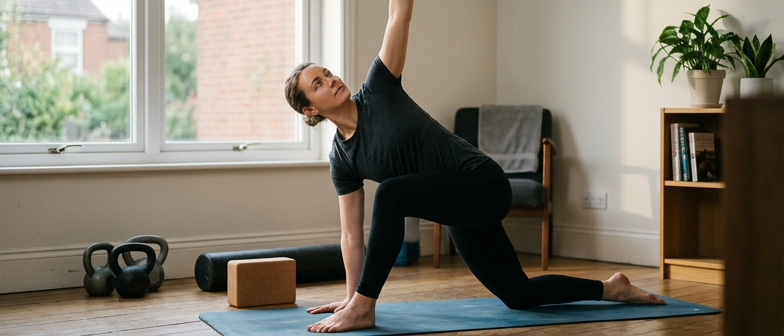
One adaptable pattern is to place more intense days between lighter ones while keeping the movement ingredients familiar. The first training day of the week might include a slightly longer moving warm‑up, followed by controlled squats and lunges with rotation, finishing with a multi‑position stretch for your hips and spine.
A second key day can use a shorter preparation sequence and focus more on low‑risk power such as small box jumps or light throws, ending with time on the floor for hips and back. A middle‑of‑the‑week slot might tilt toward recovery, with deep squat variations, slow hip rotations, easy shoulder work, and relaxed walking carries.
Another higher‑intensity day later in the week can revisit power or heavier tasks like loaded carries or pushes, wrapped up with quiet breathing and gentle stretches. A final day can work as a full‑body reset: small bounces or rhythm drills, reach‑based stretches, light side shuffles, then longer, easy holds in positions that feel most restricted.
Across this rhythm, joints are regularly asked to move, stabilize, and express force through comfortable ranges, while you also build in chances to downshift and restore.
Q&A
-
How should athletes structure Mobility Training For Athletes across a typical week?
A practical approach is to sprinkle short, targeted sessions throughout the week rather than relying on a single long block. Combine joint range exercises, dynamic warm up flow, and recovery mobility work on most training days, then dedicate at least one lighter day mainly to stiffness reduction routines, breath work, and gentle movement quality focus. -
What are effective Joint Range Exercises to support Movement Quality Focus?
Useful joint range exercises emphasize active control, not just passive flexibility. Athletes can use slow hip circles, controlled ankle dorsiflexion, segmental spinal rotations, and scapular clocks, all performed through manageable ranges. The goal is to feel each segment move independently yet smoothly, reinforcing alignment and coordination that transfer to cutting, sprinting, and overhead actions. -
How can a Dynamic Warm Up Flow double as a Training Readiness Check?
Design a repeatable dynamic warm up flow and pay attention to how it feels each day. Notice asymmetries, unusual stiffness, or coordination lapses during lunges, skips, or rotational drills. If patterns feel heavier, choppier, or more limited than usual, adjust intensity, simplify movements, or extend recovery mobility work before committing to maximal loads or speed. -
What elements belong in a Stiffness Reduction Routine after intense sessions?
Post‑session stiffness reduction routines benefit from slower tempos, longer exhales, and ground‑based positions. Combine gentle joint range exercises, low‑load isometrics near end range, relaxed rocking, and supported deep squats. These help redistribute tension, calm the nervous system, and maintain usable range without adding more fatigue or provoking sensitive areas. -
How does Recovery Mobility Work enhance long‑term Training Readiness Check results?
Consistent recovery mobility work gradually shifts an athlete’s baseline, so daily readiness checks show fewer wild swings. By regularly restoring joint motion, soft‑tissue glide, and breathing quality, athletes experience more predictable responses to load, clearer signals when something is off, and better capacity to tolerate back‑to‑back demanding sessions without accumulating hidden stiffness.